Ukrainian Drone Attack Reportedly Halts All Processing at Moscow Refinery
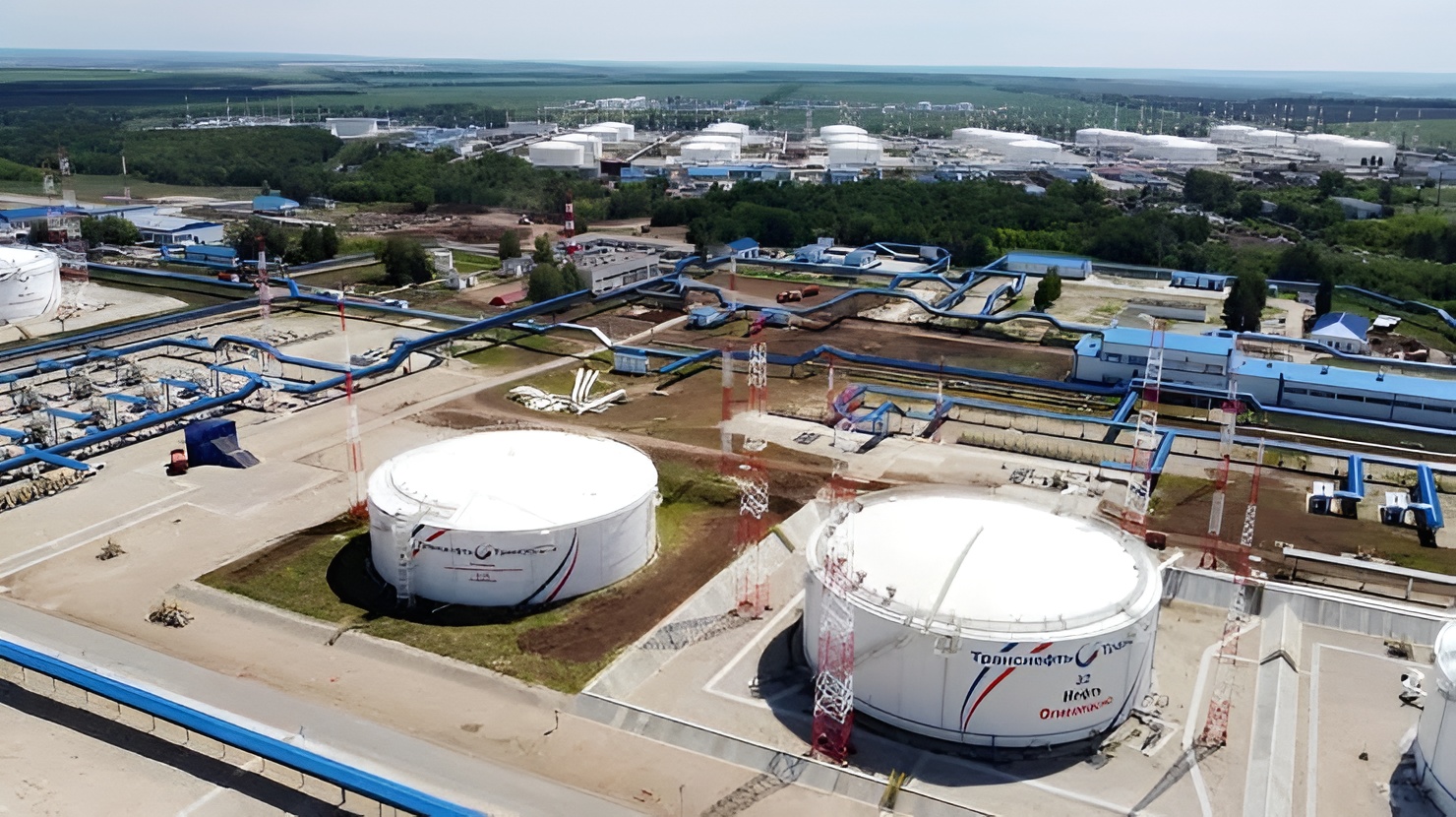
Two processing systems carry the entire crude load at Gazprom’s Moscow Oil Refinery. The AVT-6 unit represents 53% of stated capacity, while the EURO+ complex accounts for the other 47%. With both reportedly damaged after a Ukrainian drone attack, there was no unaffected crude-distillation system left to keep the refinery operating at a reduced rate.

That capacity structure explains the complete shutdown reported after the September 20 attack. Three industry sources told Reuters that fires affected both primary crude-distillation units, stopping crude processing and potentially requiring several weeks of repairs before operations resume. The damage details and repair estimate remain attributed claims, however, rather than findings from a public technical assessment.
Moscow Mayor Sergei Sobyanin confirmed that an industrial facility on the refinery grounds was damaged. Gazprom Neft did not immediately respond to Reuters’ request for comment. That leaves an important boundary around the available information: the refinery shutdown is reported by industry sources, but the precise damage, repair scope and restart schedule have not been officially detailed.
Why losing two units means losing all crude processing
Crude distillation is the front end of a refinery. It separates incoming crude into streams that can then move through additional equipment to become petrol, diesel, aviation fuel and other products. If all available primary distillation capacity is unavailable, downstream equipment cannot simply replace that initial processing function.
At the Moscow site, AVT-6 can process 21,400 metric tonnes per day. EURO+ can process 18,800 tonnes per day. Together, their stated capacity is 40,200 tonnes per day, with no third crude-distillation train identified in the available reporting. Their simultaneous loss therefore removes 100% of the refinery’s stated crude-processing capability not merely a portion of its output.
The annual figures show the industrial scale behind those daily ratings. The refinery processed 11.6 million tonnes of crude in 2024, equivalent to roughly 230,000 barrels per day. It produced 2.9 million tonnes of petrol, 3.2 million tonnes of diesel and 1.3 million tonnes of bitumen during that year. Its stated annual refining capacity is approximately 11 million tonnes.
Those figures also clarify why a processing interruption matters more than visible damage alone. A refinery is a linked production system: removing its entire first processing stage interrupts the feed required for later stages. The exact effect on finished-product inventories or deliveries cannot be calculated from the available information, but the loss of both primary systems creates a plant-wide constraint rather than an isolated equipment outage.
A multiweek repair window carries regional consequences
The refinery, in Moscow’s Kapotnya district, is described as supplying about 40% of the city’s fuel market and 70% of the surrounding Moscow region’s demand for petrol and aviation gas. Those shares make the reported repair period consequential for road-fuel distribution and aviation-fuel supply, even though no resulting retail shortage has yet been documented.
It is also important not to treat production share as a direct shortage forecast. Fuel markets can draw on inventories, redirect products from other refineries, adjust distribution and use imports or other administrative measures. How much of that flexibility is available for Moscow during this outage is not established. The supported conclusion is narrower: a large regional supplier has reportedly lost all crude-processing capacity for a period that could extend across several weeks.
The timing comes amid wider pressure on Russian refining. The International Energy Agency reported on September 17 that Russian refinery throughput had fallen to 3.8 million barrels per day in June, its lowest level in more than 20 years and about 30% below a year earlier. That national context reduces the significance of spare capacity on paper: replacement supply depends on what other facilities can actually produce and route while the Moscow plant is offline.
Repair duration is the key unresolved variable. A forecast of “several weeks” signals more than a brief operational pause, but it does not establish which components require repair, whether the two units sustained comparable damage or whether either could restart independently. Those distinctions determine whether capacity returns in stages or only after a broader restoration effort.
Until Gazprom Neft or another technical authority publishes a detailed status update, claims about exact damage and restart sequencing remain unconfirmed. What is already clear from the stated design capacity is why two affected systems could stop the whole refinery: 53% plus 47% left no crude-processing margin behind.
| More aerospace and engineering stories, right in your MSN feed. Follow AMI on MSN |
By Stephen Wallace — Editor for AMI’s aerospace integration and unmanned mobility coverage, focused on drone manufacturing, VTOL systems, autonomous networks, and air-ground mobility links.