Stellantis Studies Moving Four Ram Lines to Michigan as Tariffs Raise Costs
Stellantis is consulting suppliers about whether to move production of four Ram heavy-duty truck lines from Saltillo, Mexico, to Warren, Michigan, as U.S. tariffs weaken the cost advantage of Mexican manufacturing. The assessment covers the Ram 2500, 3500, 4500 and 5500, but no relocation decision has been made.

The central tension is straightforward but not simple: Tariffs on Mexican production could reach 25%, making Saltillo-built trucks and parts more expensive to bring into the United States. Moving production north, however, would expose Stellantis to substantial line-transfer expenses, higher U.S. parts costs and labor costs governed by its United Auto Workers contract, which expires April 30, 2028.
Available floor space does not make Warren a turnkey replacement
Warren has an obvious physical advantage. The Michigan truck plant covers 3.31 million square feet, has built trucks since 1938 and currently produces only the Jeep Grand Wagoneer. It is described as having substantial excess capacity following the end of Ram Classic production.
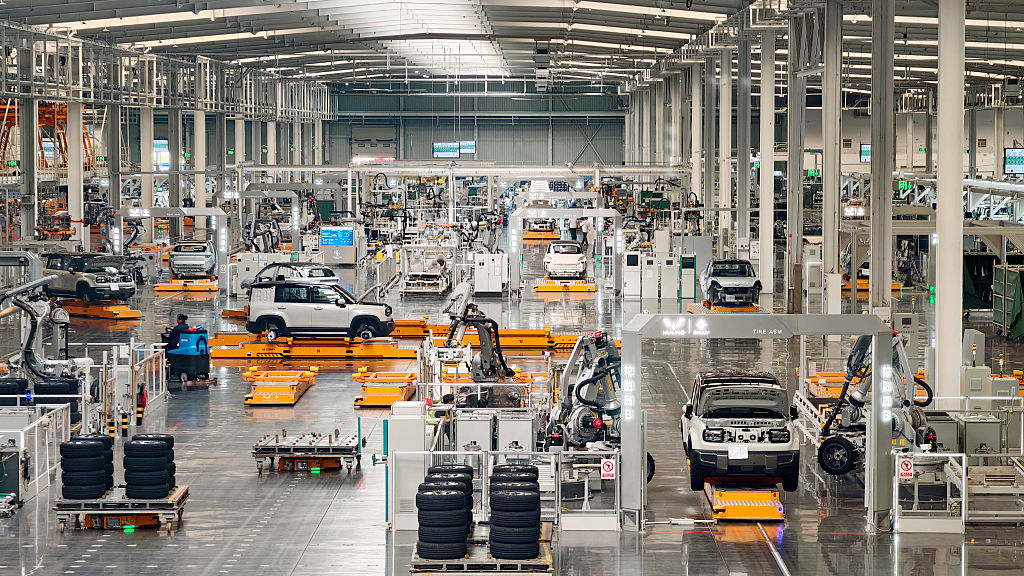
Saltillo, by comparison, is reported to cover 212,850 square feet. It began production in 1995 and switched to heavy-duty pickups in 2009. Yet factory area alone does not establish that Warren can absorb the work economically. A production line is an integrated system of tooling, material flow, quality controls, worker processes and supplier deliveries not simply equipment placed inside an open building.
Stellantis therefore must calculate the expense and disruption associated with transferring production lines from Mexico to Michigan. The available information does not specify which equipment could be moved, which tooling would need replacement or how long a transfer would take. Those unresolved details matter because relocation costs are paid before any longer-term tariff savings can be realized.
Supplier geography may determine whether the tariff math works
The supplier consultation is particularly important because final assembly is only one layer of a truck’s cost. Stellantis is expected to compare the tariff-inclusive price of Mexican-made parts with the higher underlying price of comparable parts sourced in the United States without those tariffs.
The scale of cross-border integration shows why that comparison cannot be reduced to assembly-plant wages. The United States imported more than $86 billion in motor vehicles and more than $63 billion in auto parts from Mexico in 2024. A Michigan assembly location would not automatically create a fully domestic supply chain. If significant components continued crossing the border, some tariff exposure could remain; if sourcing shifted, Stellantis and its suppliers could face new capacity, logistics and pricing requirements.
That makes tariff duration another critical variable. A transfer becomes easier to justify when added import costs are expected to persist long enough to recover tooling, relocation and supplier-conversion expenses. If tariff conditions change before those costs are recovered, the company could end up with a more expensive manufacturing footprint without receiving the anticipated long-term offset.
Labor costs and truck pricing set the outside limits
Michigan production would also operate under the UAW labor agreement. That affects the recurring cost side of the calculation, while the contract’s 2028 expiration introduces a known date but not a known cost structure beyond it. Stellantis must compare those labor expenses with Saltillo’s cost base while accounting for the tariffs applied to Mexican production.
The consequences extend to workers and plant communities on both sides of the border. A transfer could direct more work toward Warren and supporting suppliers, but it could reduce production activity tied to Saltillo. No job totals or employment changes have been confirmed, so the assessment should not be treated as a commitment to add or remove positions.
Stellantis also has limited freedom to pass added costs to buyers. Ford and General Motors already build their heavy-duty pickups in the United States, giving Ram direct competitors whose pricing can constrain how much of a tariff, sourcing or relocation expense reaches the window sticker. The available information does not establish that Ram prices will rise; it shows why competitive pricing belongs in the production decision.
The choice is therefore not simply Mexico versus Michigan. Stellantis must compare two complete cost systems: continued Saltillo production burdened by tariffs, or Warren production burdened by relocation, domestic sourcing and union labor expenses. Warren’s unused capacity makes the move physically plausible. Whether tariffs make it economically durable remains the unanswered question.
| More aerospace and engineering stories, right in your MSN feed. Follow AMI on MSN |
By Thomas Caldwell — AMI’s senior editor for mechanical and mobility engineering, covering vehicle electronics, systems integration, electrification, chassis systems, propulsion, and safety policy.