


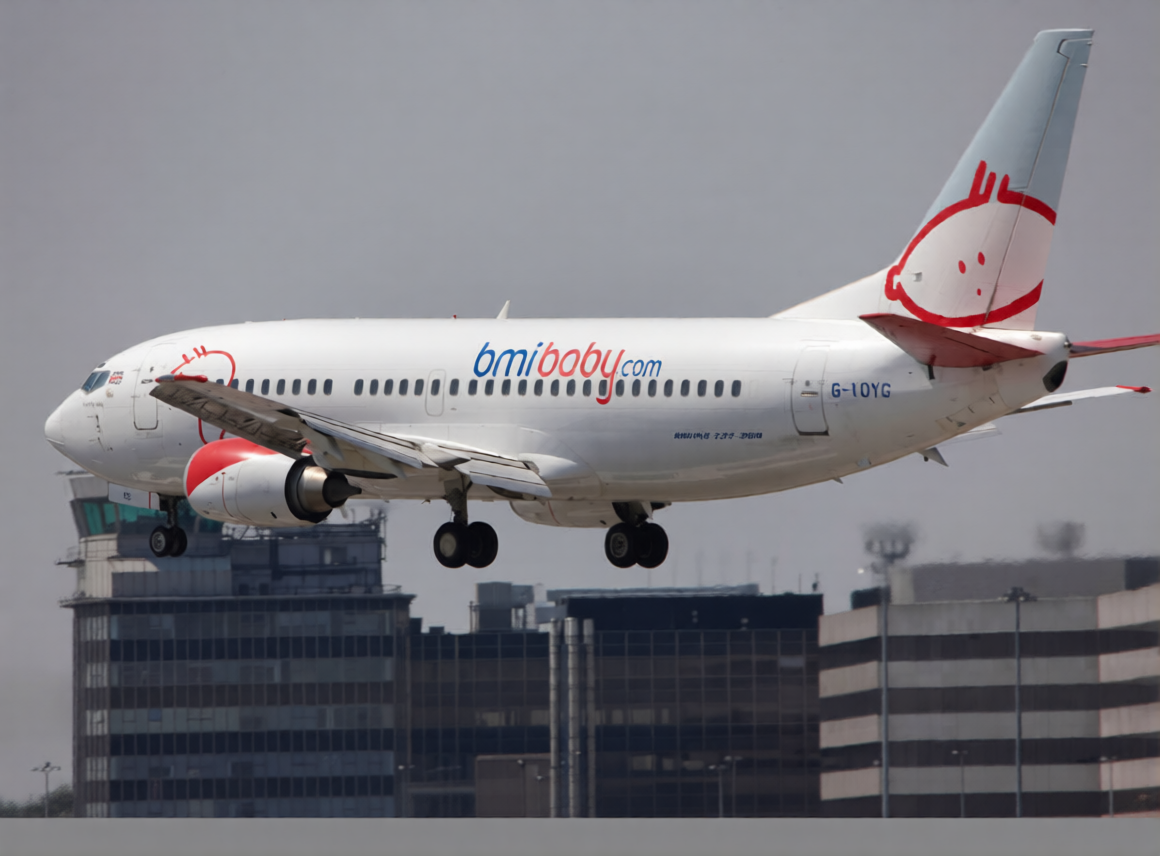
Boeing 737 Carrying 177 Landed With 363 Kilograms, Below Fuel Reserve
A Boeing 737 carrying 171 passengers and six crew landed safely at Manchester Airport with 363 kilograms of fuel remaining far below its stated final reserve of 1,100 kilograms. The UK Airprox Board concluded that the aircraft probably did not have sufficient fuel for another go around.

The October 3, 2025 incident developed during Storm Amy as the flight traveled from Pisa, Italy, toward Prestwick near Glasgow. After two approaches to Prestwick were abandoned following wind shear warnings, the crew sought to divert to Manchester. That request was initially refused, so the aircraft headed toward Edinburgh, where it encountered a third wind shear event during the approach.
The pilots then declared a fuel emergency, diverted to Manchester and transmitted a mayday fuel call. The aircraft landed there at 19:13 GMT. All 177 people aboard arrived safely, but the 363 kilograms remaining was less than one third of the aircraft’s stated final reserve quantity.
Why final reserve is different from ordinary usable fuel
An aircraft can still have usable fuel while being below a protected planning threshold. Final reserve is not intended to represent the point at which the engines stop; it is the last planned layer of fuel protection after trip, contingency and diversion requirements have been accounted for.
Standard fuel-planning definitions distinguish final reserve from alternate fuel, which covers the missed approach at the destination and the subsequent flight and landing at an alternate airport. Reserve fuel generally combines alternate fuel and final reserve, while the total fuel loaded can also include trip, contingency, additional and discretionary quantities.
That distinction matters in this incident because the aircraft did not simply fly its planned route and arrive with a low indication. It abandoned two approaches at Prestwick, proceeded toward an alternate after Manchester initially declined the diversion, encountered wind shear again at Edinburgh and then changed destination once more. Each additional segment reduced the margin available for delays or another unsuccessful approach.
International fuel management guidance summarized by Skybrary says a pilot in command should continually ensure that usable fuel is sufficient to reach an airport where a safe landing can be made with planned final reserve remaining. It also calls for a “MAYDAY FUEL” declaration when the predicted fuel on landing at the nearest suitable airport will be below that reserve. The Manchester bound crew’s emergency declaration therefore communicated a specific operational condition requiring priority, not merely a general concern about fuel quantity.
The airport communication finding
The Airprox Board found that Manchester’s initial refusal appeared to result from a communication breakdown within the airport. That is an attributed finding, not a determination of individual blame, and the available information does not establish the technical cause of the breakdown.
Manchester Airport said its policy is to accept diversion requests when it has capacity to receive the aircraft. After reviewing the circumstances, it reinforced its procedures for handling such requests.
From a systems perspective, that response addresses the interface between an aircraft requesting an alternate, air traffic coordination and the airport personnel responsible for determining whether the diversion can be received. A diversion decision has a time dimension: an answer that arrives only after an aircraft has continued toward another airport can leave the crew with fewer options and less fuel margin, even if the destination is ultimately available.
The event also illustrates why a successful landing does not erase the safety significance of the preceding fuel state. Wind shear warnings had already led to three disrupted approaches across two airports. Investigators did not conclude that another go around would certainly have been impossible, but their wording was direct: “It is unlikely that there would have been sufficient fuel available for another go around.”
Important uncertainties remain. The finding does not establish crew culpability, a regulatory violation, an airport capacity problem or the technical mechanism behind Manchester’s communication breakdown. Nor does the remaining mass translate responsibly into a simple number of flying minutes without aircraft configuration, operating conditions and fuel consumption data that have not been provided.
What is confirmed is narrower and consequential: severe weather repeatedly interrupted landing attempts, the first Manchester diversion request was refused following an apparent internal communication breakdown, and the 737 ultimately arrived with 737 kilograms less than its stated final reserve. Manchester’s reinforced diversion procedures are the concrete operational response to a flight that landed safely but probably could not support one more aborted approach.
| More aerospace and engineering stories, right in your MSN feed. Follow AMI on MSN |
By Thomas Caldwell — AMI’s senior editor for mechanical and mobility engineering, covering vehicle electronics, systems integration, electrification, chassis systems, propulsion, and safety policy.


