Krasnodar Declares Emergency as Ukrainian Strikes Reportedly Sideline 90% of Grain Export Capacity
Southern Russia’s Krasnodar region declared a state of emergency after Ukrainian drone and missile strikes disrupted Black Sea ports and shipping, leaving farmers with grain they could not sell. Industry analysts estimated that 90% of the region’s grain export capacity was offline during August, although that figure is not an official finding and cannot be independently treated as a complete damage assessment.

Governor Veniamin Kondratyev signed the decree on September 23, 2026, with its effective date set retroactively to August 12. The order cites “mass attacks on logistics facilities, suspended port operations and disrupted shipping in the Azov Black Sea basin.” Kondratyev warned that the resulting agricultural bottleneck could “disrupt normal living conditions for the population and cause significant material losses.”
The emergency marks a shift from a series of infrastructure interruptions to an officially recognized regional economic problem. Farms are still holding grain, but the export machinery that converts that harvest into delivered cargo has lost much of its normal throughput. That distinction matters: agricultural output does not need to disappear for the supply chain to fail.
Grain is available, but the transport system is constrained
A grain export network is more than a port entrance or an individual loading terminal. It depends on inland deliveries, storage, cargo handling, vessel availability and functioning shipping routes operating in sequence. A severe restriction at the maritime end of that chain can force grain to remain upstream, first at terminals and warehouses and eventually at farms.
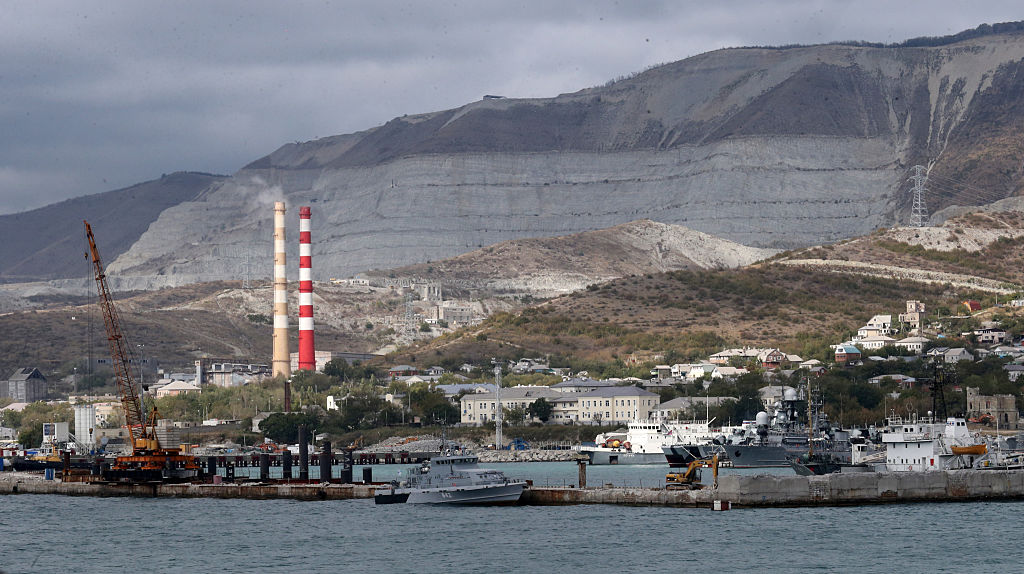
Krasnodar is especially exposed because the Azov Black Sea basin normally carries the vast majority of Russia’s agricultural shipments. Novorossiysk alone handles about a third of the country’s grain exports, according to a published assessment of the port disruption. Concentrating so much volume in one export basin improves efficiency in normal operations, but it also limits how readily lost throughput can be replaced elsewhere.
Alternative ports and overland routes may absorb part of the flow, but they do not automatically reproduce the Black Sea system’s capacity. Grain elevators, rail links, deepwater berths and loading equipment are fixed industrial assets. Redirecting cargo also adds distance, handling steps and cost, while competing for capacity that may already be committed to other shipments.
Timing compounds the problem. August falls within the peak grain export season, and terminals ordinarily run heavily into the autumn. If cargo is deferred rather than permanently lost, operators still face a recovery challenge: delayed shipments must be added to an already busy future schedule. Restoring a terminal does not instantly clear the accumulated queue of grain, trains and vessels.
Storage pressure turns a port outage into a farm problem
When exports slow while harvesting and production continue, unsold grain accumulates locally. That can occupy storage needed for later deliveries and increase handling or preservation demands. It can also weaken the position of producers who need to sell crops to meet operating costs. Kondratyev’s warning of significant material losses reflects that widening effect rather than damage confined to waterfront equipment.
The same bottleneck can produce opposite price pressures in different places. Excess grain trapped near farms can depress local prices, while reduced availability to overseas buyers can contribute to higher international prices. The reported rise in global prices therefore does not mean Krasnodar farmers necessarily benefit; a producer cannot capture an export price if the transportation system cannot move the product to market.
Shipping behavior is another capacity constraint. Physical repairs alone may not restore normal operations if shipowners decline calls or if interruptions prevent predictable schedules. Export throughput depends on confidence that vessels can arrive, load and depart with manageable delay. That makes reliability not simply whether a port is technically open the more meaningful measure of recovery.
The 90% estimate needs a clear boundary
The estimate that 90% of regional grain export capacity went offline conveys the reported scale, but it should not be read as proof that 90% of grain was destroyed or that exports stopped permanently. Capacity can be unavailable because terminals suspend work, shipping is interrupted or operators judge calls too uncertain. Conditions can also change rapidly during an active conflict.
The sustained use of drones and missiles nevertheless creates an industrial resilience challenge larger than any single interruption. Authorities must protect a broad logistics network while maintaining routine port operations, and defensive resources cannot guarantee uninterrupted service across every commercial facility. The resulting readiness pressure is measured not only in intercepted aircraft or repaired structures, but in canceled loading windows and cargo that cannot leave farms.
The decisive next measure will be durable throughput: how much grain the basin can move consistently after operations resume, and whether the accumulated backlog can be cleared before later harvest and shipping demands consume the available capacity. Until then, Krasnodar’s emergency illustrates a hard supply chain limit grain in storage is not grain on the world market.
| More aerospace and engineering stories, right in your MSN feed. Follow AMI on MSN |
By Stephen Wallace — Editor for AMI’s aerospace integration and unmanned mobility coverage, focused on drone manufacturing, VTOL systems, autonomous networks, and air-ground mobility links.