U.S. Air Force Makes Drone and Missile Base Defense a Core Mission
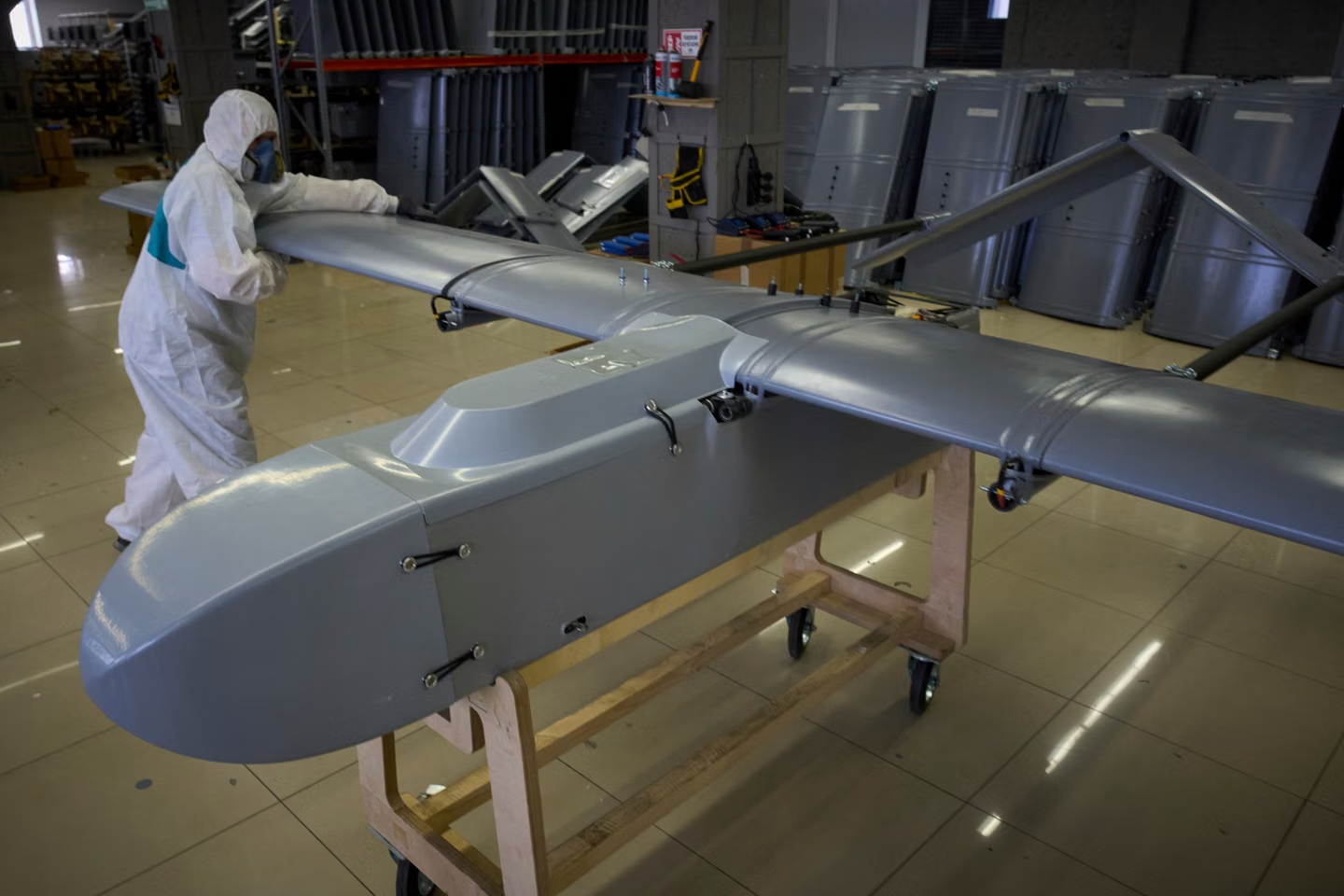
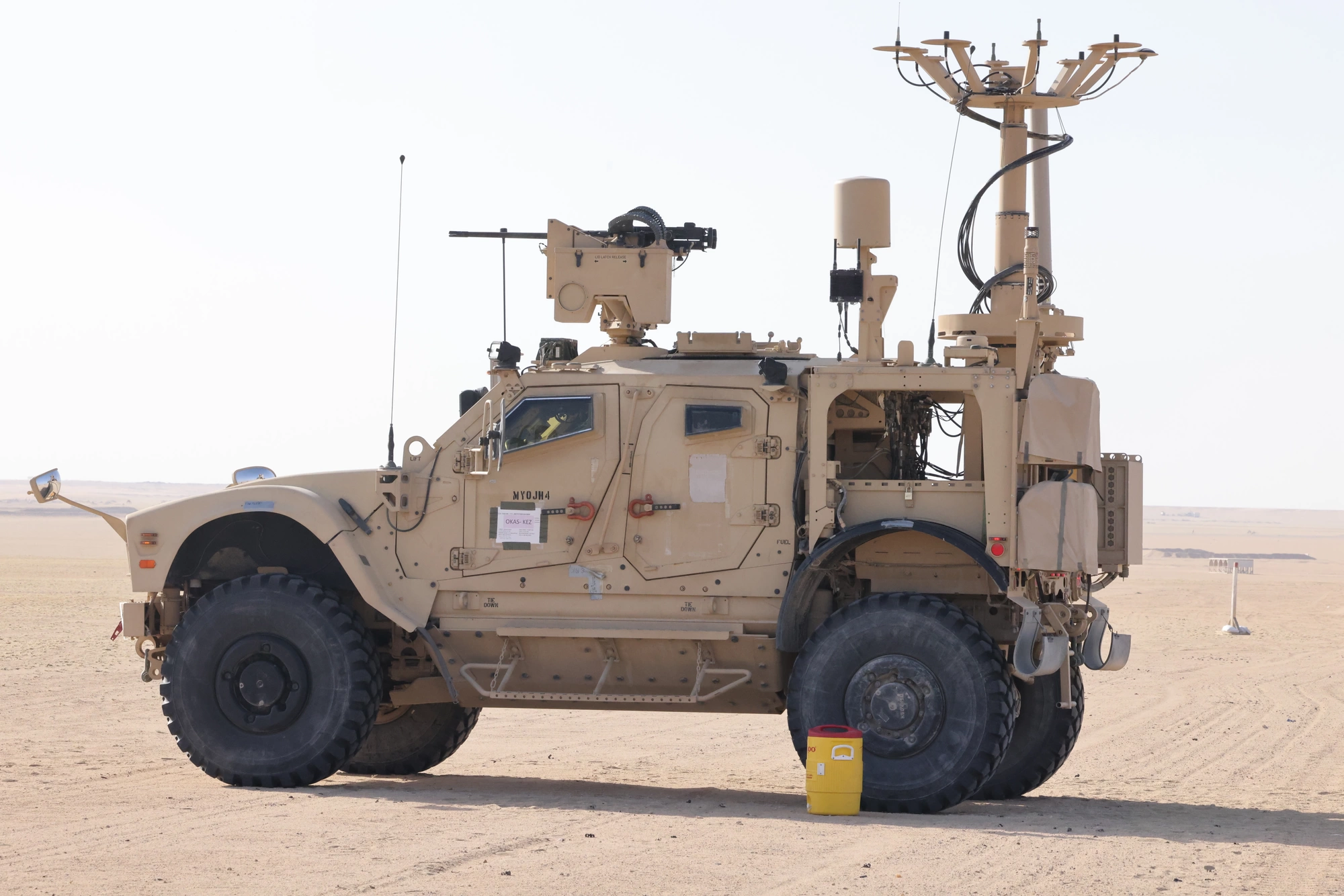
Air Force bases can no longer be treated as protected sanctuaries while aircraft and personnel prepare for operations. The U.S. Air Force is responding by creating a dedicated point-defense career path and planning a layered defensive system for threats ranging from inexpensive quadcopters to cruise missiles. Chief of Staff Gen. Kenneth S. Wilsbach announced the initiatives in September 2026 during his State of the Air Force address at the Air & Space Forces Association’s Air, Space & Cyber Conference.
“We can no longer treat point defense as a side hustle,” Wilsbach said. “We must make it a core function of air and space power.” The career field is intended to become operational within two years, although the Air Force has not disclosed its formal structure, who will be eligible to enter it or which equipment its personnel will operate.
That organizational change is as important as the hardware. Point defense protects a particular location, such as an airfield, rather than a broad region. When the job is assigned as an additional responsibility, training, staffing and equipment must compete with an airman’s primary occupation. A dedicated career path can instead establish repeatable qualifications, unit structures and readiness standards for personnel whose main job is keeping an installation operating under aerial threat.
One weapon cannot cover the full threat range
The Air Force’s accompanying Point Defense Weapon System remains a plan rather than a fielded architecture. Wilsbach described a combination of kinetic and non-kinetic measures intended to address small first-person-view quadcopters, larger unmanned aircraft and cruise missiles. The service has not identified the system’s components, cost, acquisition schedule, organizational home or fielding date.
That lack of detail matters because “layered” defense is more than deploying several weapons around a base. Small drones and cruise missiles differ substantially in speed, size and operating profile. A complete defensive system must first detect and classify an object, maintain a useful track and give operators enough information to select an appropriate response. Non-kinetic measures may provide options against some unmanned aircraft, while kinetic interceptors provide physical defeat where other methods are unsuitable. Command-and-control software must connect those elements without overwhelming personnel with false or duplicate warnings.
The economic balance also changes across the threat spectrum. Using a sophisticated interceptor against every small quadcopter can be an inefficient exchange, but relying only on inexpensive short-range weapons leaves no answer to larger or faster threats. Layering allows commanders to match a response to the object and preserve limited defensive capacity. It also creates integration demands: sensors, effectors, communications and trained crews must perform as one system rather than as unrelated products.
Experiments show only pieces of the planned defense
The Air Force has already tested several elements that could inform the new mission. Roughly 20-person point-defense flights, assembled from aviation and battle-management backgrounds, underwent about three weeks of training at the Joint Counter-Unmanned Aircraft Systems University at Fort Sill, Oklahoma. A separate exercise at Hurlburt Field, Florida, included automated detection and tracking, electronic warfare and physical interception.
At a more local level, the 325th Security Forces Squadron used M870 shotguns against simulated small-drone threats. The Air Force has also said it wants to qualify approximately 210 airmen on a weapon paired with the SMASH 2000 fire-control system. That rifle- or carbine-mounted optic calculates ballistic trajectories against small moving targets and can hold fire until it assesses that a hit is likely, although its operator can override that control.
Those trials illustrate individual layers, not the full Point Defense Weapon System. A smart optic is a last-line option for a limited engagement envelope; it does not replace wide-area sensing, electronic countermeasures, command-and-control or defenses against cruise missiles. Treating it as the complete answer would understate both the scale of the Air Force’s announced plan and the engineering required to connect its parts.
The Marine Corps is pursuing a comparable layered principle through its Ground Combat Element 2040 roadmap, which calls for active and passive counter-drone capabilities extending to squad level. The Air Force’s problem is different in scale and purpose: it must protect fixed and expeditionary installations while preserving the ability to launch, recover, fuel, maintain and arm aircraft.
Wilsbach connected those requirements directly, saying, “Protecting the force and generating combat power are inseparable.” The career path now has a two-year target, but the harder milestone will be defining the sensors, defensive tools, training standards and command relationships that turn that statement into continuous protection for an operating air base.
| More aerospace and engineering stories, right in your MSN feed. Follow AMI on MSN |
By Stephen Wallace — Editor for AMI’s aerospace integration and unmanned mobility coverage, focused on drone manufacturing, VTOL systems, autonomous networks, and air-ground mobility links.