Ukrainian Drone Attack Shuts Orsk Refinery; Repairs Could Take Six Months
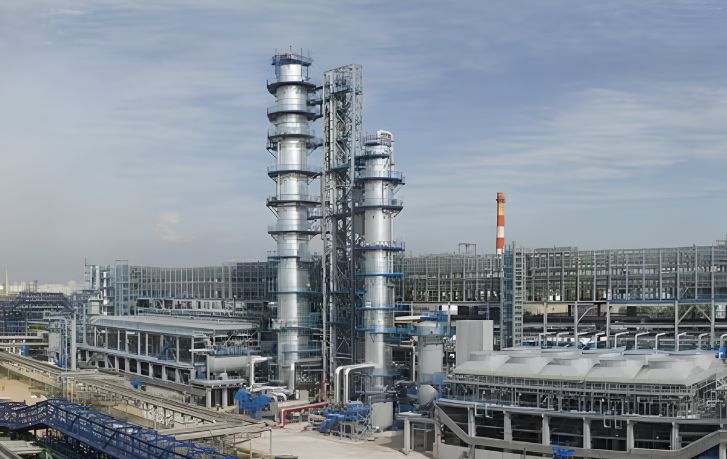
A Ukrainian drone attack reportedly forced the Orsknefteorgsintez refinery in Orsk, Russia, into a complete shutdown, removing a facility with annual processing capacity of 6.6 million metric tons. Orenburg region Governor Yevgeny Solntsev said repairs could take up to six months and that fuel would have to be brought in from outside the region.

The Ukrainian military said it attacked the refinery on August 11. The facility is near Russia’s border with Kazakhstan and about 1,500 kilometers, or 930 miles, from the Ukrainian border. Solntsev said shrapnel damaged “key infrastructure,” but no independent technical assessment has established the precise equipment affected, the extent of the damage or a firm restart date.
That uncertainty matters because a refinery shutdown is not simply a measure of visibly damaged hardware. Returning an industrial plant to service can require inspections, replacement components, control-system checks and confirmation that connected equipment can operate safely and produce fuel to specification. A single unavailable component or unresolved integrity question can keep a much larger processing chain offline.
Sanctions turn equipment damage into a supply-chain problem
Solntsev attributed the possible six-month timeline to the refinery’s reliance on imported equipment and the difficulty of replacing or repairing it under Western sanctions. That remains his assessment rather than an independently verified finding about Orsk’s equipment inventory. However, the broader constraint is documented: the European Union’s Russia sanctions include restrictions on oil-refining equipment, energy-industry technology and related services.
For industrial maintenance, the consequence can extend beyond whether a replacement machine is available. Operators may need compatible parts, specialist engineering support, software, documentation, payment processing and a supplier willing and legally able to complete the transaction. Substituting a domestically produced or third-country component may also require additional engineering and validation before a refinery can restart.
The governor’s estimate is nevertheless not proof that Orsk will remain closed for the full six months. Repair duration depends on what was damaged, whether equipment can be restored rather than replaced and whether unaffected sections can return independently. None of those details has been confirmed publicly for this facility.
The estimate does fit the wider range described by the International Energy Agency. In a September analysis of Russian refining disruptions, the IEA said minor damage to a basic crude-processing unit can sometimes be repaired in one or two weeks, while serious damage to more complex processing units can require six to eight months. That comparison provides context for the governor’s timeline, but it does not identify which category applies at Orsk.
Fuel distribution becomes the immediate operating constraint
With local refining stopped, Orenburg authorities are shifting from production to distribution management. Solntsev said the region was preparing for a worst-case scenario and reconfiguring logistics to bring fuel in from elsewhere. He reported that 80% of the region’s 287 filling stations were operating and said “emergency and specialized vehicles” were receiving priority.
Those figures do not establish the volume of regional inventories or prove how severe any consumer shortage will become. They do show the practical consequence of losing refining capacity: fuel availability depends increasingly on transport links, outside production and the ability to allocate deliveries among filling stations and essential services.
Russia historically imported little refined fuel relative to its domestic production. The Centre for Research on Energy and Clean Air calculated that seaborne refined-product imports averaged less than 5,000 metric tons per month from 2023 through 2025. Its August 2026 analysis found imports had risen to 172,000 metric tons as wider refinery disruptions increased demand for fuel processed elsewhere. Orsk’s regional supply plan is one local expression of that broader logistical reversal.
The attack’s distance also adds pressure to industrial-site readiness across a wide geographic area. It does not reveal how the drones reached the refinery or what defenses were present, and those details remain outside the confirmed record. At a strategic level, however, an event roughly 1,500 kilometers from Ukraine means protective resources, warning systems and continuity planning cannot be concentrated only near the border.
The next meaningful milestone is not the six-month date itself but a verified damage assessment and a defined repair path. Until those emerge, Orsk faces a complete shutdown, constrained access to imported equipment and the loss of 6.6 million metric tons of annual processing capacity from Russia’s refining system.
| More aerospace and engineering stories, right in your MSN feed. Follow AMI on MSN |
By Stephen Wallace — Editor for AMI’s aerospace integration and unmanned mobility coverage, focused on drone manufacturing, VTOL systems, autonomous networks, and air-ground mobility links.