GAS HUSKY Is Second Ship Sunk Off Bulgaria in Two Days; 19 Rescued
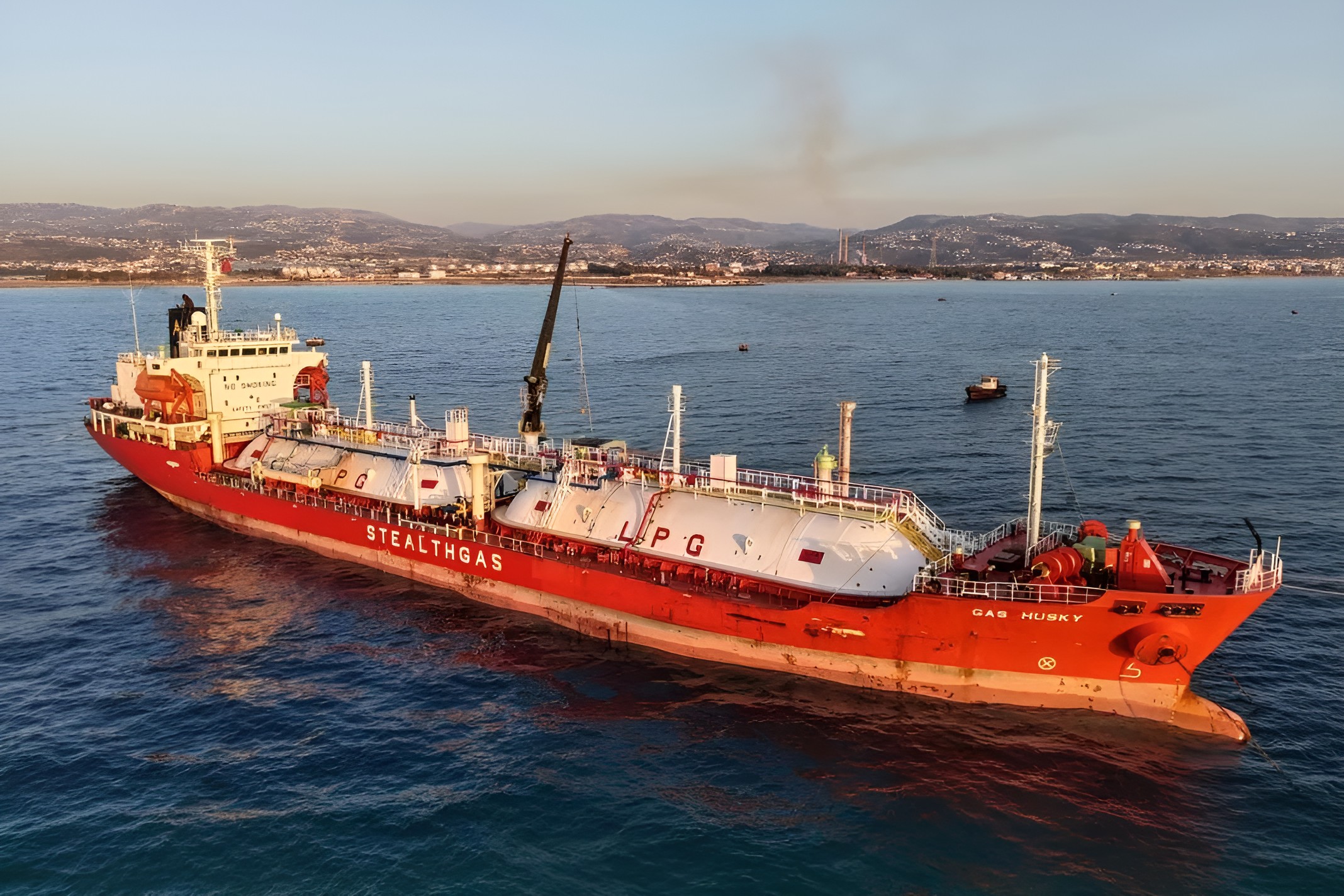
The Liberian-flagged gas carrier GAS HUSKY sank in the Black Sea on Tuesday, November 17, becoming the second merchant ship lost inside Bulgaria’s exclusive economic zone in two days. All 19 crew members, identified as Filipino nationals, were rescued and flown to Varna, where medical checks found them in good health.
The successful rescue provides the clearest positive result from an incident that remains under investigation. The vessel went down about 50 nautical miles nearly 60 miles or 100 kilometers off Bulgaria while traveling from Alexandria, Egypt, to the Romanian port of Midia. It was carrying 3,400 metric tons of liquefied petroleum gas, according to a November 18 account of the sinking.
Four reported strikes, but an unresolved cause
The tanker disappeared from radar shortly after midnight local time. At 8:02 a.m., its emergency buoy activated and transmitted a signal indicating that the ship had sunk. That sequence established the loss and helped initiate the emergency response, but it did not establish why the vessel went down.
The rescued captain told maritime news website maritime.bg that four drones had hit the GAS HUSKY. Varna regional governor Mario Smarkov subsequently said there was no doubt that the vessel had sustained four strikes, while adding that the sailors had not confirmed what kind of drones were involved. Two maritime-security sources separately described an unmanned system as responsible.
Officials have not issued a final finding identifying the projectiles, their origin or the complete chain of events that caused the sinking. The captain’s reported account therefore remains an attributed description rather than an official investigative conclusion. Establishing the cause will require authorities to reconcile crew testimony with available vessel, communications and physical evidence.
For commercial operators, the distinction is important because a confirmed unmanned-system strike carries different risk implications from a collision, structural casualty or other marine emergency. Insurers, vessel managers and route planners depend on verified incident classifications when assessing exposure. Premature certainty can distort that process, while delayed findings leave operators working with incomplete information.
A repeated safety problem for merchant shipping
The GAS HUSKY loss did not occur in isolation. A Somali-flagged cargo ship sank nearby in Bulgaria’s exclusive economic zone on Monday, one day earlier. All 12 people aboard that vessel were also rescued. Two complete crew rescues in two days demonstrate that emergency systems and regional response resources can still produce successful outcomes even after ships are lost.
The wider record is far more severe. Over 24 days in October, nine cargo ships and tankers were struck by aerial or naval drones near the Bulgarian and Romanian coastlines. At least 30 commercial sailors were confirmed dead or reported missing in those incidents. The repeated losses have moved unmanned-system risk from an exceptional security concern toward a persistent operating factor for civilian shipping in the western Black Sea.
The commercial consequences extend beyond damaged vessels. The Black Sea carries grain, crude oil and refined products, while Romania’s Constanta port is a major European grain hub. Shipping volumes through Constanta remained stable through the end of September, and grain exports had increased, but those figures predated the October surge in incidents.
Marine insurance has remained available for Romanian Black Sea operations, although premiums have risen and some insurers have reduced their willingness to provide coverage. London’s marine insurance market widened the Black Sea area it classifies as high risk in September, while exempting the territorial waters of Bulgaria, Romania, Georgia and Turkey. Repeated incidents farther offshore can still raise the overall cost and complexity of moving cargo through the region.
The investigation into GAS HUSKY must now determine what struck the ship and how those impacts relate to its loss. Until that work is complete, the firmest conclusions are also the most consequential: four strikes were reported, the vessel sank, and all 19 sailors survived. Its position as the second merchant ship lost off Bulgaria in two days places that rescue within a worsening safety environment that has already left at least 30 other commercial sailors dead or missing.
| More aerospace and engineering stories, right in your MSN feed. Follow AMI on MSN |
By Stephen Wallace — Editor for AMI’s aerospace integration and unmanned mobility coverage, focused on drone manufacturing, VTOL systems, autonomous networks, and air-ground mobility links.