Ukrainian Drones Hit Gazprom’s Salavat Before 45% Russian Refining Drop
Russian refineries were processing about 45% less crude by Nov. 18 than they had at the end of October, according to estimates from two industry sources cited by Reuters. Fifteen of the country’s 35 major refineries had been disrupted or halted, giving a system-level measure of the pressure that surrounded the earlier Ukrainian drone strike at Gazprom’s Salavat complex.
The November estimate advances the picture beyond isolated fires and percentages of nameplate capacity. Russian crude-processing volume reportedly fell from more than 700,000 metric tons per day at the end of October to roughly 400,000 tons per day after near-daily drone incidents over the following 20 days. Average November processing remained above 500,000 tons per day because the losses accumulated over time, the sources said.
Salavat had already illustrated how repeated incidents can burden a refinery before the latest nationwide decline. Ukrainian drones reportedly struck the Gazprom Neftekhim Salavat oil-refining and petrochemical complex in Bashkortostan on Aug. 13. Regional head Radiy Khabirov said falling drone debris caused a fire in Salavat’s industrial area, while Ukraine’s General Staff said the complex was struck.
No quantified damage assessment established whether the August fire stopped additional processing equipment or extended repairs. The plant was already recovering from a July 14 attack that reportedly damaged two primary processing units and halted operations. Repairs were then expected to require anywhere from several weeks to several months.
A large refinery was already under repair
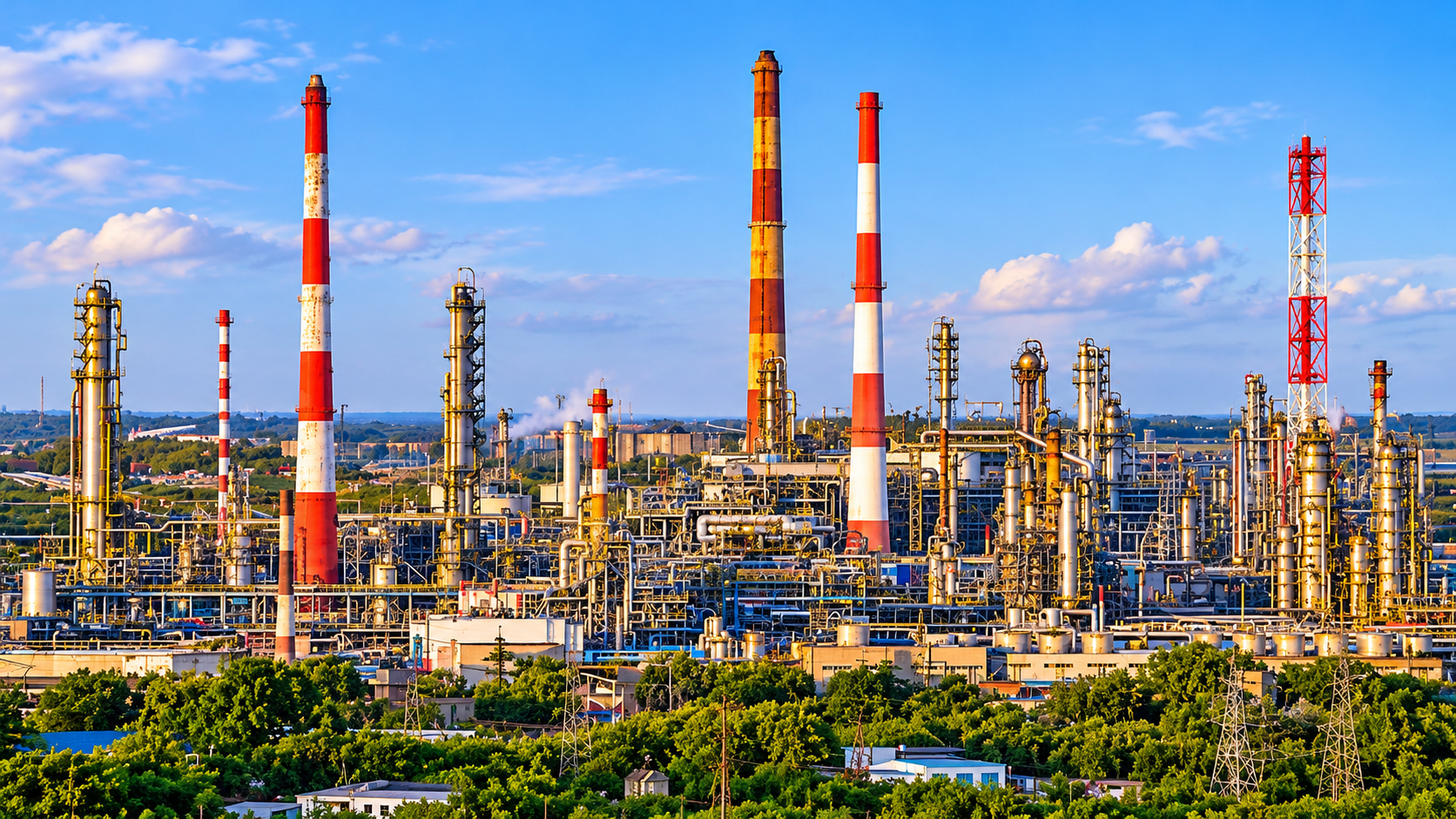
Salavat is Gazprom’s largest petrochemical complex and can process as much as 7.5 million metric tons of crude annually, equivalent to about 2.7% of Russia’s total refining capacity. It makes gasoline, diesel, kerosene and liquefied gases as well as ammonia, urea and other petrochemicals.
That 2.7% figure describes maximum processing scale, not confirmed production lost in the August fire. Its significance is the concentration of several fuel and chemical production streams at a site that was already undergoing repairs. A second incident can require another inspection, redirect emergency and maintenance personnel, or delay the return of equipment even when it does not eliminate the plant’s full capacity.
The later 45% national decline is likewise a measure of processing volume over a specific period, not permanent destruction of nearly half the refining system. Reuters reported that affected plants represented about 54% of Russia’s nominal primary refining capacity, but refineries may retain partial output when individual units stop. Restart dates also differ from site to site.
Why refinery losses reach filling stations
Russia can possess ample crude oil while experiencing shortages of finished fuels. Refineries must convert crude through multiple primary and secondary stages, and returning one unit to service does not automatically restore the full mix or volume of gasoline, diesel and aviation fuel.
The International Energy Agency reported in September that Russian refinery throughput had fallen to 3.8 million barrels per day in June, approximately 30% below the previous year and the lowest level in more than two decades. Gasoline output was down 20% from 2025, while diesel production was estimated to have fallen nearly 30%.
Those reductions prompted restrictions on exports of gasoline, jet fuel and diesel to protect domestic availability. Renewed filling-station lines and sales limits were subsequently reported in at least 16 Russian regions, with some Gazprom and Lukoil stations no longer offering certain common gasoline grades in affected areas. No specific regional shortage has been tied directly to the Aug. 13 Salavat fire.
Refiners attempted to preserve output by accelerating repairs, postponing planned maintenance and returning mothballed equipment to service. These measures can recover near-term throughput, but repeated repair cycles also compete for specialized workers, replacement components and inspection capacity across geographically dispersed facilities.
Russia increasingly supplemented domestic production with imported fuel. The Centre for Research on Energy and Clean Air estimated that oil-product imports reached 172,000 metric tons in August more than seven times the previous monthly high since the full-scale invasion began. That volume was modest relative to the national refining system, but it required products to be processed abroad and returned through longer supply chains.
For Salavat, the unresolved issue remains the operating condition of its processing units after two reported incidents. For Russia’s broader fuel network, the November estimate supplies the harder measure that was previously missing: the cumulative disruption was no longer limited to theoretical capacity, with reported daily crude processing down about 45% in less than three weeks.
| More aerospace and engineering stories, right in your MSN feed. Follow AMI on MSN |
By Stephen Wallace — Editor for AMI’s aerospace integration and unmanned mobility coverage, focused on drone manufacturing, VTOL systems, autonomous networks, and air-ground mobility links.