Taura Expands After 20 US Flights, but Ecuador Denies Base
Ecuador’s president has now given the clearest official answer yet about the growing US military presence at Taura Air Base: it is temporary, mission-specific cooperation, not an American base. In a November 15 statement, Daniel Noboa said US personnel were conducting “temporary activities” tied to specific missions or operations. “It’s not an American base, it’s an Ecuadoran base,” he said.
That answer addresses the question raised by around 20 US military flights, substantial construction and documents describing American use of Taura between June and mid-October. It does not settle how long the activity will continue, what agreement governs it or where Ecuador legally draws the line between rotational cooperation and a foreign military facility.
The physical capacity is growing
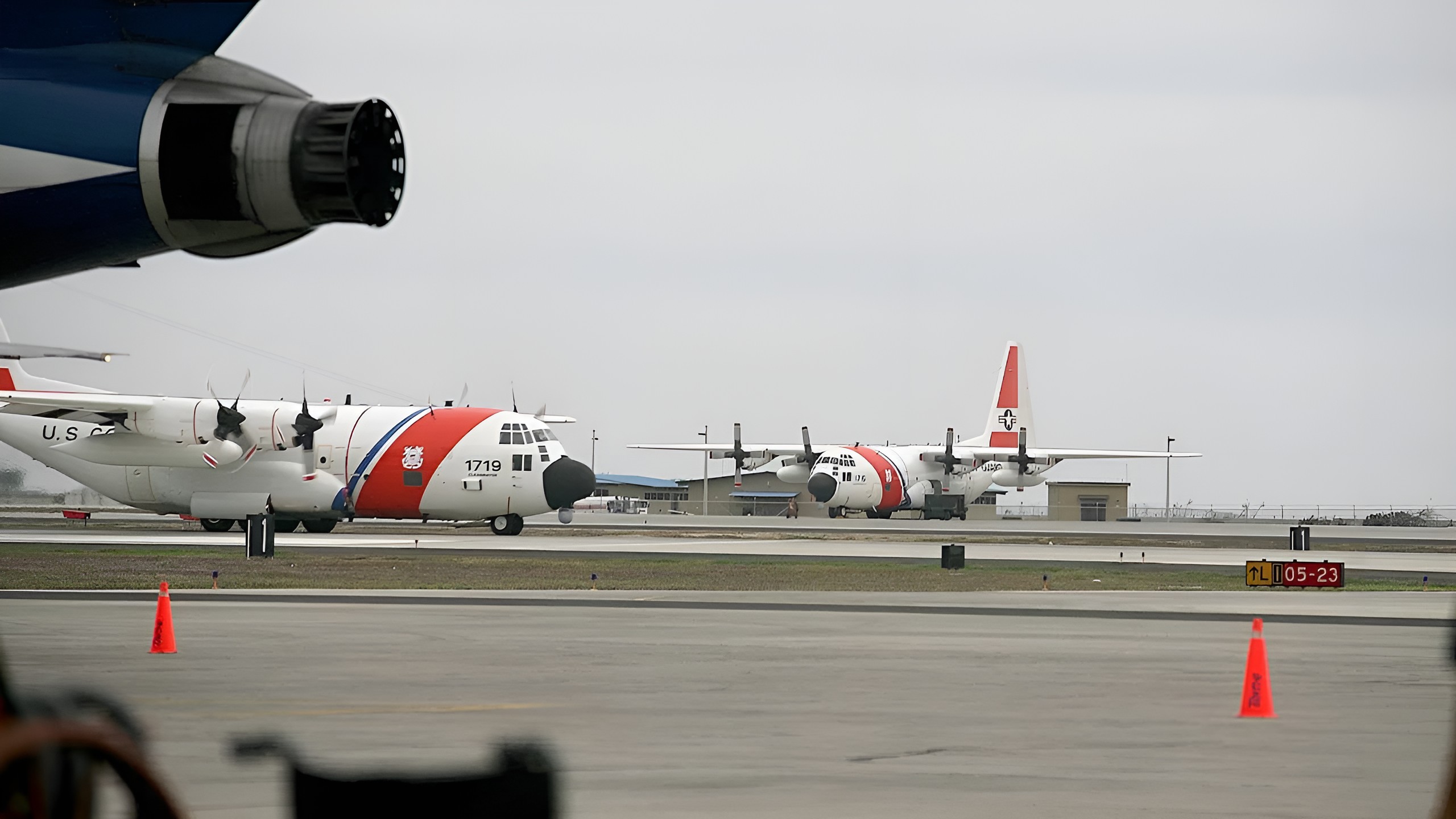
The aircraft identified at Taura included C-130 Hercules and C-17 Globemaster transports, V-22 Osprey tiltrotor aircraft and Black Hawk helicopters. That mix matters because it reflects more than occasional passenger movement. Heavy transports can bring personnel, palletized cargo and large equipment, while helicopters and tiltrotors support shorter-range movement from the same aviation complex.
Taura is particularly well suited to that role. It is Ecuador’s only air base reserved exclusively for military use, and its runway exceeds 3,000 meters, making it longer than the runway at Guayaquil’s international airport. The US Air Force says the C-17 can operate from runways as short as 1,064 meters, although actual runway needs vary with aircraft weight, weather and field conditions. Taura therefore offers ample published runway length for the heavy transport observed there.
Runway length, however, only determines whether an aircraft can arrive and depart under suitable conditions. Sustained operations also require parking areas, fuel, ground handling, maintenance space, communications and facilities for crews and support personnel.
Satellite imagery showed cleared vegetation, new operational areas and dozens of structures consistent with rapidly deployable military tents. A structure measuring roughly 40 by 20 meters resembled a retractable aircraft-maintenance hangar. Construction traffic was also visible at the guarded installation. The precise functions of those structures have not been publicly identified, but together they increase the base’s ability to receive, service and support aircraft beyond a single visit.
Deployable buildings occupy an important middle ground. They can be installed faster than permanent facilities and removed if a mission ends, supporting Noboa’s description of temporary activity. Yet maintenance cover, personnel accommodation and recurring heavy-airlift access can also sustain a rotation for an extended period without conventional permanent construction.
A legal boundary remains undefined
The issue is unusually sensitive because Ecuadorans voted against allowing foreign military bases less than a year before the activity was documented. Ecuador’s constitution prohibits foreign military bases and foreign facilities for military purposes, making ownership, command, duration and control more consequential than the appearance of the structures alone.
A September 8 letter from then Ecuadoran Air Force commander Mauricio Salazar said the US Air Force would “use and modify infrastructure at the base” and conduct “temporary support flights.” Salazar warned senior commanders that hosting US troops, supporting American aircraft and receiving continuing personnel flights might be illegal or unconstitutional. He was removed as Air Force commander two days later and reassigned to less senior duties.
Noboa’s statement supplies the government’s position on the base’s identity and the stated duration of US activity. He also described specific missions as including drone flights used to gather intelligence. He did not publicly define a withdrawal date, personnel ceiling, infrastructure limit or the legal instrument authorizing the arrangement.
Previously announced aviation cooperation adds to the need for those details. Ecuador’s defense minister said the United States would deploy three Black Hawk helicopters, while Noboa said Ecuador would operate two MQ-9 Reaper remotely piloted aircraft. Those programs can fit within bilateral support while remaining under Ecuadoran control, but public statements have not established who operates each part of Taura’s new ground infrastructure.
Manta shows what a defined arrangement looks like
Ecuador has hosted a more clearly structured US-supported counterdrug aviation operation before. Under a 1999 agreement, American forces operated from Manta until 2009. The arrangement permitted up to 500 US personnel, although fewer than 200 were present in 2007, according to a contemporaneous US Air Force account. It included aircraft parking, accommodation, offices and shared support functions with Ecuador’s Air Force.
No equivalent public description has emerged for Taura. Noboa’s denial means the Ecuadoran government does not classify the current activity as a US base. The recurring flights and added support infrastructure nevertheless show that Taura can handle a broader and more durable aviation mission than before. The remaining test is whether Ecuador discloses operating limits that make “temporary” a defined status rather than an open-ended description.
| More aerospace and engineering stories, right in your MSN feed. Follow AMI on MSN |
By David Whitaker — Associate editor for AMI’s aerospace and drone systems desk, translating flight systems, aircraft programs, spaceflight, and UAV developments into accessible technical stories.