Tesla Model Y Scores 8.2, but Recall and Usability Compromises Remain
The refreshed 2026 Tesla Model Y earned strong marks for its smoother ride and quieter cabin, but a newly listed suspension recall adds a safety-related qualification to that improvement. According to the recall information listed by Edmunds, 19 vehicles are affected because one or more front-suspension lateral-link fasteners may not have been tightened correctly. A link could loosen or separate from the subframe, shifting wheel alignment and potentially causing a loss of control.

Tesla’s prescribed remedy is to tighten or replace the fasteners, check wheel alignment and replace any related damaged components at no charge. The recall applies to a small, defined population rather than every refreshed Model Y, but owners can check a vehicle identification number through the federal recall database to determine whether a particular vehicle requires service. The issue is separate from crash-test performance and does not invalidate the comfort gains observed during the independent road test.
A better ride produces an 8.2 rating
Those gains were substantial enough for Edmunds automotive expert Jonathan Elfalan to award the 2026 Model Y an overall score of 8.2 out of 10. That tied it with the 2027 Rivian R2 for second among 16 small electric SUVs in the cited ranking, one-tenth behind the Hyundai Ioniq 5.
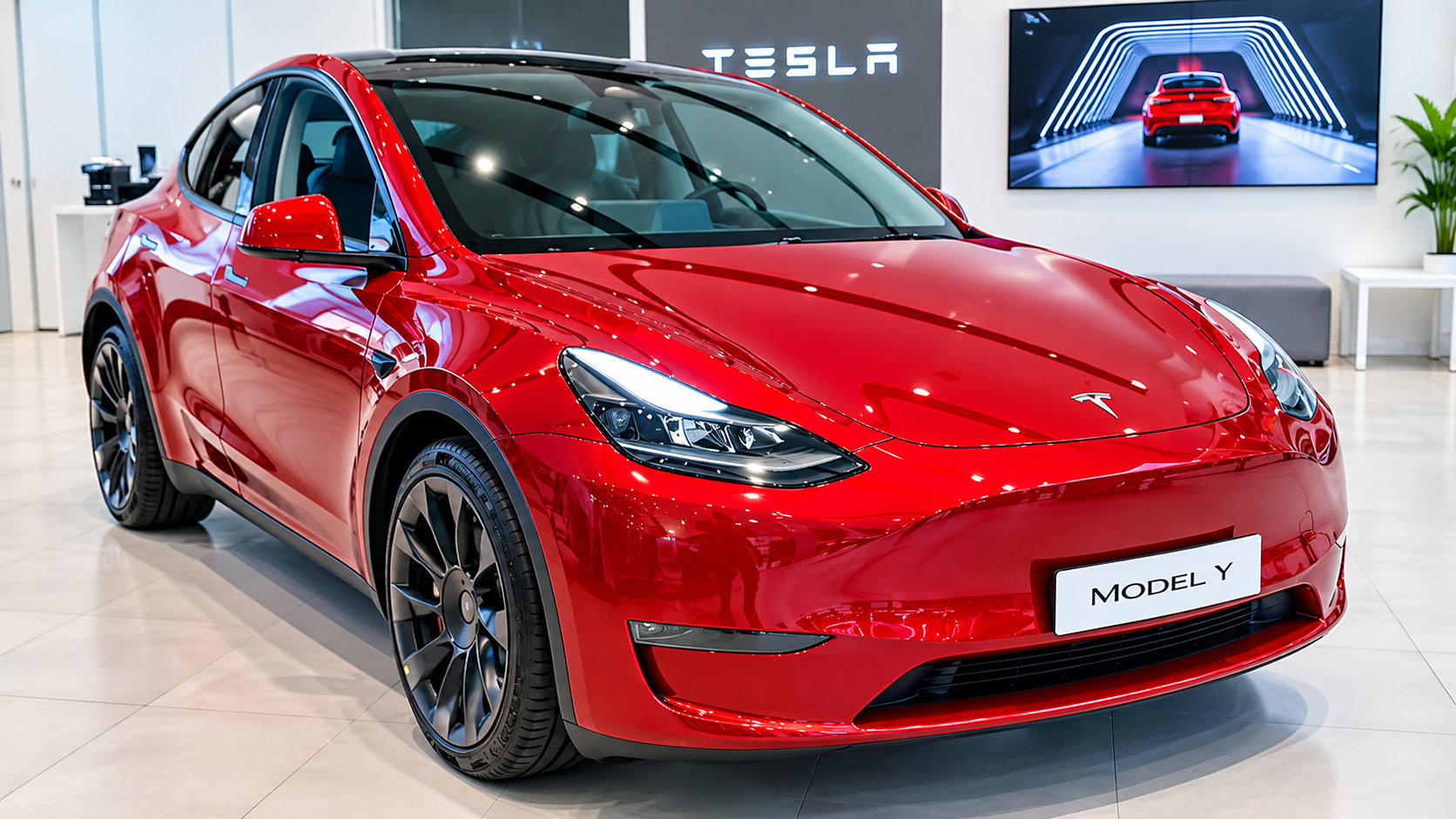
The Model Y starts at $41,380, while the fully loaded Long Range All-Wheel Drive Launch Series tested by Edmunds cost just over $60,000. The refresh combines revised front and rear styling with a more comfortable suspension, a quieter cabin and a touchscreen for rear passengers. Edmunds scored the vehicle 8.0 for comfort and 8.5 for driving experience, indicating that the refinement work did not erase its performance advantage.
The tested all-wheel-drive vehicle accelerated from zero to 60 mph in 4.2 seconds. More significantly for routine electric-vehicle use, its measured range aligned exactly with its official figure: the Model Y traveled 327 miles in the Edmunds range test, matching its 327-mile EPA estimate. Edmunds recorded energy consumption of 26.8 kilowatt-hours per 100 miles.
Charging results also provided a practical counterpoint to peak-rate specifications. The Model Y supports charging at up to 250 kilowatts, and Tesla estimates that this all-wheel-drive configuration can recover 169 miles in 15 minutes under optimal conditions. In Edmunds’ test, the vehicle added 100 miles in just under 15 minutes on average. The measured result is useful for trip planning because charging speed changes with battery state, temperature and charger conditions.
Touchscreen dependence remains a human-factors issue
The refresh did not fundamentally alter the control strategy. Most functions still depend on the central touchscreen, while Apple CarPlay and Android Auto remain unavailable. A small rear window also limits direct rearward visibility, although camera-based assistance is provided. Edmunds gave the in-cabin technology an appreciably lower score of 7.6.
This layout is more than an aesthetic preference. Euro NCAP’s 2026 assessment protocols reward direct physical inputs for essential functions because well-positioned buttons and stalks can reduce the need to look away from the road. Its specified functions include indicators, windshield wipers and washers, hazard lights, the horn and the emergency-call control. The organization’s approach reflects a broader human-factors principle: a control that can be found by touch generally demands less visual attention than one embedded in a screen menu.
Cargo space does not translate into a full family third row
The Model Y performs much better as a cargo carrier. Its 9.4 storage score reflects 33.1 cubic feet of total space when the front trunk and compartment beneath the rear load floor are included. Folding the rear seats raises capacity to as much as 76 cubic feet. With a Tesla-approved hitch, maximum towing capacity is 3,500 pounds.
The optional third row is the packaging exception. Edmunds found it cramped, difficult to enter and appropriate mainly for children or occasional use. It also lacks LATCH anchors for compatible child restraints. Limited air-conditioning airflow and limited ultraviolet protection beneath the rear glass allow the area to become hot quickly, reducing its usefulness on warm family trips.
The refreshed Model Y therefore presents two distinct engineering outcomes. Its suspension and cabin work have corrected prominent refinement weaknesses while preserving measured range, acceleration and cargo capacity. The recalled fasteners require attention on the 19 affected vehicles, while the touchscreen interface and marginal third row remain design-wide compromises that routine service cannot correct.
| More aerospace and engineering stories, right in your MSN feed. Follow AMI on MSN |
By Thomas Caldwell — AMI’s senior editor for mechanical and mobility engineering, covering vehicle electronics, systems integration, electrification, chassis systems, propulsion, and safety policy.