Senate Panel Recommends $77 Million for Unexplained B94 Nuclear Bomb
A Senate committee has recommended $77.108 million for fiscal 2027 for a previously unseen U.S. nuclear-bomb designation called B94. The line appears in the Senate Appropriations Committee’s Energy and Water Development explanatory statement, but the 179-page document provides no narrative explaining the proposed weapon’s design, mission or program origin.
The entry is narrow but consequential. On page 143, B94 appears under the National Nuclear Security Administration’s Stockpile Modernization budget, with a blank fiscal 2026 column and $77.108 million recommended for 2027. The designation appears nowhere else in the statement, leaving Congress to consider a substantial new line without a public description of what the money would purchase.
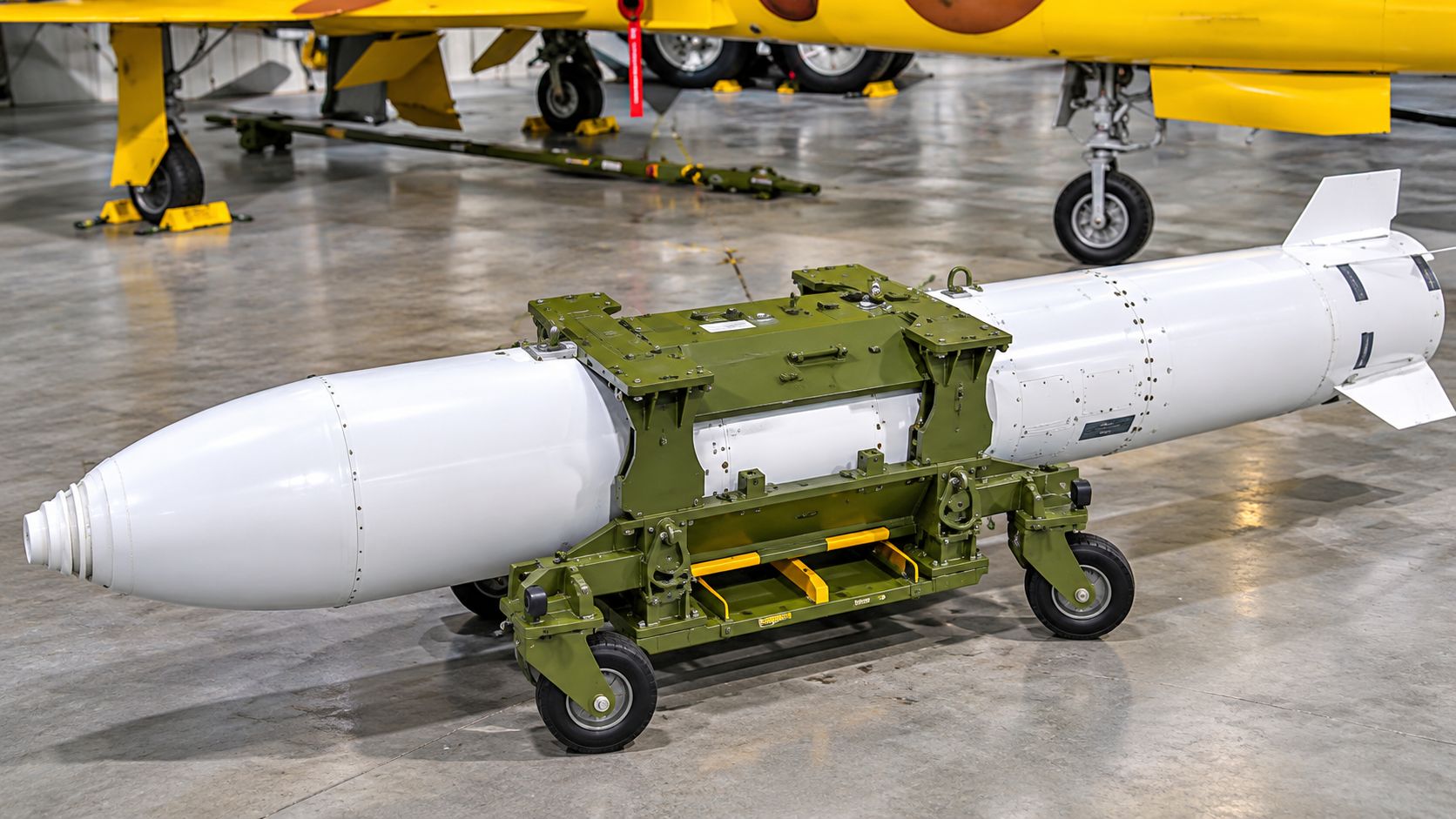
What can be established begins with the name. The Defense Department’s Nuclear Matters Handbook explains that U.S. stockpile weapons receive either a “B” designation for a bomb or a “W” designation for a warhead. In practice, the B prefix identifies a weapon delivered as a bomb rather than a warhead integrated with a missile or another delivery vehicle.
The number is also unusual. Modifications normally retain the parent weapon’s number and add a suffix, as demonstrated by B61 variants including the B61-11, B61-12 and B61-13. A clean B94 designation therefore signals a separate weapon identity rather than another publicly identified B61 modification. The last entirely new U.S. bomb designation identified in the public record was B90, a nuclear depth and strike bomb canceled in September 1991.
A budget line, not an engineering specification
The placement of B94 provides limited program context. It sits immediately below B61-13 and above a separate “Future Programs” line recommended to receive $122.892 million. The same modernization block includes W80-4, W87-1 and W93. That location places B94 within stockpile modernization, but it does not establish that the weapon shares a design, mission or delivery platform with any neighboring program.
Nor does the $77.108 million represent a disclosed total program cost. NNSA’s fiscal 2027 budget justification requests $27.441 billion for Weapons Activities overall, including $6.458 billion for Stockpile Management. Against that scale, the B94 recommendation could fund an early portion of a much larger effort, but the public documents do not identify a development phase, schedule, lifecycle estimate or future-year funding profile.
This distinction affects meaningful cost oversight. Without a stated milestone, the public cannot tell whether the proposed money is intended for concept assessment, design engineering, component development, production preparation or another activity. Each stage carries different requirements for testing, certification, manufacturing infrastructure and integration with the Defense Department’s delivery systems.
The institutional division of responsibility makes those missing details important. The Defense Department defines military requirements and develops delivery platforms, while NNSA develops, produces, certifies and maintains nuclear weapons. A new bomb program therefore requires more than a standalone weapon design: engineering interfaces, safety requirements, quality assurance, certification work and production resources must align across both organizations. The B94 line discloses none of those boundaries.
What remains unconfirmed
No cited NNSA or Energy Department document identifies B94’s intended aircraft, yield, physical configuration or mission. Public speculation has connected the designation with the Nuclear Deterrent System Air delivered program and a possible role involving hardened or deeply buried targets, but no public NNSA document connects that program name to B94. The B94 mission therefore remains undisclosed, and the budget entry cannot support conclusions about its intended target set or technical characteristics.
The absence of detail does not necessarily mean the underlying engineering work lacks documentation. Nuclear-weapon programs contain classified and sensitive design, certification and production information. The accountability issue is narrower: the public-facing statement requests a specific amount under a new weapon designation without offering even the broad program description available for several other modernization efforts.
The recommendation also is not approved spending. The fiscal 2027 measure must pass the Senate, be reconciled with House legislation and receive a presidential signature before becoming law. During that process, lawmakers can retain, alter or remove the B94 line and may seek additional information through classified or public oversight.
For now, the designation reveals two firm facts: B94 is presented as an aircraft-delivered nuclear bomb within stockpile modernization, and a Senate committee wants to allocate $77.108 million to it. Nearly every engineering fact needed to judge its scope including its purpose, development status, aircraft interface and projected cost remains outside the public budget statement.
| More aerospace and engineering stories, right in your MSN feed. Follow AMI on MSN |
By Thomas Caldwell — AMI’s senior editor for mechanical and mobility engineering, covering vehicle electronics, systems integration, electrification, chassis systems, propulsion, and safety policy.