Navy Combatant Craft Medium Carries 19 Operators at Nearly 60 MPH
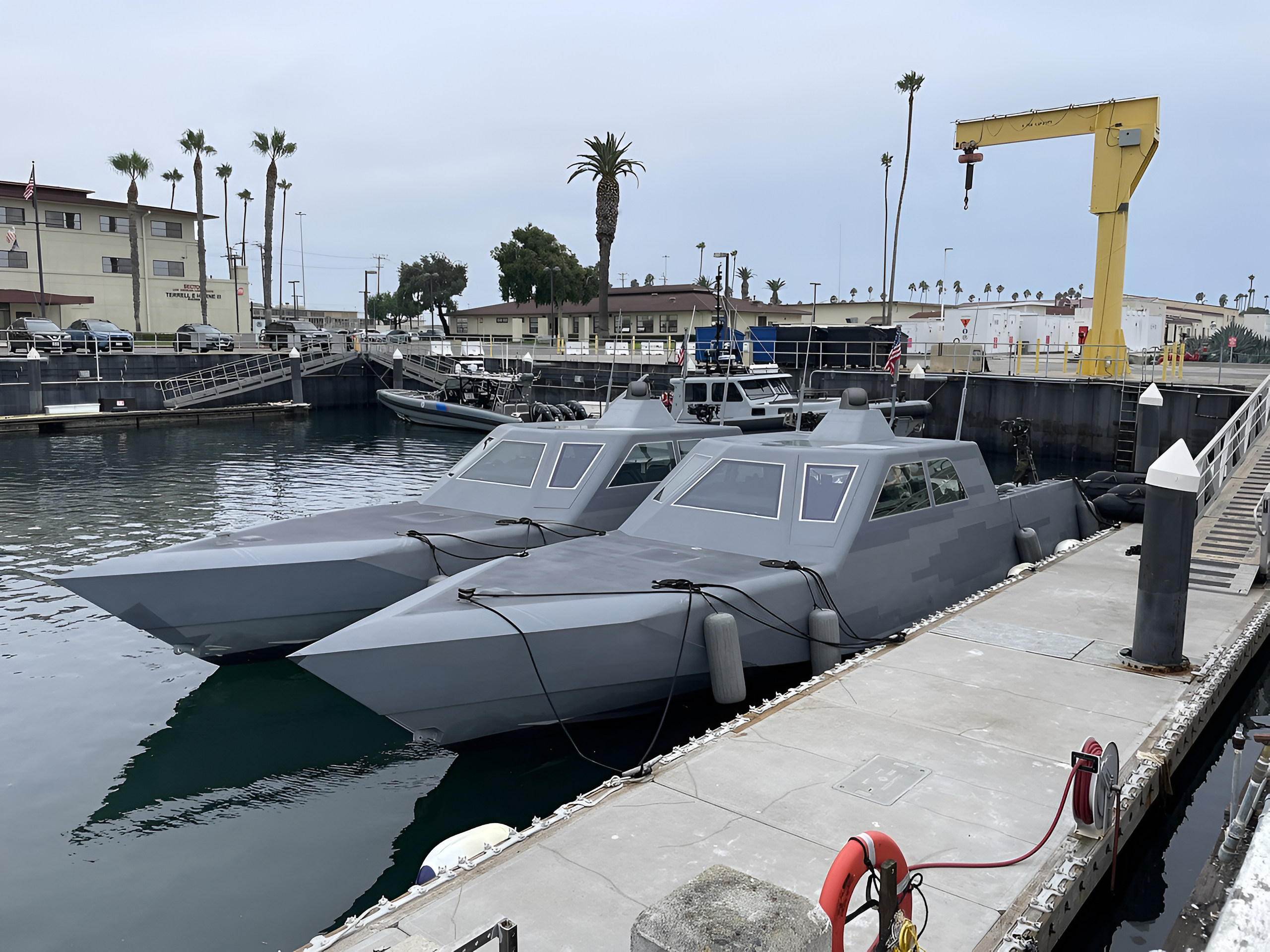
An open inflatable boat can be delivered by parachute, but its passengers remain exposed to spray, cold and repeated impacts during a long, fast trip. The U.S. Navy’s Combatant Craft Medium makes the opposite trade: it cannot be parachuted from a cargo aircraft, but it can carry as many as 19 operators in protected accommodation at speeds exceeding 50 knots, or roughly 60 mph.

In service with Navy special boat teams since 2015, the low-observable craft is built around the problem of delivering people after hours on the water without leaving them as exposed as they would be in a smaller open boat. A four-person Special Warfare Combatant-Craft Crewmen team operates the vessel, while the passenger compartment uses shock-mitigating seats to reduce the punishment associated with crossing waves at high speed.
Speed is only part of the engineering problem
The Combatant Craft Medium uses an aluminum hull with a double-step design. Hull steps introduce breaks in the running surface that help reduce the wetted area as speed rises, allowing the boat to skim across the surface rather than push as much water aside. That supports the combination of speed and efficiency required for longer transits.
The boat cruises at about 40 knots, approximately 46 mph, and can sprint beyond 50 knots. Its cited range is about 400 nautical miles, although the original requirement sought as much as 600 nautical miles. Those figures place it in a different operating category from a small craft optimized primarily for compact transport or shallow waterways.
High speed on water also creates a human-factors problem. A rigid hull can repeatedly leave and strike the surface, transmitting sharp vertical loads through the structure and seats. Earlier research into Naval Special Warfare high-speed boats documented frequent, high-magnitude impacts and found that rougher water and greater speed generally increased the loads experienced by crews.
Shock-mitigating seats cannot remove the underlying hull impacts, but they provide another layer between the structure and the people aboard. The semi-enclosed cabin also limits exposure to weather and spray. Together, the hull, seating and protected working spaces are intended to preserve more of the passengers’ physical readiness over a long transit rather than treating maximum speed as the only performance measure.
The inflatable boat keeps a major mobility advantage
The Navy’s approximately 36-foot, 11-meter rigid inflatable boat is smaller and open, but it can be dropped from a C-17 cargo aircraft using a parachute system. The Combatant Craft Medium was not designed for that type of aerial delivery. It can be transported by truck and military cargo aircraft, but deployment requires the aircraft to land and unload it.
That distinction shows what the larger craft purchases with its greater size. The Combatant Craft Medium provides a cabin, shock-reducing seating, more protection from the elements and long-range high-speed performance. The inflatable boat gives up much of that protection to gain a delivery method that can place a compact craft where unloading from a runway is not the plan.
A third design, the roughly 33-foot Special Operations Craft Riverine, makes another set of compromises. It uses water jets for shallow waterways, reaches about 40 knots and can fit inside a C-130 Hercules or travel beneath a Chinook helicopter. Its compact dimensions and shallow-water propulsion distinguish it from the medium craft’s emphasis on longer maritime transits.
A larger successor is being developed
The Navy’s current craft is about 60 feet long, and 31 were built. U.S. Special Operations Command awarded ReconCraft an agreement in August 2025 to produce an engineering development model of a successor. The planned Combatant Craft Medium Mark 2 is described as approximately 69 feet long, with more room, electrical power and capacity to accept future systems.
The existing boats are not scheduled to disappear as soon as the new design arrives. Special Operations Command has said individual Mark 1 craft will be evaluated according to their condition, operational demand and available resources once Mark 2 production begins. That makes the successor a fleet transition rather than an immediate one-for-one retirement.
The enduring compromise remains physical: more cabin space, range and protection require a larger structure, more fuel and a heavier transport package. The Combatant Craft Medium can move 19 operators at nearly highway speed across open water, but the smaller inflatable boat can go somewhere the larger craft cannot out the back of a cargo aircraft under a parachute.
| More aerospace and engineering stories, right in your MSN feed. Follow AMI on MSN |
By David Whitaker — Associate editor for AMI’s aerospace and drone systems desk, translating flight systems, aircraft programs, spaceflight, and UAV developments into accessible technical stories.