NOAA Forecast Put Northern Lights Within Reach of 12 States
A burst of plasma and magnetic fields left the Sun on Nov. 14, setting up a possible encounter with Earth three days later. The resulting space-weather forecast put the northern lights within potential viewing range of dark locations across 12 states overnight Nov. 17 into Nov. 18, 2026.

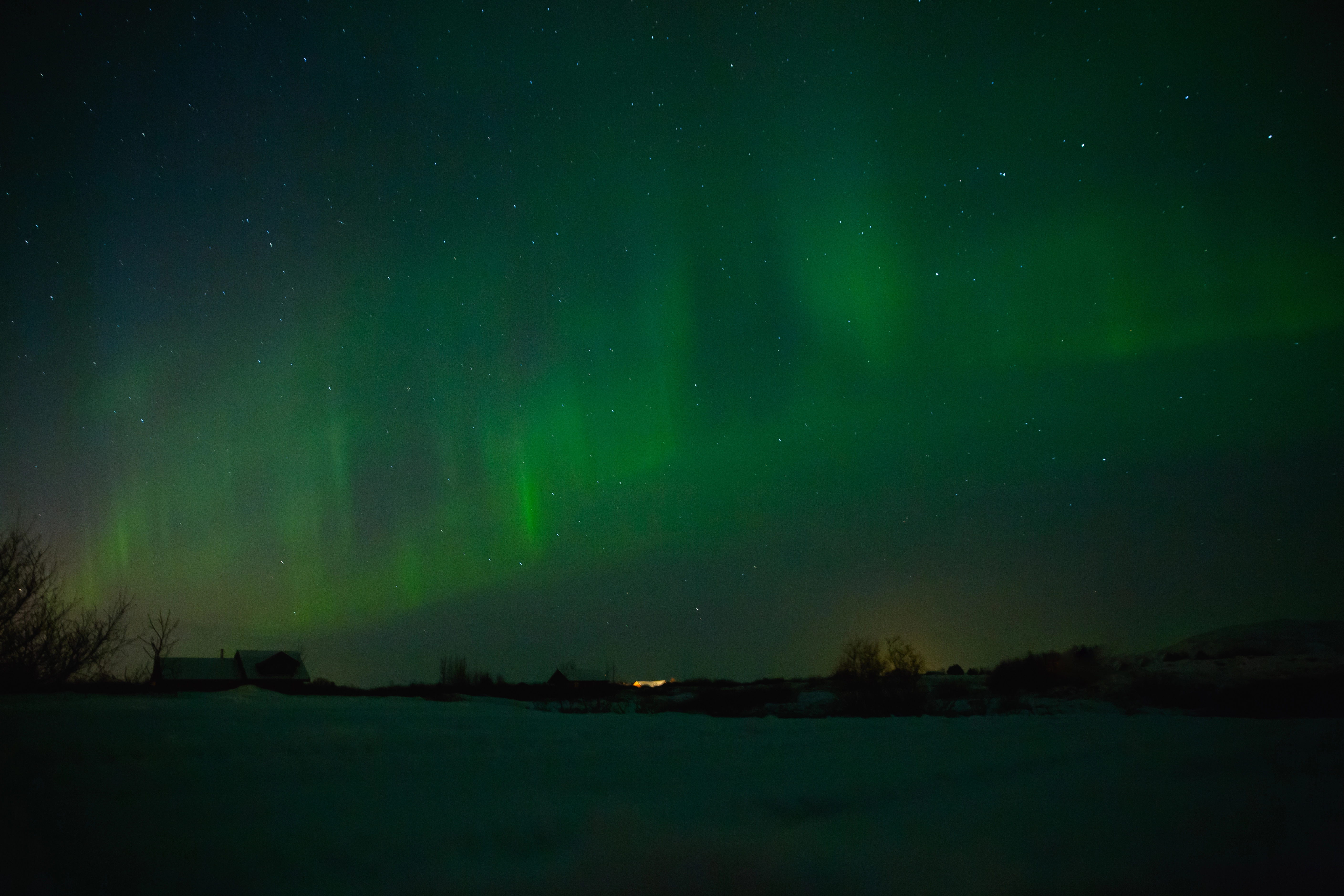
NOAA’s Space Weather Prediction Center forecast that geomagnetic activity could approach Kp 5, the threshold associated with a minor G1 geomagnetic storm. If that activity developed as expected, the aurora could extend beyond its more familiar high-latitude territory. Visibility was never guaranteed: The storm’s timing and strength, cloud cover, moonlight and local light pollution all had to align.
Which states had the best viewing prospects
The forecast favored Alaska and 11 northern states in the contiguous United States: Washington, Idaho, Montana, North Dakota, South Dakota, Minnesota, Wisconsin, Michigan, Maine, Vermont and New Hampshire.
Within that footprint, location mattered. The strongest prospects were away from urban lighting, with a clear and unobstructed view toward the northern horizon. A viewer near the southern edge of the forecast area could expect a more limited display than someone farther north, potentially seeing a low band or pale glow rather than lights filling the sky.
The mechanism behind the opportunity was a coronal mass ejection, or CME, on Nov. 14. A CME is a large expulsion of plasma and magnetic fields from the Sun’s atmosphere. When material and magnetic energy from an eruption interact with Earth’s magnetic environment, they can drive geomagnetic activity and produce auroral light in the upper atmosphere.
The Kp forecast described the expected overall level of geomagnetic disturbance, but it could not settle the view from any specific backyard. Cloud cover can completely block an active aurora, while artificial lighting can wash out a weak display. Even under clear skies, the lights may appear as a faint, relatively stationary band instead of the bright, rapidly moving curtains commonly captured in long-exposure photographs.
Why the hours after midnight offered a better chance
The moon was expected to be near its first-quarter phase and remain bright until around midnight. That made the darker hours after midnight the more favorable portion of the viewing window, provided geomagnetic activity persisted and local skies stayed clear.
Viewers also needed time for their eyes to adjust. The National Park Service’s aurora guidance recommends spending at least 30 minutes outside and avoiding bright flashlights or phone screens. Dark adaptation can make a weak auroral band easier to distinguish from clouds or ordinary sky glow.
NOAA’s 30-minute aurora forecast and space-weather applications offered a way to follow changing conditions close to observation time. That short update cycle was useful because an overnight regional forecast could only identify an opportunity; it could not ensure that the aurora would intensify over a particular place at a particular hour.
A phone camera could detect more than the eye
A smartphone could help confirm a marginal display. Night Mode, Pro Mode or another long-exposure setting allows the camera sensor to collect light for longer than a normal snapshot. Keeping the phone steady rather than attempting a handheld exposure reduces blur and gives the sensor a better chance of recording faint structure and color.
That camera image might look brighter and greener than the scene appeared in person. Human vision is less sensitive to color at very low light levels, while a long exposure accumulates photons over several seconds. A weak aurora can therefore look pale or nearly white to the eye but show a clearer green tint in a photograph.
The 12-state footprint represented possibility rather than coverage. The solar eruption created the opening, but the display still depended on a G1 storm developing near the predicted level, the activity lasting into sufficiently dark hours and local weather leaving the northern sky exposed.
| More aerospace and engineering stories, right in your MSN feed. Follow AMI on MSN |
By David Whitaker — Associate editor for AMI’s aerospace and drone systems desk, translating flight systems, aircraft programs, spaceflight, and UAV developments into accessible technical stories.