Air Force Seals Last Three Super Tucanos as Global Orders Continue
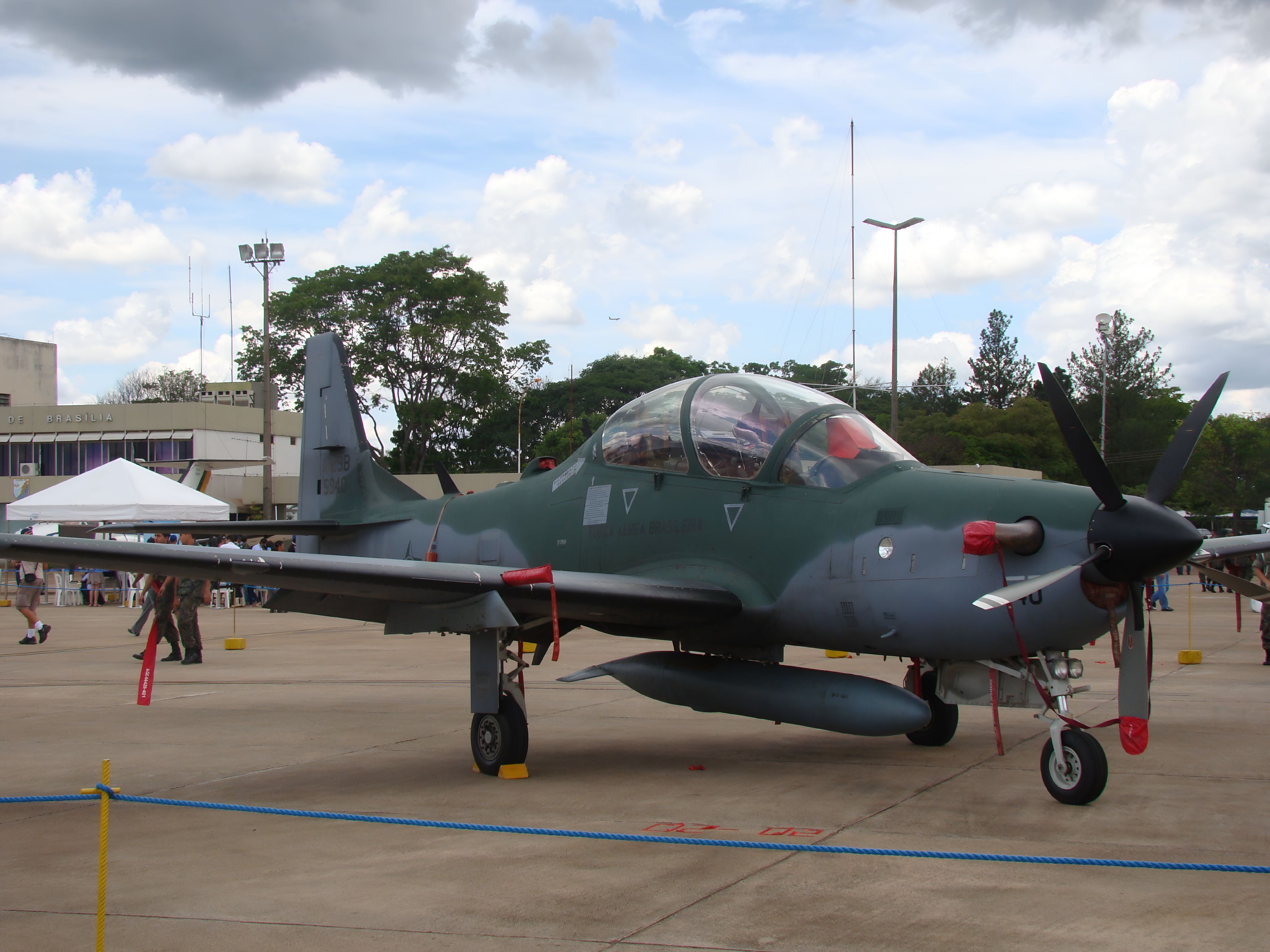
The A-29 Super Tucano still has buyers, but no longer has a flying job in the U.S. Air Force. Embraer reported 25 firm A-29 orders in its third-quarter 2026 backlog, even as the Air Force’s final three examples sit fully sealed at Edwards Air Force Base in California. The service has divested the aircraft, and they are not expected to fly again for the Air Force.

That contrast narrows the reason for the American fleet’s retirement. It is not the end of the Super Tucano as an international program; it is the end of a small U.S. fleet that lost the mission behind its purchase and could not secure a lasting replacement assignment. The Air Force had bought the aircraft around its effort to equip and support the former Afghan Air Force, then tried to repurpose them for test-pilot training and research.
A second mission lasted about two years
The three turboprops reached Edwards in 2024 after the Air Force had already determined that they no longer fit its operational missions. Their transfer to the Air Force Test Pilot School appeared to provide an answer: use a relatively small, robust aircraft for flight-test instruction instead of disposing of it.
The proposed work went well beyond basic pilot training. The school planned to use the A-29 for stall and spin instruction, sensor and weapons-system evaluation, and research involving externally carried equipment. Air Force officials also expected it to reduce some flying-hour and maintenance demand on the T-38 and F-16 fleets used at Edwards.
Making that concept operational required a substantial setup effort. Instructors prepared to fly an aircraft for which the Air Force had no formal training course, and the three A-29s underwent six months of maintenance with Sierra Nevada Corporation. In July 2025, the school said it was integrating the aircraft into its curriculum and expected its first student class to fly them.
The Test Pilot School ultimately concluded that the A-29 did not meet its intended use. The Air Force is now considering other options for a sustainable spin-training and mission-systems aircraft, closing the Super Tucano’s replacement role roughly two years after the trio arrived at Edwards.
Sealed aircraft still require support
Retirement has removed the aircraft from flying status, but not every ownership obligation. An October 29 notice said the Air Force intended to award SNC a sole-source contract for on-call storage support. The planned work covers safe storage, environmental compliance and ground movement within Edwards, including responses to potential oil leaks, worn or flat tires and servicing needs involving fuel or hydraulic components.
Sealing is a preservation process rather than abandonment. Military storage treatments can cover openings to keep animals out, limit corrosion and reduce heat inside an aircraft. Those measures can be reversed when an aircraft is selected for regeneration, although the Air Force does not expect these three to return to its flight operations. Their final disposition has not been announced.
A small fleet tied to a much larger purchase
The three-aircraft U.S. fleet was a minor branch of the Afghan aviation program. The U.S. government procured 26 A-29s for Afghanistan, although not all reached the Afghan Air Force before the former government collapsed in 2021. Moody Air Force Base in Georgia became the Afghan training site in 2014, the first Afghan pilots graduated in late 2015, and initial deliveries to Afghanistan followed in 2016.
The purchase also created a significant U.S. industrial role. Embraer developed the Super Tucano in Brazil, then partnered with SNC to establish a second production line in the United States. The aircraft exported through the American program for Afghanistan were built in the United States rather than Brazil.
By 2023, more than 260 Super Tucanos had been delivered worldwide, with Brazil operating 99 the largest national fleet. The type’s commercial life has continued since then: Embraer’s October 2026 backlog report listed 25 firm A-29 orders.
That active order book makes the outcome at Edwards more specific and more striking. A broadly exported aircraft with continuing demand lost the particular U.S. requirement that brought it into the inventory, received a short reprieve as a test-school platform, and now needs contracted care merely to remain safely sealed on the ground.
| More aerospace and engineering stories, right in your MSN feed. Follow AMI on MSN |
By David Whitaker — Associate editor for AMI’s aerospace and drone systems desk, translating flight systems, aircraft programs, spaceflight, and UAV developments into accessible technical stories.