Navy’s $1 Billion Battleship Start Faces Challenge Over $23 Billion Cost
The Navy is seeking $1 billion to begin work on a proposed guided-missile battleship whose first hull could cost as much as $23 billion. The request now faces a congressional challenge centered on whether one exceptionally large warship is a better investment than a broader mix of high-end ships and cheaper, replaceable systems.
The opening request is only a fraction of the commitment under consideration. The Navy has estimated that the first ship would cost more than $17 billion, while one Congressional Budget Office estimate put it at $23 billion and subsequent ships at an average of $18 billion. For comparison, the cited cost of the Ford-class aircraft carrier USS John F. Kennedy is just over $13 billion.
Those figures make the proposed battleship more than another shipbuilding line item. Congress would be authorizing the start of a new class potentially costing more per hull than a new aircraft carrier, while the Navy is already balancing ship construction, maintenance, munitions and other readiness demands.
A much larger answer to an established fleet problem
The Navy’s argument begins with the limits of its existing surface fleet. Acting Navy Secretary Hung Cao has said the Arleigh Burke-class destroyer is overburdened and lacks room for more missile-launching tubes and newer weapons. A larger hull can provide additional space, electrical power, cooling capacity and growth margin attributes that become harder to add after a ship’s basic architecture is fixed.
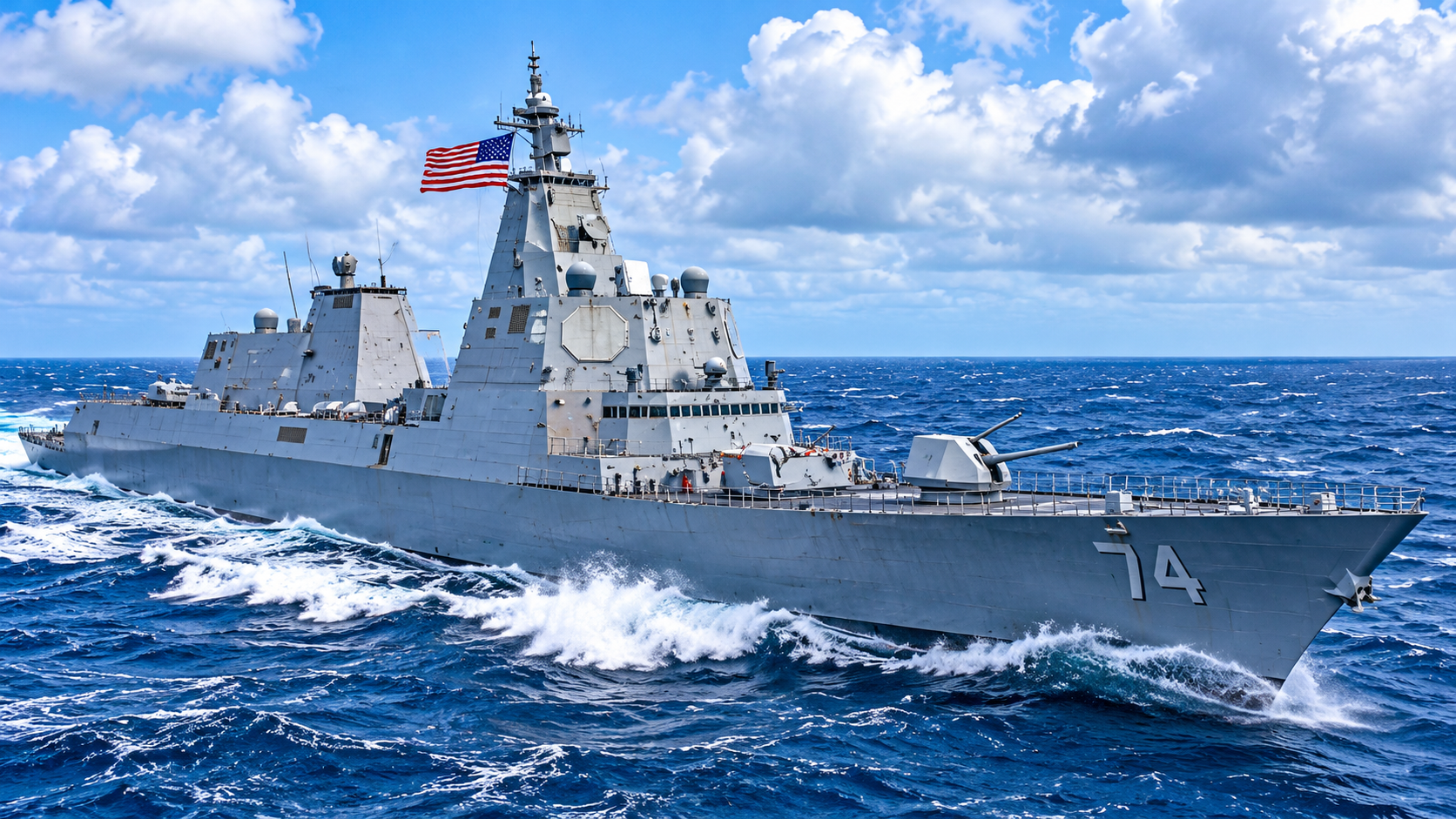
The proposed battleship is more than twice the size of the next-generation destroyer the Navy had been considering. A current Congressional Research Service program brief describes a ship more than 35,000 tons and 840 to 880 feet long, potentially armed with missiles, guns, lasers and other systems. It would be the first battleship procured by the Navy since World War II.
The latest congressional program description identifies the proposed ship as conventionally powered, despite earlier descriptions of the concept as nuclear-powered. That distinction has major implications for design, construction and lifetime support, and it underscores how much of the ship remains unsettled. The program designation itself includes an “X,” indicating that the design has not been fully developed.
Some of the intended equipment also adds development risk. The proposal includes higher-power lasers and an electromagnetic railgun, technologies that would require further maturation. The Navy previously abandoned railgun development, so including it in a new ship does not make the capability available on the proposed construction schedule.
One battleship or several smaller ships
The sharper comparison is not only battleship versus carrier. It is the battleship versus what the same shipbuilding budget could purchase elsewhere. The Congressional Research Service lists a current Arleigh Burke-class destroyer at about $2.7 billion when bought at two per year. Even allowing for major differences in size and capability, a first battleship priced between $17 billion and $23 billion would consume funding comparable to several destroyers.
Rep. Adam Smith has argued for an “appropriate mix” of survivable high-end systems and lower-cost, attritable capabilities instead of a fleet centered on nuclear-powered battleships. That position does not eliminate the Navy’s need for ships with greater power and payload capacity. It challenges whether concentrating those attributes in an unusually expensive hull produces enough fleet-wide value.
Distribution affects more than combat capability. Multiple ships can cover more assignments, enter maintenance at different times and reduce the availability impact when one hull is tied up for repair. A larger ship can consolidate substantial capacity, but its cost also concentrates procurement and maintenance demands.
The industrial base creates another constraint. U.S. shipyards are already taking roughly nine to 10 years on average to build some destroyers and submarines that previously took five to six years. Workforce shortages, supplier limits and maintenance backlogs mean Congress must consider whether a new class would expand total fleet capacity or compete with ships already under construction and repair.
The first billion dollars is the immediate test
The battleship request sits within a Pentagon funding plan totaling $1.5 trillion across three packages. The standard budget request is $1.1 trillion, supplemented by a $350 billion reconciliation package and another $67 billion request. Disagreement over that structure could leave Pentagon spending below $900 billion under a yearlong continuing resolution, which would prevent spending on new projects.
That makes the proposed $1 billion more than preliminary design money. Approval would give institutional momentum to a class envisioned at 15 to 25 ships, while rejection or modification could redirect the Navy toward a smaller combatant or a more distributed fleet. Before committing to a first hull potentially costing $23 billion, Congress must decide whether the battleship’s added space, power and payload justify buying fewer ships elsewhere and whether the shipbuilding base can deliver it without worsening existing delays.
| More aerospace and engineering stories, right in your MSN feed. Follow AMI on MSN |
By David Whitaker — Associate editor for AMI’s aerospace and drone systems desk, translating flight systems, aircraft programs, spaceflight, and UAV developments into accessible technical stories.