Genesis AI Raises $500 Million as Robot Stumbles and Hands Wear Out
Genesis AI announced a $500 million Series A financing round on November 18, but the machinery behind its industrial-automation ambitions remains far from maintenance-free. During a repeated packing demonstration observed by TechCrunch, the robotic system fumbled a box and struggled to separate an adhesive label from its backing. Genesis also disclosed that its dexterous robot hands currently withstand only a few weeks of regular work before requiring replacement.
The contrast captures the central engineering problem in dexterous robotics. Completing a varied handling sequence once can demonstrate useful sensing, control and manipulation. Repeating it reliably through thousands of cycles with predictable speed, limited supervision and acceptable component life is what turns that capability into industrial equipment.
The financing was led by Khosla Ventures, Premji Invest and Eclipse. Genesis plans to use the capital to expand computing infrastructure, increase robot production and hire employees, according to details published by Crunchbase News. The company previously announced a $105 million seed round in July 2025.
In the demonstration, Genesis ran its physical-AI model on two off-the-shelf robotic arms. The system picked up and scanned two small boxes, placed them inside a larger box, folded and taped the outer package, and applied a label. The first run showed that one model could coordinate perception and manipulation across several linked steps. The errors on the repeat run exposed how an apparently minor variation can disrupt the sequence.
Force data connects human work to robot control
Genesis is building its system around a vertically integrated data pipeline rather than relying only on robot teleoperation or simulation. More than 100 workers around the world wear sensor-equipped gloves and headset cameras, allowing the company to record hand movement, visual context and the forces applied during ordinary activities.
Force information is especially important when vision alone cannot reveal whether an object has been gripped firmly enough, whether packaging is beginning to deform or whether an adhesive edge has separated. Genesis equips its robots with similar sensor-enabled gloves and uses hands proportioned like human hands, an arrangement intended to reduce the physical mismatch between human demonstrations and robot execution.
The company supplements those recordings with simulation, generating millions of high-fidelity models of robot experience. Simulation can broaden the range of positions and conditions encountered during training without consuming physical hardware time. It cannot remove the need for real-machine validation, however, because friction, compliance, wear and slight differences between objects emerge at the contact surface.
That is why standardized repetition is more informative than a polished single run. The National Institute of Standards and Technology has developed manipulation benchmarks using task boards, defined scoring methods and comparisons with human completion times. Such testing evaluates grasping, perception and assembly across repeatable tasks, including difficult operations involving flexible parts, wires and belts.
Hand life is an operating-cost constraint
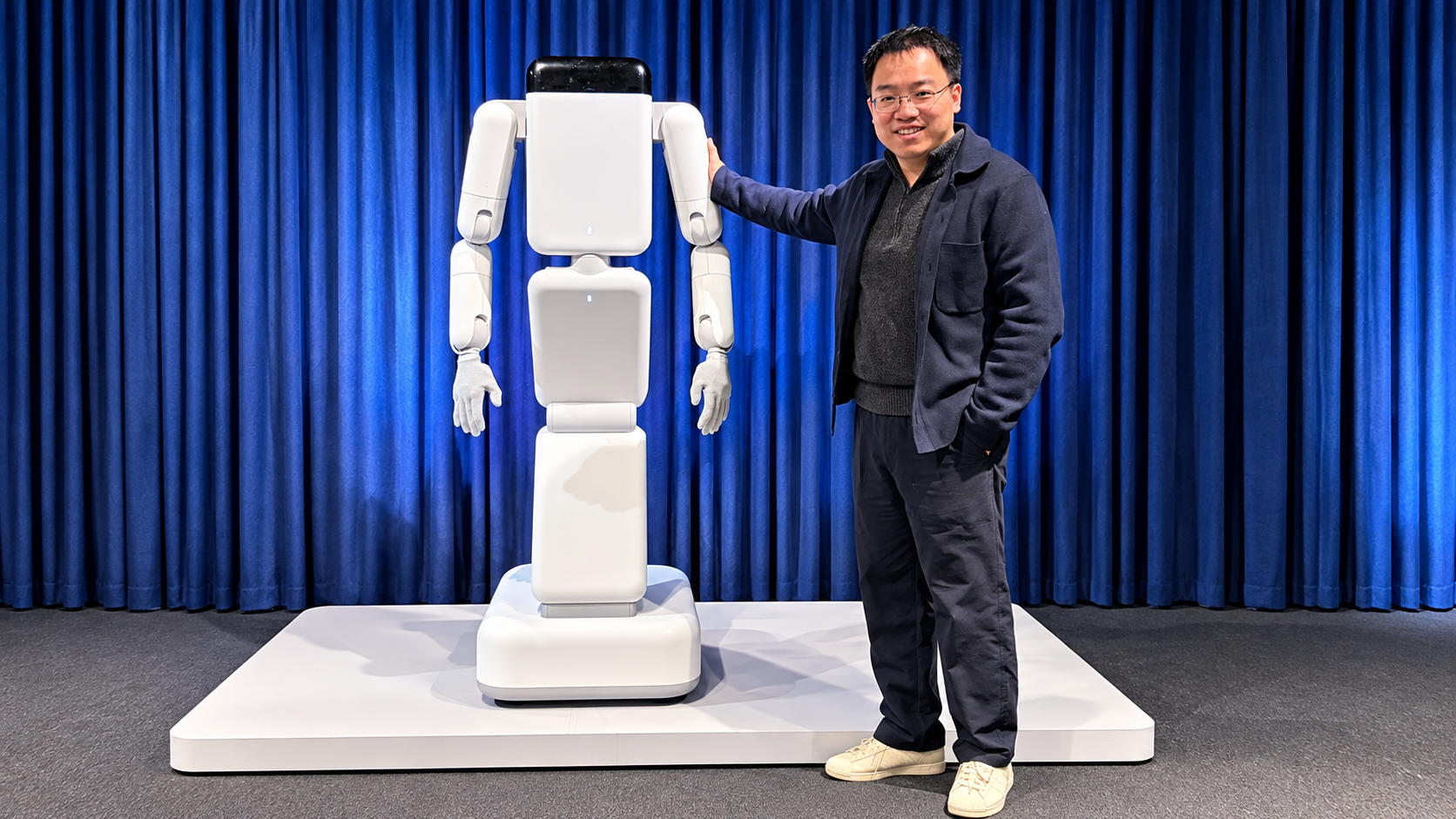
Genesis CEO and co-founder Zhou Xian has said the company has “cracked dexterous manipulation,” but the observed errors and present hardware life place a clear boundary around that claim. A hand that requires replacement after only weeks of regular use creates downtime, spare-parts demand and service costs. Those burdens grow with every deployed robot, even if the control model continues improving.
Dexterous hands concentrate actuators, sensors, joints and transmission components in a small volume. Human-like proportions may make transferred training data more useful, but they also leave limited space for robust mechanisms. Xian identified mechanical design and industrial supply chains as key hardware bottlenecks constraints that financing can address through engineering, tooling and supplier development, but not through model training alone.
Genesis says it has built 30 to 40 examples of Eno, its humanoid robot, and is piloting the platform with a handful of undisclosed customers. It has finalized what it calls the mass-production design and selected a contractor expected to begin work in the United States next year. The company has not disclosed its planned production volume.
Eno itself was not ready for the demonstration observed by TechCrunch, although Genesis said its model performs better on the flagship platform. That leaves the next meaningful test at the system level: the production robot operating repeatedly in customer environments, with measurable intervention rates, cycle times and component life. For now, the $500 million program has substantial resources to pursue that test, while a label edge and a hand lasting only weeks remain practical limits on dependable deployment.
| More aerospace and engineering stories, right in your MSN feed. Follow AMI on MSN |
By Jonathan Barrett — Editor for AMI’s future mobility and autonomous systems section, with two decades covering robotics, e-mobility, drone-vehicle convergence, and transport mechanical systems.