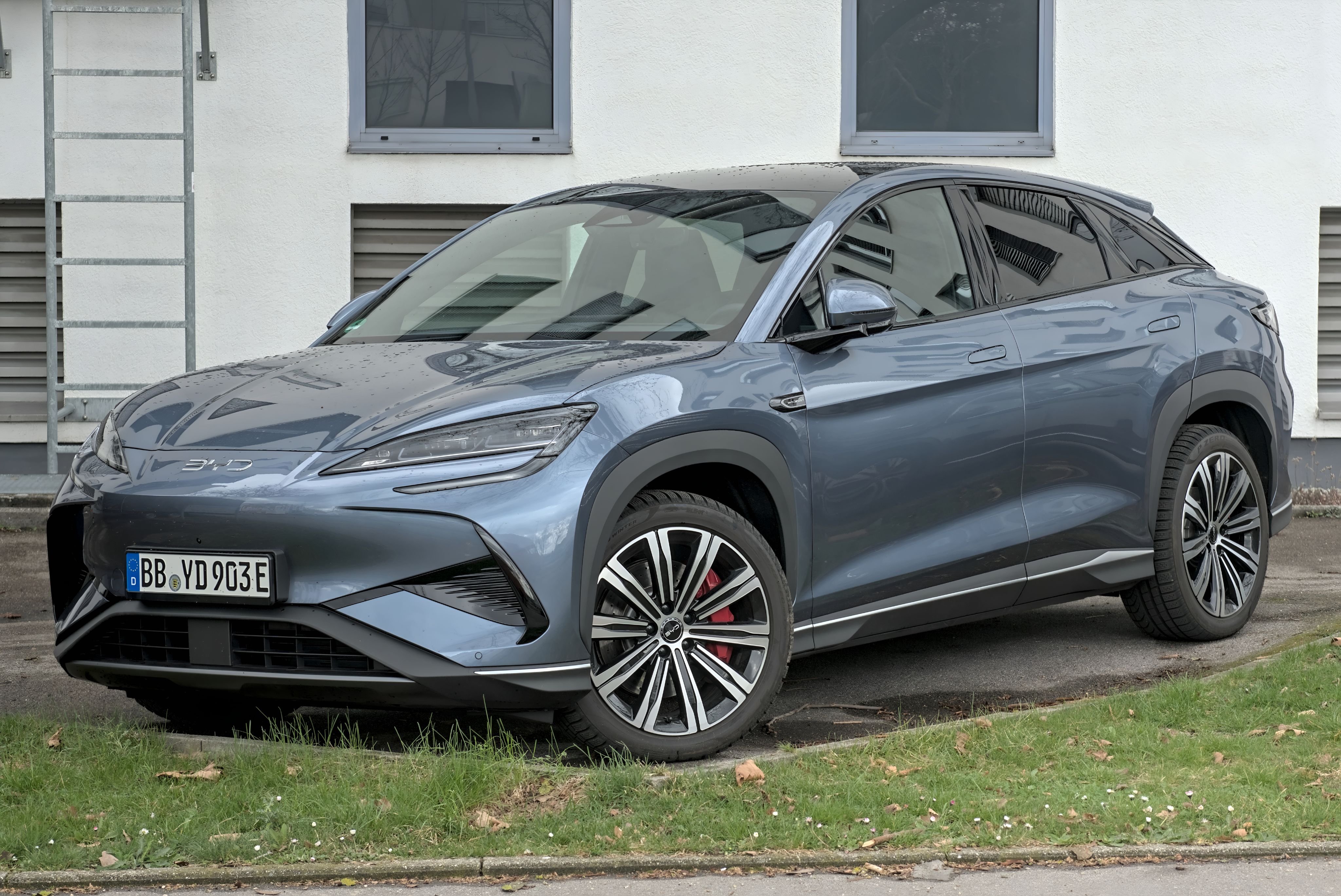
BYD Seal 07 Automatically Dodges Mock Car at 81 MPH in Test
Eighty-one miles per hour was the headline figure in a manufacturer-run demonstration of the BYD Seal 07’s emergency-steering capability. During the staged test in China, the electric sedan automatically changed lanes to avoid a stationary mock car that had been concealed by a lead vehicle.

The maneuver was one of three controlled tests organized by BYD for its second-generation Seal 07. It showed how the God’s Eye B driver-assistance system can combine sensing, computation and steering actuation when braking alone may not be the preferred response. It did not establish how reliably the system would perform across the varied roads, weather, traffic behavior and obstacle positions encountered outside a prepared test.
In the 81 mph run, a BYD Sealion 05 SUV traveled ahead of the Seal 07 and changed lanes before reaching the stationary target. Once the SUV exposed the obstacle, the sedan issued a warning, activated its hazard lights and steered into the adjacent lane. The driver had removed his hands from the wheel before the automatic maneuver.
The speed was higher than mainland China’s usual expressway limit of approximately 75 mph, or 120 km/h. That made the demonstration an unusually demanding presentation of the system’s response time, but the available test record ends shortly after the Seal 07 passes the mock vehicle. Whether it subsequently returned to its original lane, and how smoothly it stabilized after the initial avoidance action, remains unclear.
Two tests added different traffic constraints
BYD also conducted two emergency-steering tests at 56 mph. In one, the Seal 07 traveled between the lead SUV and a following truck. When the SUV moved aside and exposed another stationary target, the sedan changed lanes rather than relying solely on abrupt braking.
That scenario demonstrates the intended value of combining longitudinal and lateral control. Heavy braking can reduce the risk of hitting an obstacle ahead, but it may also expose a vehicle to a rear-end collision when another vehicle is following closely. An available adjacent lane can give the control system another option, provided its sensors have identified sufficient space and the steering maneuver remains within the car’s stability limits.
The third test introduced a different perception problem. At 56 mph, the Seal 07 steered away from a child dummy emerging from behind a parked vehicle. Unlike the stationary targets revealed by a lead SUV, this scenario required the system to respond to an object entering the vehicle’s path from an occluded area.
Sensor fusion feeds one central processor
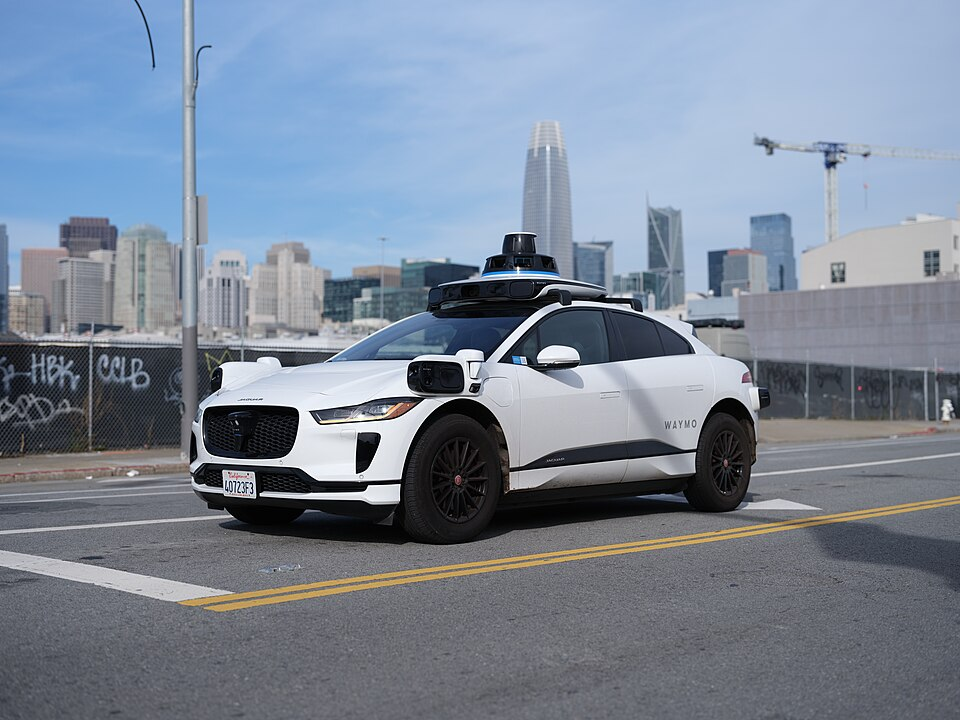
The God’s Eye B configuration uses a roof-mounted lidar sensor, 12 cameras, 12 ultrasonic sensors and five millimeter-wave radars. Their data is processed by a single Nvidia Drive Orin X chip rated at up to 254 trillion operations per second.
Each sensing technology has a different role and operating boundary. Cameras provide detailed visual information, radar measures range and relative motion, and lidar supplies direct spatial measurements. Ultrasonic sensors are generally associated with short-range awareness. Combining these inputs can help a vehicle build a more consistent representation of its surroundings than any one sensor could provide alone.
Processing capacity is only one part of the control chain. An emergency-steering system must detect and classify the obstacle, estimate available space, select between braking and steering, generate a feasible path and command the steering and stability systems quickly enough to execute it. The car must then recover from the maneuver without creating another conflict. BYD’s tests demonstrated the avoidance stage, while providing less information about post-maneuver lane recovery.
God’s Eye B also supports emergency braking, automated parking and supervised Navigate on Autopilot guidance between addresses. Those functions remain driver assistance rather than a claim that the Seal 07 can take over the complete driving task. International rules for sustained driver-control assistance similarly retain driver responsibility and require the person behind the wheel to monitor the road and system performance.
The three successful runs show a potentially valuable use of sensor-fused steering: avoiding a sudden obstacle when stopping distance is limited or hard braking introduces another risk. The next engineering question is repeatability not merely whether one prepared car can complete the maneuver, but whether the system can recognize, avoid and recover consistently across changing road surfaces, visibility, lane markings, traffic gaps and obstacle trajectories.
| More aerospace and engineering stories, right in your MSN feed. Follow AMI on MSN |
By Jonathan Barrett — Editor for AMI’s future mobility and autonomous systems section, with two decades covering robotics, e-mobility, drone-vehicle convergence, and transport mechanical systems.