Tesla Opens Limited $29,990 Cybercab Orders With Mandatory $299 Monthly Fee
Tesla is inviting selected customers to order a Cybercab for personal use at an estimated price of US$29,990, but ownership does not provide unrestricted operation. The steering wheel free vehicle requires a US$299 monthly autonomy subscription and can be used only in supported service areas.

Tesla announced the limited early-access offer on November 13. An example order shows a US$1,000 nonrefundable deposit and an estimated December 2026 delivery in Austin, Texas. The invitation is not a nationwide sales opening, and the delivery estimate does not mean customer deliveries have begun.
The subscription is part of the driving system
At the advertised rate, the required autonomy subscription adds US$3,588 over a full year. That makes the first-year combination of estimated purchase price and subscription US$33,578, before accounting for the deposit separately or for other ownership expenses that were not specified in the invitation.
For a conventional car, a software subscription might unlock additional functions while leaving the driver able to operate the vehicle. Cybercab has no steering wheel or pedals, so its autonomy service is the means of operation rather than an optional enhancement. If the subscription is required to operate the vehicle, the monthly charge effectively becomes part of its usable cost.
The same architecture makes geographic availability more consequential. Cybercab cannot fall back to manual driving when it leaves a supported operating area. Its sensing, control and actuation systems must perform the complete driving task within the locations Tesla supports, while the passenger manages the journey through an app.
Personal ownership therefore differs from the familiar model in which a buyer decides where and when to drive. The purchaser would own the physical vehicle, but practical mobility would remain tied to Tesla’s autonomy service and geographic deployment. The early-access terms do not identify a nationwide rollout date, and Tesla has not announced Canadian availability or pricing.
A purpose-built two-seat vehicle
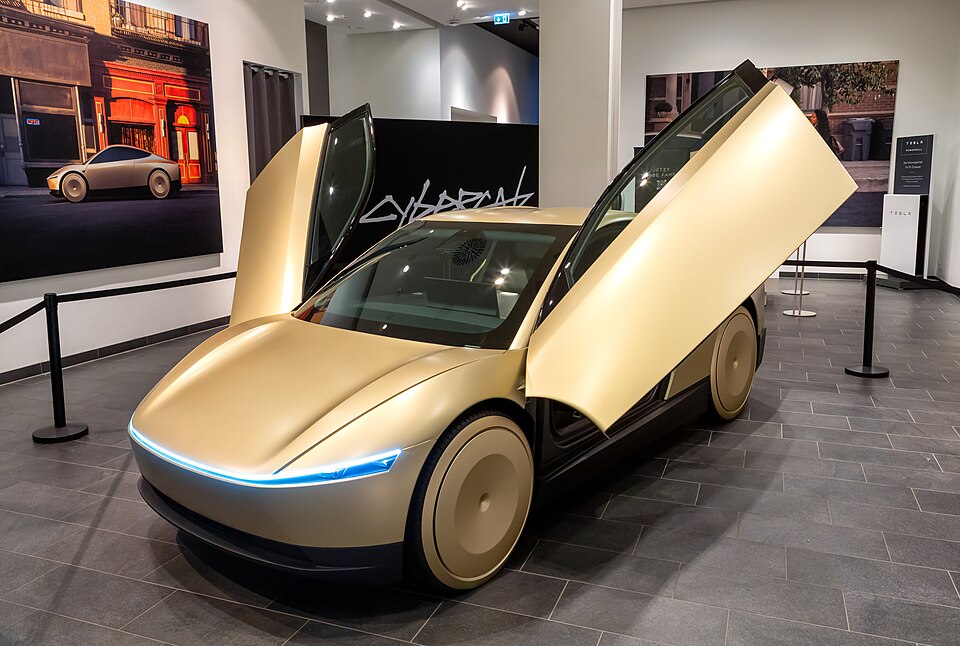
Cybercab’s packaging reflects its dedicated autonomous role. The two-seat cabin includes adjustable seating, wraparound ambient lighting and a 21-inch centre touchscreen. Tesla lists 20.1 cubic feet of storage. Removing conventional driving controls can free cabin space and simplify the passenger interface, but it also eliminates the mechanical fallback available in an ordinary owner-driven Tesla.
That unconventional design also intersects with existing vehicle rules written around equipment such as pedals and steering controls. In September, the National Highway Traffic Safety Administration sent Tesla 21 requests concerning Cybercab’s compliance with federal motor-vehicle safety standards. Tesla responded in October but designated the submission as confidential business information, according to a review of the regulatory exchange. US automakers generally self-certify compliance, with the agency able to examine those certifications afterward.
The questions do not prevent Tesla from presenting early-access terms, but they illustrate why a vehicle without manual controls is more than a conventional car with advanced driver assistance. Its commercial deployment depends on the full chain of sensing, automated decision-making, actuation, remote service support and compliance working as an integrated system.
Early access is deliberately narrow
The invitation advances Cybercab from demonstrations toward individual purchases, although only for selected customers under constrained conditions. Tesla is preparing to create more production room for Cybercab at Gigafactory Texas as Cybertruck output is set to wind down around the middle of 2027, but no broader Cybercab sales timetable was included.
For now, the clearest ownership terms are also the key operating limits: an estimated US$29,990 vehicle, a US$1,000 nonrefundable deposit, a mandatory US$299 monthly autonomy subscription and use confined to supported service areas. With no steering wheel or pedals, those restrictions determine whether the purchased vehicle can provide the trip its owner wants to make.
| More aerospace and engineering stories, right in your MSN feed. Follow AMI on MSN |
By Jonathan Barrett — Editor for AMI’s future mobility and autonomous systems section, with two decades covering robotics, e-mobility, drone-vehicle convergence, and transport mechanical systems.