FAA Restores Flights After Five-Hour Stop, but Thousands Remain Canceled
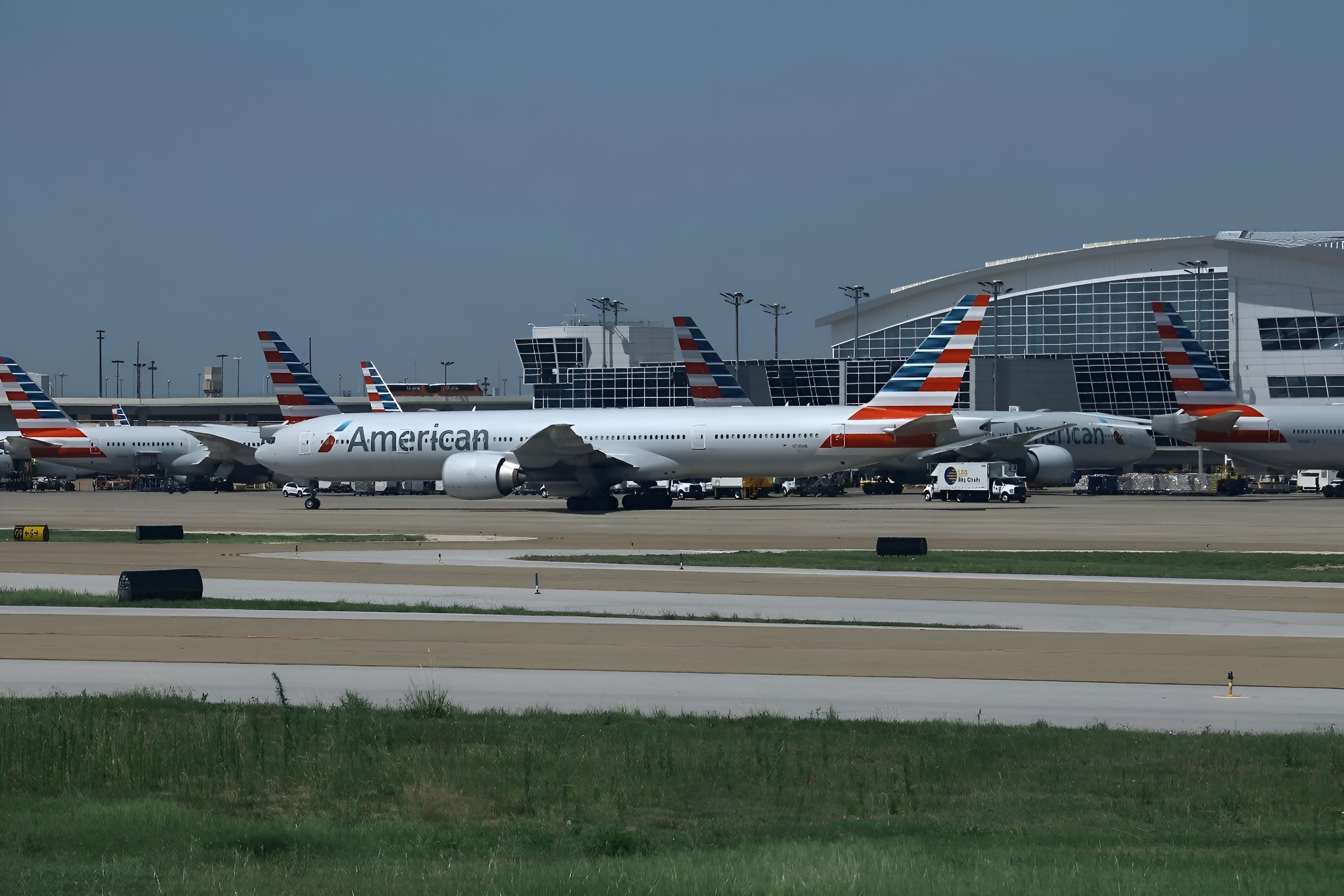
The Federal Aviation Administration restored U.S. departures after a telecommunications failure stopped all departing flights nationwide for about five hours Friday. The agency cited “extraordinary circumstances and for reasons of safety,” then waited for the network to remain stable before lifting the restriction. According to the FAA’s November 15 incident update, air traffic resumed at 8:15 p.m. ET on November 13.
The safety response worked, but the operational disruption did not end with the ground stop. FlightAware counted more than 3,800 U.S. cancellations and more than 2,000 delays at Saturday’s reporting snapshot. Transportation Secretary Sean Duffy warned that disruption would continue as airlines rebuilt schedules and repositioned aircraft and crews. FlightAware had recorded 9,159 cancellations and 7,190 delays Friday.
Officials said there was no indication that the outage resulted from a cyberattack, a threat to the United States or the global Microsoft outage. The White House similarly said there was no indication of a “nefarious act.” The investigation instead is centered on instability inside the FAA Telecommunications Infrastructure, the private network carrying essential voice and operational data among air traffic control facilities.
A stable network, but no final root cause
The FAA’s current account is more specific than the initial description of a telecommunications outage, although the agency and network operator L3Harris are still investigating the root cause. The agency said legacy equipment became unstable as data flooded the network at a rate of 1,000 connection attempts every four to five seconds. The resulting instability affected aircraft communications and radar feeds at 17 of the FAA’s 22 Air Route Traffic Control Centers and spread into several terminal-control facilities.
Investigators identified two potential originating locations: a radar site in Amarillo, Texas, and a radio communications site in El Dorado, Arkansas. L3Harris had been working at the El Dorado site, including installing a new router. Blocking those two locations stabilized the network, the FAA said. The agency also disabled a broadcasting function on the new routers and, as a precaution, on approximately 60 similar units.
That sequence narrows the technical inquiry, but it does not yet settle what initiated the excessive traffic. Earlier accounts included overloaded routers and an update that caused the communications network to reboot and fail. Preliminary attention also focused on Cisco 600-series routers manufactured from 2001 through 2006. The unresolved engineering question is whether the incident began with equipment, configuration, maintenance activity or an interaction among those elements and the legacy network.
Why flights remained disrupted after the network recovered
A nationwide ground stop creates a logistics problem that lasts longer than the technical outage. Aircraft remain at gates or remote stands instead of reaching their next scheduled airports. Crews are similarly displaced and may reach limits on how long they can remain on duty. Gates and parking positions can fill as arriving aircraft continue to land while departures remain frozen.
About 3,500 aircraft already airborne landed safely during the disruption, according to the FAA. Some radio frequencies and radar feeds remained reliable, allowing controllers and pilots to use established procedures. Critical medical, law-enforcement and military flights also continued. The agency characterized the event as network instability rather than a complete loss of radio and radar communications.
Once departures resumed, airlines still had to reconcile aircraft locations, crew availability, passenger connections and airport capacity. That explains why thousands of cancellations persisted Saturday even though federal airspace operations had returned to normal. The FAA said approximately 12,462 flights were canceled Friday across operators, while noting that not every cancellation was directly caused by the ground stop.
An old warning becomes a nationwide constraint
The deeper concern is the architecture beneath the restored service. A November 2023 FAA-commissioned safety review described the telecommunications infrastructure as obsolete and dependent on older time-division multiplexing technology. It warned that an unexpected failure could disconnect an individual FAA facility or an entire regional control center from the wider network.
The vulnerability extends beyond a single communications incident. A 2024 Government Accountability Office assessment classified 51 of 138 air traffic control systems as unsustainable and another 54 as potentially unsustainable. As Reuters reported, those categories covered more than three-quarters of the systems reviewed. Congress approved $12.5 billion in July 2025 for air traffic control modernization, including telecommunications and radar work, but federal auditors have warned that the program lacks a reliable cost estimate and an integrated master schedule.
Replacing copper lines with fiber improves transmission capacity, but it does not by itself replace aging network architecture, eliminate incompatible facility systems or create resilient failover paths. Friday’s shutdown demonstrated the system-level consequence: instability in a communications backbone can force the safest available response to be stopping departures across the entire country.
The immediate network is stable, and the identified functions have been disabled while the investigation continues. The longer test is whether modernization can remove the common dependencies that allowed excessive data at two potential locations to disrupt 17 regional control centers and leave airline schedules impaired well after aircraft were cleared to depart again.
| More aerospace and engineering stories, right in your MSN feed. Follow AMI on MSN |
By Thomas Caldwell — AMI’s senior editor for mechanical and mobility engineering, covering vehicle electronics, systems integration, electrification, chassis systems, propulsion, and safety policy.