COMAC’s 19-Seat Electric Aircraft Flies With Crew, Certification Still Ahead
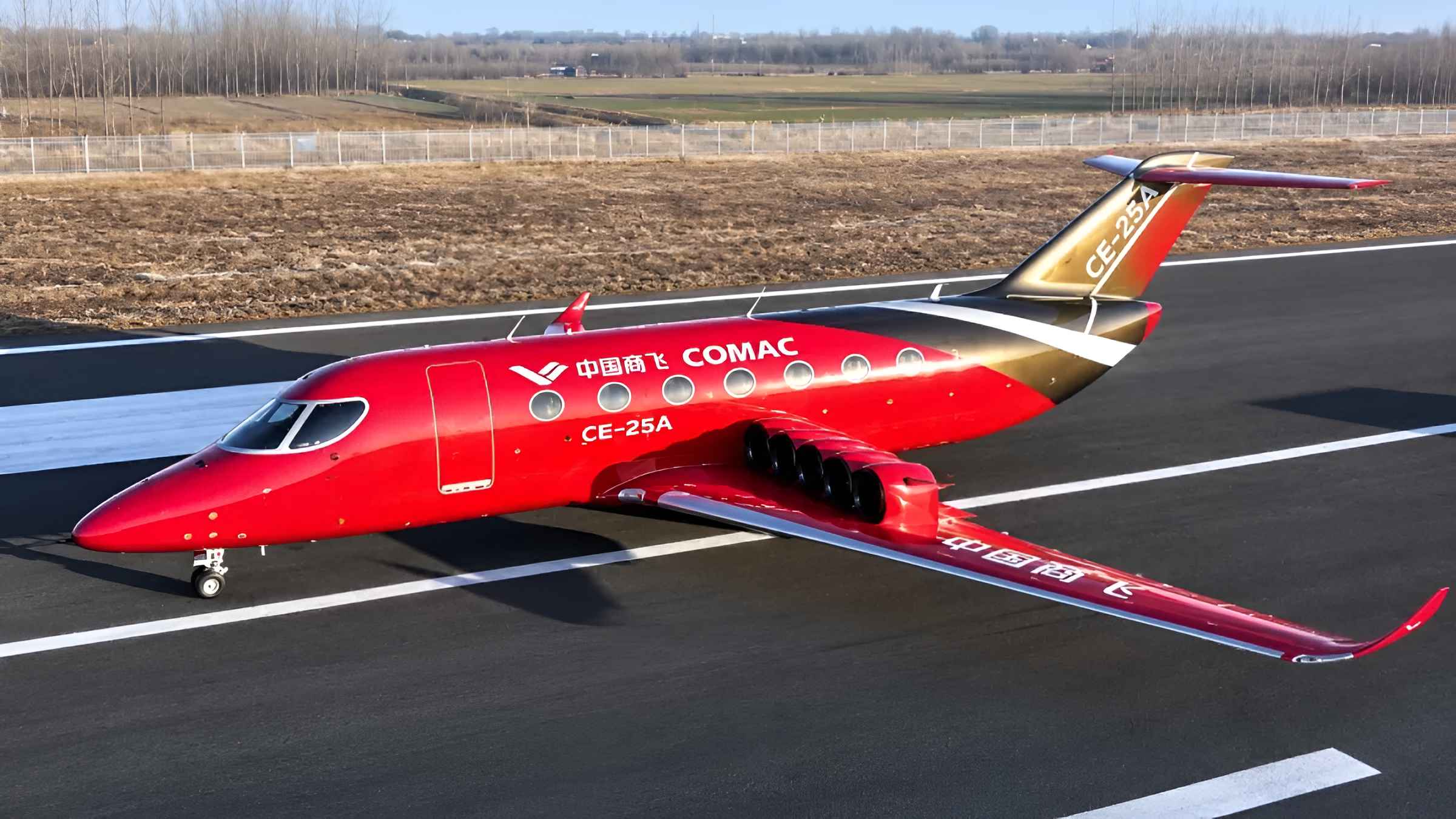
COMAC’s CE-25A electric aircraft has carried people for the first time, moving the 19-seat prototype beyond unmanned verification while leaving its most consequential hurdle unresolved. The 10-tonne aircraft flew from Binzhou in China’s Shandong Province on November 14, 2026, with two pilots and a flight-test engineer aboard. It is not yet certified to carry regular passengers.

The crewed test followed a series of progressively more demanding steps. The CE-25A completed its first autonomous flight on February 2, and Chinese media reported that the program conducted 19 unmanned flight-verification tests before putting a crew aboard. That sequence allows engineers to evaluate the aircraft and its supporting systems before exposing flight personnel to the test environment.
The November test lasted 57 minutes and 46 seconds when ground operations were included. The aircraft was airborne for 16 minutes and 38 seconds and covered 60.4 kilometres. COMAC said it operated normally and that its performance indicators met expectations.
Those measurements document a limited flight-test result rather than the aircraft’s full intended mission. COMAC lists a cruising speed of 300 kilometres per hour, a cruising altitude of 2,400 metres and a range of 400 kilometres. The CE-25A is intended primarily for short intercity passenger routes, but the crewed flight did not demonstrate a 400-kilometre trip or a representative 19-passenger service.
A propulsion system integrated into the wing
The CE-25A is COMAC’s first electric commercial-aircraft project. Instead of burning aviation fuel in conventional engines, it uses electrically driven ducted fans distributed along its wings. COMAC is developing the aircraft with battery manufacturer Contemporary Amperex Technology Co. Limited, Shanghai Jiao Tong University and other partners.
Distributed electric propulsion treats the wing, motors, fans, power electronics and flight controls as a connected system. Spreading propulsion units across the wing can give designers more control over how thrust and airflow are distributed. It also expands the number of interactions that must be assessed, including electrical faults, asymmetric thrust, local changes in wing airflow, cooling demands and the ability of remaining systems to support continued flight.
The architecture therefore shifts much of the engineering burden into systems integration. Multiple motors require inverters, electrical feeders, protection logic, sensors and thermal-management equipment. The battery must supply enough energy for the planned distance and enough instantaneous power for takeoff, climb and other high-demand conditions, while retaining the required operating margins as it ages.
COMAC has not disclosed the CE-25A’s battery capacity, pack mass, chemistry, charging time or reserve assumptions. Without those figures, its stated range cannot establish how far an operational aircraft could fly with 19 passengers, baggage, contingency energy and allowances for weather or battery degradation.
Certification is a larger test than one successful flight
China’s Civil Aviation Administration has accepted COMAC’s application for type certification, beginning the process of showing that an approved aircraft design meets applicable airworthiness requirements. Acceptance of an application is not the same as granting a type certificate, and no confirmed certification or entry-into-service date has been announced.
For an electric passenger aircraft, that work extends beyond demonstrating that the prototype can take off, fly and land. The design must establish safe behavior across its approved operating envelope and foreseeable failure conditions. Battery containment, high-voltage isolation, cooling, electromagnetic compatibility, software behavior and propulsion redundancy all become parts of the aircraft-level safety case.
Lithium battery installations receive particular attention because overcharging, internal short circuits and excessive discharge can produce uncontrolled increases in temperature and pressure. The U.S. Federal Aviation Administration’s battery guidance, while not the CE-25A’s Chinese certification basis, illustrates the broader industry emphasis on battery-management systems, fault analysis and minimum performance standards for aerospace installations.
Regular service would also extend the system boundary beyond the aircraft. Airports would need compatible charging equipment, sufficient electrical capacity and procedures for isolation and emergency response. An FAA infrastructure assessment has warned that higher operating tempos and multiple electric-aircraft operators could require utility upgrades, while the lack of a common charging protocol may force airports to accommodate different equipment.
The first crewed flight establishes that the CE-25A program has progressed beyond autonomous verification and placed three people aboard a full-scale electric-aircraft test. The next decisive result will come from certification evidence showing that the integrated aircraft not merely one prototype on one measured flight can safely and repeatably carry passengers.
| More aerospace and engineering stories, right in your MSN feed. Follow AMI on MSN |
By Thomas Caldwell — AMI’s senior editor for mechanical and mobility engineering, covering vehicle electronics, systems integration, electrification, chassis systems, propulsion, and safety policy.