KLM Delays Four Airbus A350 Route Launches as Business Seats Remain Unavailable
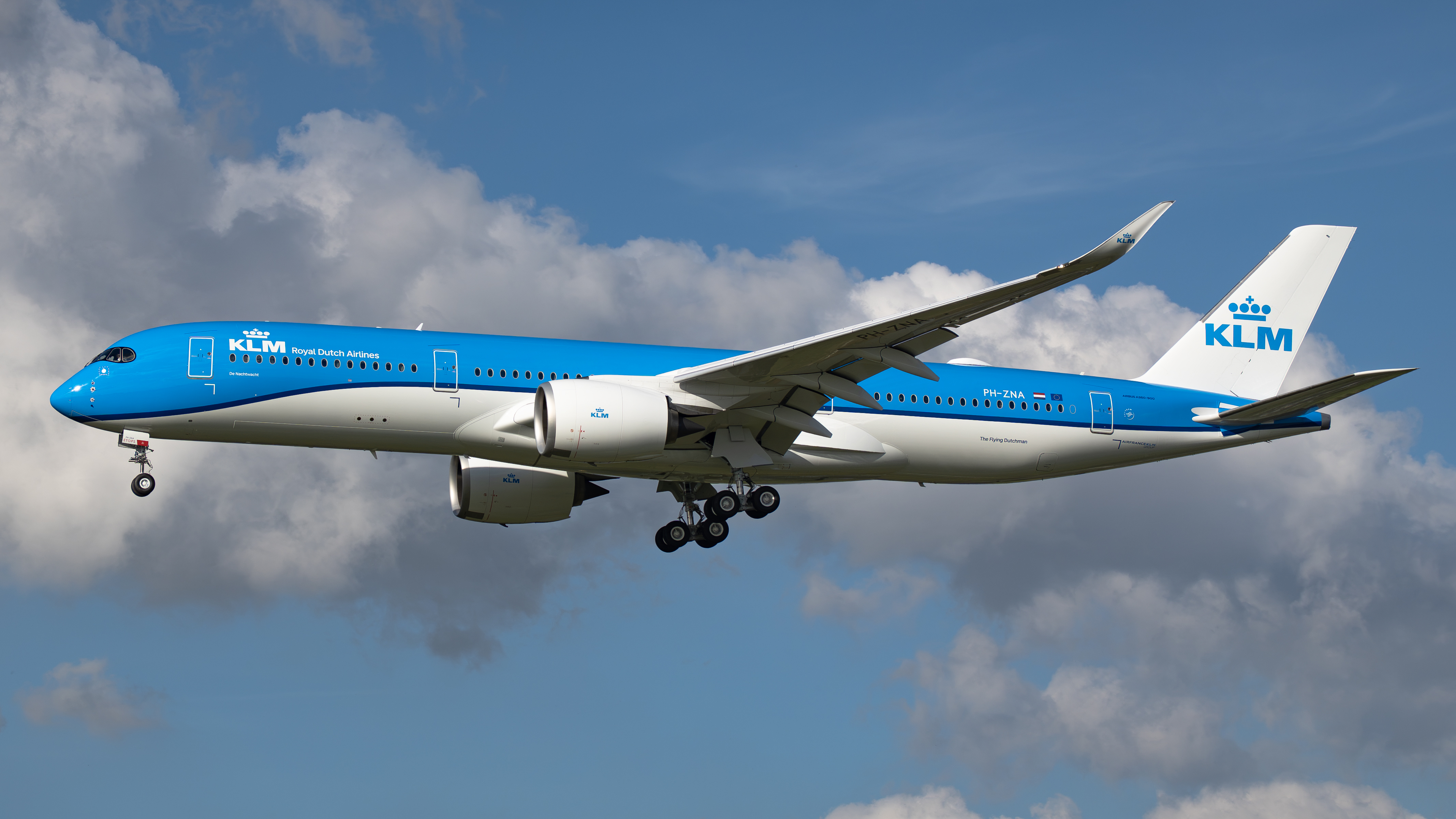
KLM has an Airbus A350 carrying passengers, but it still cannot sell the aircraft’s new World Business Class seats. That unusual split between an operational widebody and an unavailable premium cabin now accompanies another schedule change: four planned A350 route deployments covering five cities have moved from December 2026 into the first quarter of 2027.

A schedule filing current as of November 11 shows revised introductions for Nairobi, Zanzibar, the combined Kilimanjaro–Dar es Salaam rotation and Montreal. The schedule remains subject to change. Toronto, where KLM began scheduled A350 service on October 30 as flight KL691, remains the airline’s only current destination for the aircraft.
Where and when KLM now plans to deploy the A350
Nairobi is scheduled to receive three weekly A350 flights beginning January 5, 2027. One weekly A350 flight on the Amsterdam-Kilimanjaro-Dar es Salaam-Amsterdam rotation is set to follow on January 6, increasing to two flights a week from February 26 and three from March 6.
Zanzibar is scheduled for two weekly A350 rotations from January 8, falling to one a week from February 20. Montreal is due to receive three weekly flights from March 1 through March 26. Toronto’s existing five weekly A350 services are scheduled to become daily from March 3.
For passengers, the revisions mean a longer wait to encounter KLM’s newest widebody on those routes. They also show that placing a newly delivered aircraft into commercial service is not the same as completing every part of its intended passenger product.
Why an approved aircraft can have unavailable seats
The aircraft itself can operate while a particular cabin installation remains behind a separate regulatory gate. KLM previously said aviation authorities had revised their interpretation of regulatory requirements affecting the new business-class seats. The airline later said the European Union Aviation Safety Agency had accepted the seat test results, allowing the certification process to begin. That step was not final authorization to make the seats available for booking.
Aircraft-seat approval extends well beyond checking dimensions or passenger comfort. Premium seats can incorporate complex structures and installation hardware that must work safely with the cabin floor and restraint system. EASA guidance on seat-to-floor interface structures explains that an installation must avoid creating a weak element between the seat and airframe. Depending on the design, the seat and its supporting structure may require testing together under emergency-landing load conditions.
This makes the cabin part of the aircraft’s certified system rather than removable furniture in the everyday sense. A result accepted at one stage can support the next stage of approval without automatically authorizing passenger use. Until the complete installation clears the applicable process, KLM can fly the A350 while withholding the affected premium seats from sale.
A small subsystem can constrain a widebody rollout
Business class is also a central part of long-haul aircraft planning. Leaving those seats unavailable changes the usable cabin inventory and limits the commercial product KLM can offer on a route, even when the airframe, engines and flight deck are ready for service. The airline must coordinate certification status with crew planning, maintenance support, schedules and the arrival of additional aircraft.
The cabin restriction should not be treated as the sole established cause of every route change. The uneven rollout has also been connected with broader operational complexities and the timing of further A350 deliveries. With limited aircraft available, one change can propagate through several destinations because the same jet cannot cover every planned rotation.
That is why Toronto provides only a partial picture of KLM’s A350 introduction. The aircraft has crossed the basic threshold into passenger operations, but the wider deployment remains dependent on both fleet availability and completion of the premium-seat approval process. Under the current plan, Nairobi becomes the next A350 destination on January 5, with Montreal waiting until March and Toronto remaining the only place passengers can currently board KLM’s newest widebody, without its World Business Class seats available to book.
| More aerospace and engineering stories, right in your MSN feed. Follow AMI on MSN |
By Thomas Caldwell — AMI’s senior editor for mechanical and mobility engineering, covering vehicle electronics, systems integration, electrification, chassis systems, propulsion, and safety policy.