NTSB Has Closed Just 1 of 52 Reagan Airport Safety Recommendations
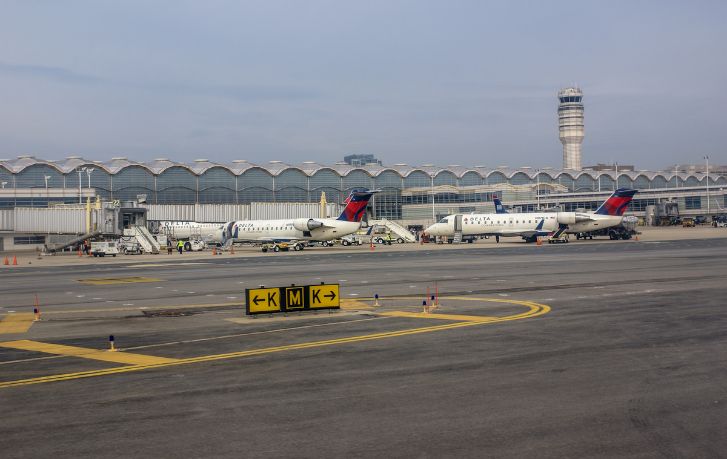
Only one of 52 federal safety recommendations issued after the fatal collision near Reagan National Airport has been closed, leaving aircraft-tracking, controller-training and civil-military coordination measures unresolved. The slow closure rate creates a difficult safety tension: families and National Transportation Safety Board Chair Jennifer Homendy argue that serious gaps remain, while aviation experts caution that complex operational changes can reasonably take years to evaluate and implement.

The recommendations followed the January 2025 collision between an Army helicopter and an American Airlines passenger aircraft over the Potomac River, which killed 67 people. Six months after the final recommendations were issued, the NTSB lists 51 as open. An open status does not necessarily mean no work has occurred; it means the board has not yet accepted the completed response and closed the recommendation.
The sole closed measure addresses the most immediate geographic conflict. The Federal Aviation Administration restricted helicopter operations between Hains Point and the Woodrow Wilson Bridge when specified Reagan National runways are in use. It also prohibited commercial operations during certain limited helicopter activity near the airport.
That restriction removed a defined overlap without requiring new aircraft hardware or a broad redesign of the air traffic system. Michael McCormick, an Embry-Riddle air traffic management coordinator, described it as “a fairly quick and easy low-hanging fruit.” The remaining recommendations are more interconnected: they include route design, surveillance equipment, collision alerts, staffing practices, controller training, radio procedures and limits on airport traffic volume.
Why the open recommendations are harder
Reagan National operates in constrained airspace shared by commercial flights, military helicopters and presidential aircraft. A change that separates one traffic stream can affect runway capacity, controller workload or another route. Jeff Guzzetti, a former FAA and NTSB investigator, said agencies need time to assess such unintended consequences and called the board’s overall recommendation effort unusually aggressive.
The scale of prior proximity events nevertheless gives urgency to that systems work. The NTSB identified 15,214 events near Reagan National from 2021 through 2024 in which aircraft came within one nautical mile laterally and less than 400 feet vertically. Within that set, 85 events involved less than 1,500 feet of lateral separation and 200 feet vertically. Those figures do not establish that every encounter was an imminent collision, but they show why route geometry and separation practices cannot be considered independently.
The board determined that the FAA’s placement of a helicopter route near the Runway 33 approach path was the largest factor in the 2025 collision. Its recommendations extend beyond moving helicopters away from that particular path. They call for recurring reviews of helicopter routes, revised route-design criteria, more comprehensive visual-separation training and risk-assessment tools for supervisors.
Visual separation is especially dependent on human factors. It requires pilots and controllers to perceive traffic, understand relative motion and maintain a shared picture while workload and radio congestion change. New scenario-based training can address those limitations, but it must be developed, tested, delivered and then repeated. Equipment changes add certification, installation and fleet-scheduling work on top of the procedural burden.
Tracking policy remains unsettled
A central unresolved issue is whether aircraft should be required not only to broadcast their position but also to receive and display surrounding traffic information. The Senate-passed Rotor Act would have imposed broader advanced-location receiving requirements, including Automatic Dependent Surveillance-Broadcast equipment, but it failed in the House by one vote.
The House instead passed the less stringent ALERT Act, which was referred to the Senate Commerce Committee. It would generally require affected civil and military aircraft to adopt receiving capability by the end of 2031 while providing treatment for certain special missions. The NTSB has said the bill addresses all its recommendations, but the differing bills show that equipment scope, exemptions and deadlines remain legislative decisions rather than completed operational changes.
Communication is another layer of the separation system. The FAA confirmed that a hotline connecting Reagan National controllers with Pentagon counterparts had not worked since 2022. Separately, the FAA and NTSB are investigating a recent momentary loss of separation involving Marine One and a passenger aircraft. No cause has been established for that incident. The FAA subsequently convened a safety review panel, met with the White House Military Office helicopter unit and said it would improve coordination for three-minute lift notifications and increase signal frequencies.
Virginia Tech aerospace engineering professor Ella Atkins acknowledged that regulation requires care but argued that economic and workforce resistance can make it slower than necessary. That distinction matters: recommendation closure is a formal endpoint, not the only measure of progress, but unresolved equipment rules, training programs and communication arrangements still represent unfinished safety work.
The next meaningful benchmark will not be the passage of time alone. It will be whether agencies can document completed changes, demonstrate that they work together without creating new operational risks and give families and airport users a clear accounting of which of the remaining 51 recommendations are ready to close.
| More aerospace and engineering stories, right in your MSN feed. Follow AMI on MSN |
By Thomas Caldwell — AMI’s senior editor for mechanical and mobility engineering, covering vehicle electronics, systems integration, electrification, chassis systems, propulsion, and safety policy.