Report: Pentagon Delays Allied Weapons Deliveries as Iran War Drains Missiles
The Pentagon faces a hard allocation problem: missiles used immediately in the Iran war cannot also remain available for another contingency or be delivered to an ally. Reporting dated Aug. 8 said heavy U.S. expenditure had depleted inventories enough to delay some weapons deliveries to European and Asian allies.

Senior officials cited by The New York Times said American forces had expended thousands of multimillion-dollar precision-guided missiles, along with significant stocks of air-defense weapons used against Iranian attacks. The reported pressure also contributed to a decision to scale back a major bombing campaign in July.
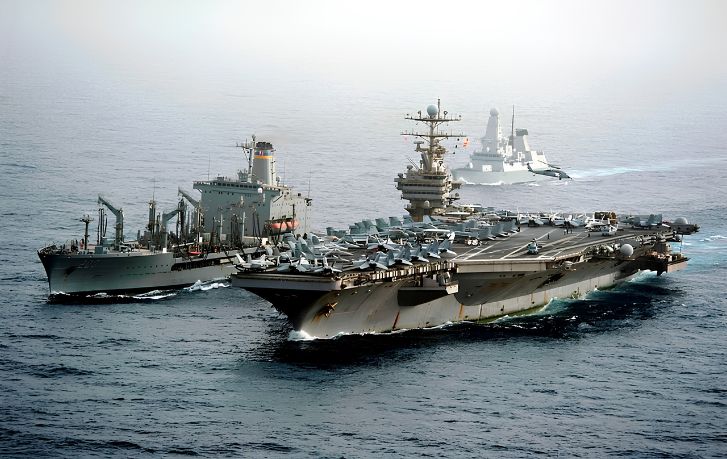
The consequences extend beyond missiles. The Pentagon reportedly moved ships, aircraft, air-defense units and other equipment from Europe and Asia to support operations in the Middle East. That redistributes capability quickly, but it does not create additional capacity. It can also increase flying hours, maintenance requirements and personnel strain while leaving commanders elsewhere with fewer resources.
A stockpile cannot be rebuilt at combat speed
The central constraint is the difference between the rate at which a force can fire advanced weapons and the rate at which industry can replace them. Missile production depends on specialized propulsion systems, guidance electronics, seekers, energetic materials, test infrastructure and qualified suppliers. Adding money does not instantly expand those pipelines.
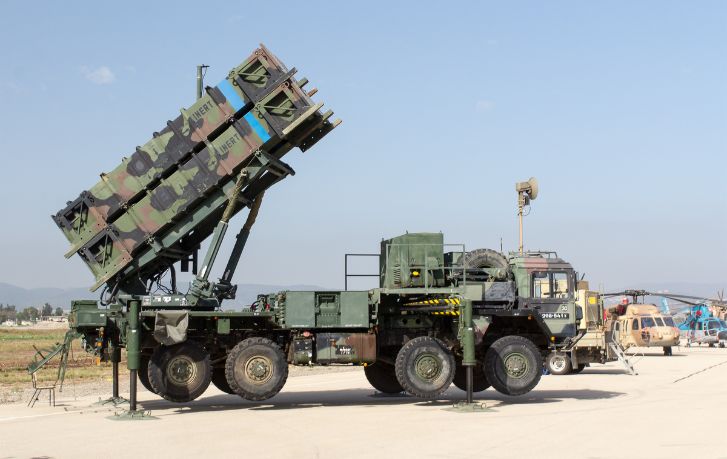
A Congressional Budget Office analysis reported by Defense News on Sept. 15 estimated that operations had consumed between one-half and two-thirds of the combined U.S. inventory of four missile-defense interceptor families since June 2025. Those were Patriot, Terminal High Altitude Area Defense, Standard Missile-3 and Standard Missile-6 interceptors. CBO estimated that rebuilding the affected stocks could take at least five years even with higher production rates, while cautioning that its calculations carried considerable uncertainty because the Pentagon does not publish inventory totals.
That estimate is broader and more specific than the August warnings, but it should not be read as a confirmed count of missiles remaining. It combines four interceptor families and relies on reported expenditures and public procurement records rather than disclosed Pentagon inventory data.
The production challenge also varies by weapon. Military Times reported in September that a Center for Strategic and International Studies analysis estimated production timelines of about 42 months for Patriot’s PAC-3 MSE interceptor and 53 months for a THAAD interceptor. Those estimates illustrate why a factory expansion announced today may not deliver finished rounds for years: facilities, tooling, suppliers, workers and acceptance testing all have to scale together.
More procurement does not settle who receives missiles first
The Defense Department has asked industry for faster delivery schedules and proposals for facility expansion. It has also announced multiyear arrangements intended to increase production capacity for several interceptor components. The department’s stated goals include tripling PAC-3 MSE capacity and quadrupling THAAD capacity, subject to annual congressional appropriations.
The money under consideration is substantial. In its fiscal 2027 submission, the department requested $95 billion for missile and munitions procurement and research, development, testing and evaluation, according to a Congressional Research Service review of the defense budget. It separately requested $82.2 billion for missile-defeat and defense programs, categories that include more than the interceptors reportedly depleted in the war.
Those requests can support larger production runs, but they do not eliminate near-term allocation choices. Until new weapons pass manufacturing and acceptance requirements, the Pentagon must balance current combat use, minimum U.S. reserve requirements and deliveries already promised abroad. The affected allies and specific delayed systems have not been publicly identified, nor have remaining inventories or manufacturer production rates been officially disclosed.
The White House maintains that the United States retains enough firepower for any operation ordered by the president. That position is not necessarily incompatible with shortages in particular categories: a military can retain broad combat power while facing tight supplies of specialized defensive interceptors.
The unresolved issue is therefore not simply whether the United States has missiles. It is how long scarce types must be divided among an ongoing war, forces positioned in other regions and allied customers waiting for deliveries. With replenishment measured in years rather than months, those competing commitments will outlast the immediate expenditure that created them.
| More aerospace and engineering stories, right in your MSN feed. Follow AMI on MSN |
By David Whitaker — Associate editor for AMI’s aerospace and drone systems desk, translating flight systems, aircraft programs, spaceflight, and UAV developments into accessible technical stories.