NASA Reportedly Moves SR-71 Indoors, Seeks Experts for Flight Revival
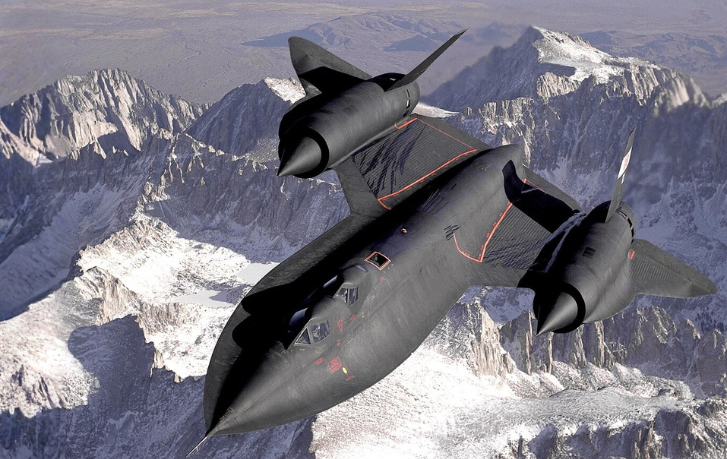
The SR-71 Blackbird airframe still exists, but much of the system that once kept it flying does not. NASA has reportedly moved SR-71A Tail No. 844 from its outdoor display at Edwards Air Force Base into a hangar and approached former program specialists about returning it to flight. The surprising development is less a conventional restoration project than a test of whether decades-old expertise, equipment and supply chains can be reconstructed.
Aviation Week reported that the aircraft was removed from its display position at NASA’s Armstrong Flight Research Center in California and inspected after being placed inside the former space shuttle hangar. Former SR-71A test engineers said NASA offered them work on the effort. NASA, however, has not publicly confirmed a return-to-flight project, and there is no confirmed budget, flight schedule, formal program approval or final mission plan.
That distinction matters. Moving the aircraft indoors permits closer examination and protects it from further exposure, but it does not establish airworthiness. Tail No. 844 last flew in 1999, nearly 27 years ago, and had remained on display since then. A complete assessment would have to determine the condition of its structure, engines, seals, fluid systems, wiring, instruments and other components after prolonged outdoor storage.
An aircraft is only one part of a flight system
A displayed Blackbird can appear complete while remaining far removed from safe operation. Former personnel raised concerns that water and sand may have entered internal cavities and that the installed and spare engines had not received the periodic rotation, lubrication and operation used while the fleet was active. Long-idle mechanical systems can corrode, seals can deteriorate, fluids and compatible replacements can become unavailable, and calibrated equipment can lose its documented status.
The larger obstacle is the support environment surrounding the airplane. The SR-71 depended on specialized consumables, spare parts, maintenance procedures and ground equipment. Some equipment needed to remove engines, handle major assemblies or service aircraft systems reportedly no longer exists. A substantial Blackbird spare-parts inventory was also destroyed in 2007, long after another operational return appeared unlikely.
Reproducing a missing component is not simply a matter of matching its external dimensions. Engineers would need dependable information about materials, heat treatment, tolerances, surface finishes, inspection requirements and service life. Newly manufactured parts would then require verification appropriate to their function. Where original tooling and process records have disappeared, recreating that evidence can be more difficult than fabricating the hardware itself.
Human knowledge presents a parallel problem. Maintenance manuals reportedly remain available, but written instructions cannot capture every practical judgment developed through years of operating an unusual aircraft. Experienced technicians and test engineers remember inspection cues, servicing sequences and subsystem behavior that may not be obvious from drawings alone. NASA’s reported outreach to retired personnel therefore indicates that knowledge recovery is already part of the technical problem, not merely a staffing exercise.
NASA already operates older research aircraft, but with continuity
NASA has experience sustaining specialized aircraft over long periods. Its two ER-2 high-altitude flying laboratories have supported Earth science, atmospheric research and sensor development, while its WB-57 research aircraft have flown science missions since the early 1970s. Those aircraft do not duplicate the Blackbird’s combination of speed and altitude, but their continued operation illustrates the value of preserving crews, procedures, facilities and recurring maintenance activity.
The SR-71 presents the opposite condition: a capable airframe separated from an industrial and operational base that has been dormant for decades. Continued F-15 and F-16 manufacturing preserved more production knowledge for those aircraft, whereas the Blackbird’s specialized support chain largely dispersed after retirement. Restart difficulty therefore rises with every missing supplier, retired specialist and discarded tool.
NASA Administrator Jared Isaacman has expressed interest in rebuilding NASA’s experimental-aircraft activity and again flying as high and fast as the agency did in earlier decades. An airworthy SR-71 could offer experimental characteristics that NASA’s current research fleet does not match, but the value of that capability would have to be weighed against restoration cost, operating support and the remaining life of a 59-year-old airframe.
The decisive development will not be the Blackbird’s appearance inside a hangar. It will be whether inspection results can define a credible airworthiness path and whether NASA formally assigns the money, people, tooling and mission needed to follow it.
| More aerospace and engineering stories, right in your MSN feed. Follow AMI on MSN |
By Thomas Caldwell — AMI’s senior editor for mechanical and mobility engineering, covering vehicle electronics, systems integration, electrification, chassis systems, propulsion, and safety policy.