Boeing Gets $14.7 Billion Patriot Seeker Award Amid Interceptor Pressure
Lockheed Martin has awarded Boeing a $14.7 billion undefinitized contract action for seekers used in Patriot Advanced Capability-3 Missile Segment Enhancement interceptors. Boeing announced the award on Oct. 5, moving a critical interceptor-production input under a major supplier agreement as demand for Patriot equipment continues to rise.

The award follows Boeing’s decision to begin expanding its seeker facility in Alabama with company capital, with production and hiring increases starting before the contract was announced. It also sits beneath a much larger Army commitment: In July, the service converted a prior one-year Lockheed Martin interceptor deal into a seven-year award worth up to $58.6 billion. The available information does not provide a delivery schedule showing when those commitments will translate into enough finished missiles to ease inventory pressure.
That gap between contracting and delivery is the central constraint. A seeker is only one part of a complete PAC-3 MSE interceptor, even if it is an indispensable one. Higher seeker output must align with propulsion, control hardware, final assembly, testing and acceptance capacity. A large award can provide suppliers with the contractual basis to hire workers, order equipment and support facilities, but its dollar value alone does not establish the rate at which complete interceptors will leave the production line.
The contract’s undefinitized status adds another boundary. It allows work to advance before every term is finalized, but it should not be read as a finished production result. Boeing’s early Alabama investment may reduce the time lost between a government demand signal and physical expansion, yet new floor space and added employees still have to produce qualified hardware consistently. For missile components, scaling output is not simply a matter of running an existing line for more hours; quality control and execution remain part of the capacity equation.
Patriot demand now reaches across the supplier base
The seeker award is one part of a broader attempt to expand PAC-3 MSE production. Lockheed Martin also awarded L3Harris a $4.7 billion undefinitized contract covering seven years of propulsion work. That agreement supports production of the interceptor’s two-pulse solid rocket motor, attitude-control motors and a related device. L3Harris broke ground in June on two Arkansas facilities expected to become operational in 2027.
Taken together, the Boeing and L3Harris awards show why interceptor expansion cannot be reduced to a single prime-contractor production target. Seekers and propulsion systems come from separate specialized operations, while Lockheed Martin remains responsible for the complete interceptor. If one supplier expands faster than another, the slowest qualified input can still govern final output. The Army’s seven-year procurement structure provides a longer planning horizon, but synchronized capacity across that network will determine the practical result.
The operational pressure is already visible. The United States reportedly sent one additional Patriot battery to Saudi Arabia to protect an oil facility and another to Qatar to protect a natural-gas facility, according to Axios, citing two U.S. officials and one regional source. Neither facility was identified, and the deployments have not been officially confirmed by the Pentagon, Saudi Arabia or Qatar. Any major disruption to Gulf oil or gas infrastructure could affect energy supplies and add pressure to global markets.
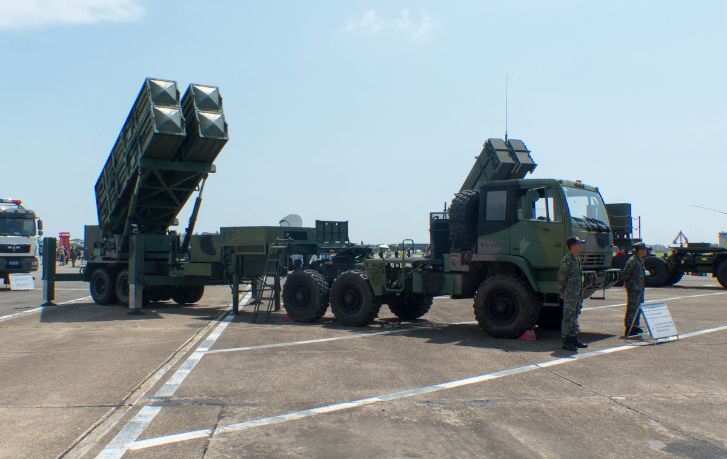
Each added defensive mission also creates continuing demand for batteries and interceptors. Patriot fire units combine radar, an engagement control station and launchers, while PAC-3 MSE interceptors use direct-impact technology and a two-pulse solid rocket motor. Depending on configuration, one launcher can carry as many as 12 PAC-3 MSE rounds. That capacity describes what can be loaded, not how rapidly expended inventory can be replaced.
Production ambitions are rising sharply: An August analysis cited Army and Navy PAC-3 MSE requests increasing from 341 in fiscal 2026 to 3,203 in fiscal 2027. The Boeing award therefore marks a consequential transition from expansion plans and early corporate spending to a large contractual commitment. The next meaningful measure will not be another headline dollar figure, but a documented delivery schedule showing when additional qualified seekers become finished Patriot interceptors.
| More aerospace and engineering stories, right in your MSN feed. Follow AMI on MSN |
By David Whitaker — Associate editor for AMI’s aerospace and drone systems desk, translating flight systems, aircraft programs, spaceflight, and UAV developments into accessible technical stories.