


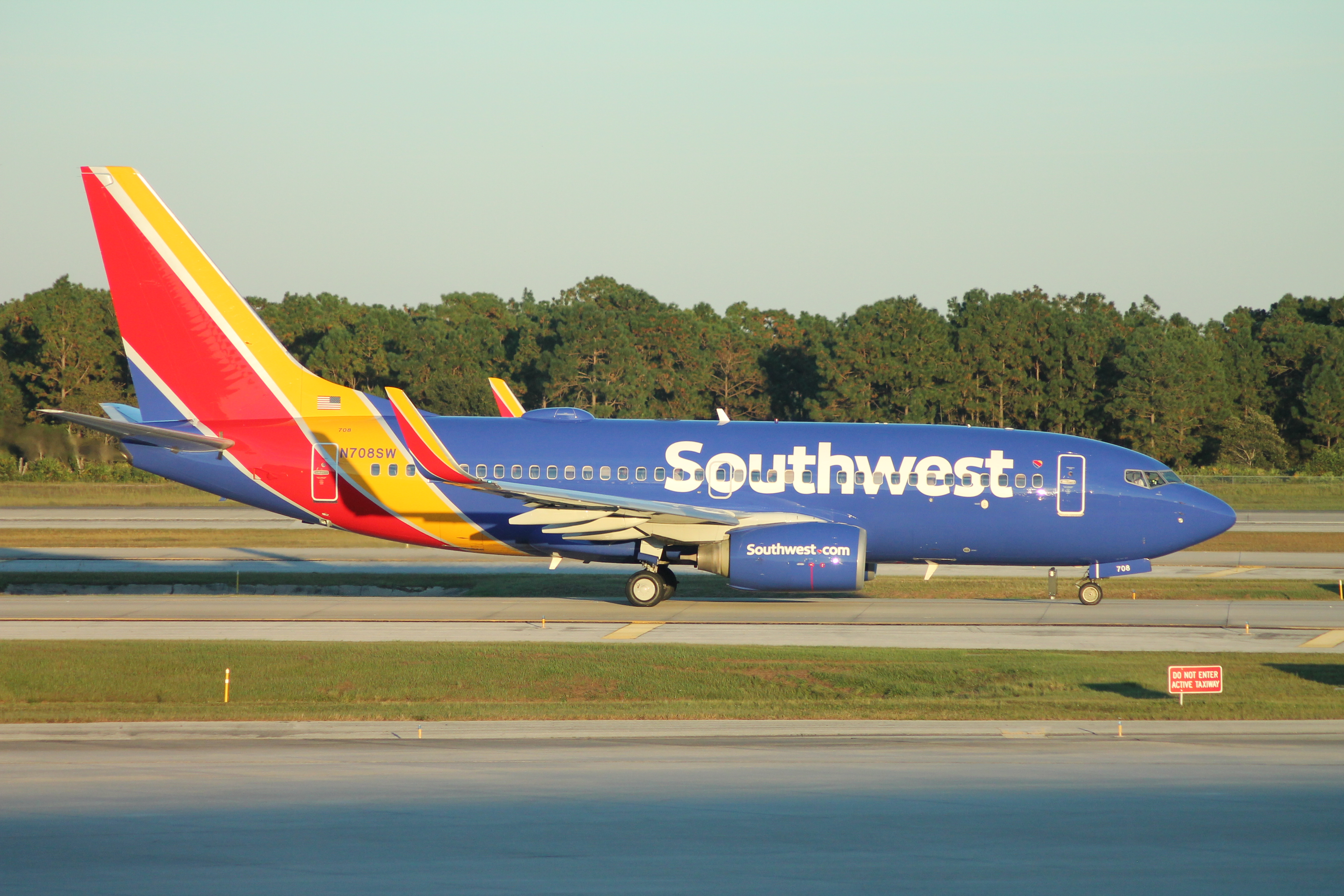
Southwest Outage Forces Manual Processing, Delays More Than 1,500 Flights
A nationwide Southwest Airlines systems outage forced airport employees to process baggage and boarding manually on Friday, October 9, as passengers lost access to routine check-in and boarding-pass functions. Although the affected technology returned after roughly two hours, disruption continued spreading through the network: FlightAware data cited later in the day showed more than 1,500 Southwest flights delayed by 5 p.m. ET.

The first problems appeared shortly after 8 a.m. ET. The interruption affected passenger check-in, boarding, baggage check-in and access to printed or mobile boarding passes. At Dallas Love Field, passengers encountered long lines as boarding-pass printing and mobile-app scanning failed. Southwest continued moving passengers through airports using manual procedures rather than suspending its entire operation.
Southwest identified Amadeus, which supplies its Altéa Passenger Service System, as the source of the interruption. Amadeus attributed the problem to an unidentified third-party technology provider but did not disclose which component failed. “Our teams took immediate action and worked closely with the provider to restore normal operations,” the company said.
Southwest reported that its systems were back online at 10:15 a.m. ET. By then, more than 900 flights had been delayed and 43 canceled. The disruption continued after restoration, with more than 1,500 delays recorded by 5 p.m. about one-third of Southwest flights up to that point. Those flight-status totals describe the network at each snapshot and do not establish that every delay or cancellation was caused solely by the outage.
Why a two-hour outage lasted longer in the flight schedule
Restoring software service does not instantly restore an airline timetable. Aircraft waiting at gates can miss departure slots, while delayed passengers, bags and employees must still be processed. A late outbound flight may also arrive late for its next scheduled segment, extending disruption beyond the airport where the initial delay occurred.
That distinction matters in a tightly connected airline network. The technical outage lasted about two hours, but the operational queue created during that period had to be cleared after automated functions returned. Manual processing helped Southwest keep flights moving, yet it could not match the normal speed and coordination of digital check-in, boarding and baggage systems.
Altéa also has a broad operational role. The platform supports reservations, flight inventory, passenger check-in, boarding, baggage check-in and automated rebooking during disruptions. Southwest introduced it for international flights in 2014 and expanded it to domestic operations in 2017.
Concentrating those functions in a common passenger-service platform provides consistent information across an airline, but it also creates a shared dependency. When an upstream provider chain is interrupted, several passenger-facing processes can become unavailable at once. Friday’s event did not disclose the precise failed component, so it is not possible to determine publicly whether the interruption began in infrastructure, connectivity, software or another supporting service.
Manual procedures are a continuity layer, not a full substitute
The response demonstrated the value and limits of fallback procedures. Employees could still check bags and board passengers, preventing the technology problem from becoming a complete operational stop. But manual work requires more time, creates longer queues and reduces how quickly staff can reconcile passengers and baggage with individual departures.
Southwest has invested more than $1 billion in operational improvements, including over $112 million for its Network Operations Control function, according to figures acknowledged by the Department of Transportation by December 2025. The airline also plans to move from a largely on-premises environment toward a cloud-based, artificial-intelligence-enabled architecture by 2028.
That modernization should not be confused with immunity from external-provider failures. Nothing disclosed about Friday’s interruption establishes that Southwest’s planned cloud transition would have prevented it. A modern internal architecture can improve scalability and recovery, but resilience also depends on vendor architecture, third-party controls, interface design and tested fallback processes across organizational boundaries.
The unresolved engineering question is therefore not simply why Southwest’s own systems stopped responding. Amadeus has placed the origin with another technology provider without identifying the component, leaving the most important resilience issue unanswered: how one failure in an external service chain reached check-in, boarding and baggage operations across a nationwide airline network.
| More aerospace and engineering stories, right in your MSN feed. Follow AMI on MSN |
By Thomas Caldwell — AMI’s senior editor for mechanical and mobility engineering, covering vehicle electronics, systems integration, electrification, chassis systems, propulsion, and safety policy.




