


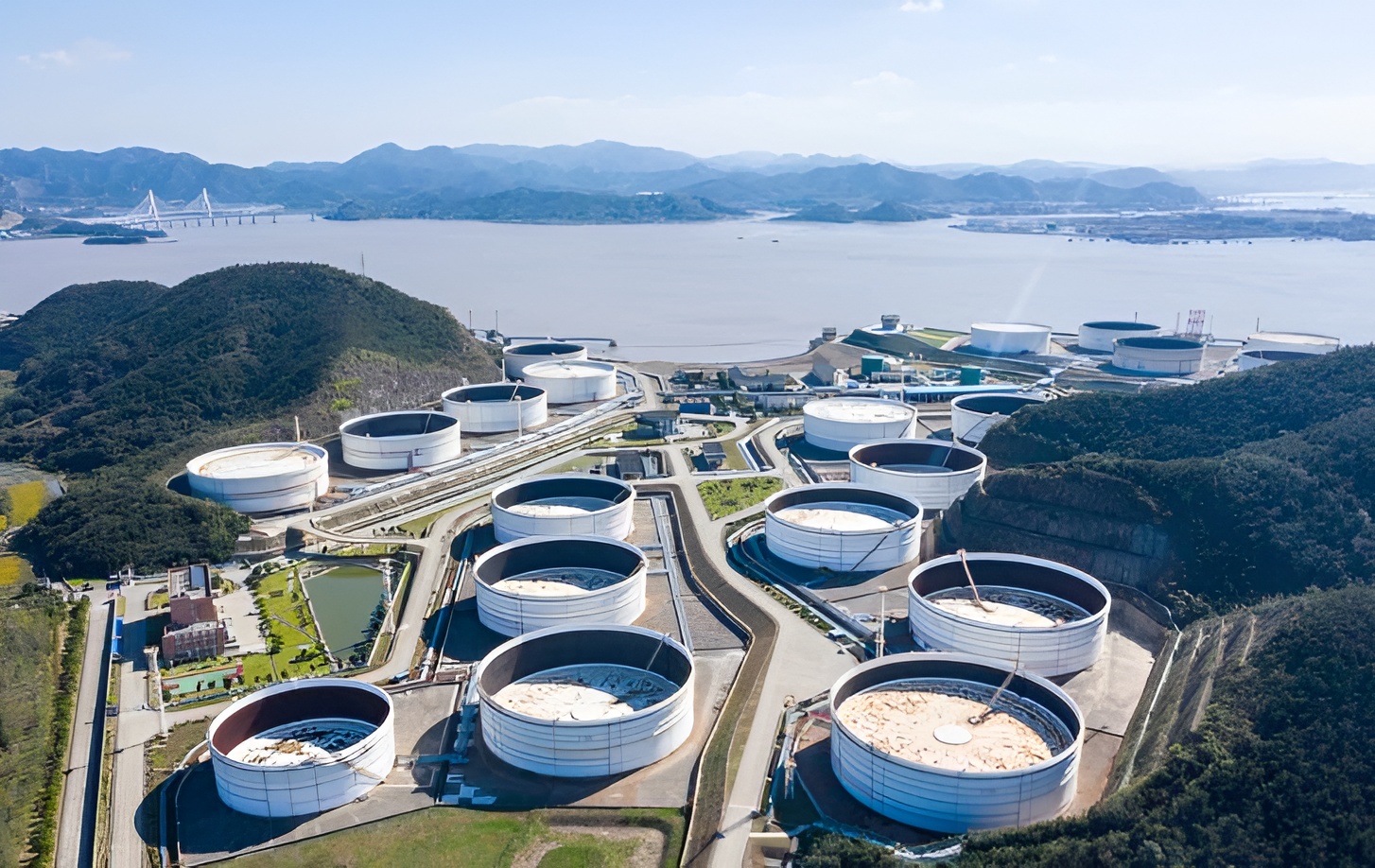
Two Strategic Petroleum Reserve Sites Face 40-Million-Barrel Delivery Test
The U.S. Department of Energy is seeking bids to exchange up to 40 million barrels of crude from the Strategic Petroleum Reserve’s Big Hill and Bryan Mound sites, with deliveries planned for November and December 2026. The September 29 solicitation follows five earlier solicitations that awarded more than 133 million barrels across four completed exchanges.
That concentration at two Texas sites makes the new commitment a more useful test of rapid deliverability than the reserve’s nationwide barrel count alone. The issue is not simply how much crude remains underground, but how much available infrastructure can move on a defined schedule from designated caverns into commercial pipelines and terminals. DOE has not reported a delivery failure or a reduced pumping rate for this latest solicitation; the test will come through bids, awards and completed deliveries.
The distinction matters because the reserve entered the final week of September with about 283 million barrels, its lowest inventory since 1982. DOE projects that the broader 172-million-barrel exchange program could take the total down to approximately 243 million barrels before replacement crude begins rebuilding it.
Borrowing oil does not produce an immediate refill
These transactions are exchanges rather than sales. Participating companies borrow crude and commit to return oil of similar quality later, plus additional “premium” barrels. Early contracts required premiums of 18% to 22%, while later premiums reached as high as 28%. Reuters estimated that the full exchange program could eventually add roughly 40 million barrels beyond the amount borrowed.
That structure could leave the reserve with more oil over the long term, but it creates a timing gap. Some replacement deliveries are not due until late 2028. Until those barrels return, contractual claims cannot perform the emergency-supply function of crude already stored and ready for withdrawal.
Market conditions also determine whether companies participate. DOE offered 40 million barrels in June but awarded only 500,000 barrels, all to Vitol. Borrowing becomes less attractive when the difference between current and future oil prices narrows, particularly when bidders must account for repayment premiums and crude-quality requirements. The new request therefore tests commercial demand as well as physical delivery capacity.
The reserve drains much faster than it refills
The system’s built-in asymmetry is the larger engineering constraint. Its design criteria allow withdrawal at roughly six times the designed refill rate. Government Accountability Office findings add another qualification: as of December 2025, actual drawdown capability was 61% of the design rate, while fill capability was 56% of design.
Those percentages describe the reserve as a network rather than guarantee a particular result at Big Hill or Bryan Mound. Site availability, maintenance work and connections to commercial transportation all affect usable flow. Energy Secretary Chris Wright has said the immediate priority is to finish repairs to the reserve. DOE’s storage system uses underground salt caverns at four Gulf Coast facilities, but the latest 40-million-barrel offering draws only from the two Texas locations.
The same infrastructure that supports a comparatively fast emergency release must later accept returned oil at a much slower pace. After accounting for a constraint at West Hackberry, the Atlantic Council calculated an ideal systemwide fill rate of 672,000 barrels per day. Even under favorable conditions, restoring a large exchange volume is therefore a months-long operation rather than a reversal of the drawdown timetable.
Premium barrels cannot close the full funding gap
If all 172 million borrowed barrels return with roughly 40 million premium barrels, the reserve could reach about 455 million barrels, based on the available estimates. That would be a substantial recovery from the projected low, but still only about two-thirds of the approximately 680 million barrels DOE says the system can effectively hold.
Closing the remaining gap would require direct purchases or further exchanges. DOE estimates that buying roughly 250 million barrels at prices near $80 per barrel would cost about $20 billion. Congress provided $171 million for crude purchases in the cited reconciliation law enough for roughly 2 million barrels at that assumed price.
The November and December schedule will consequently measure more than whether 40 million barrels can be contracted. It will show how effectively two named sites can support another large release while the reserve faces a slower, multiyear restoration process and while some of the oil already borrowed is not scheduled to return until late 2028.
| More aerospace and engineering stories, right in your MSN feed. Follow AMI on MSN |
By Thomas Caldwell — AMI’s senior editor for mechanical and mobility engineering, covering vehicle electronics, systems integration, electrification, chassis systems, propulsion, and safety policy.



