GM Defense Unveils Driverless Silverado Concept for Supply and Evacuation Missions
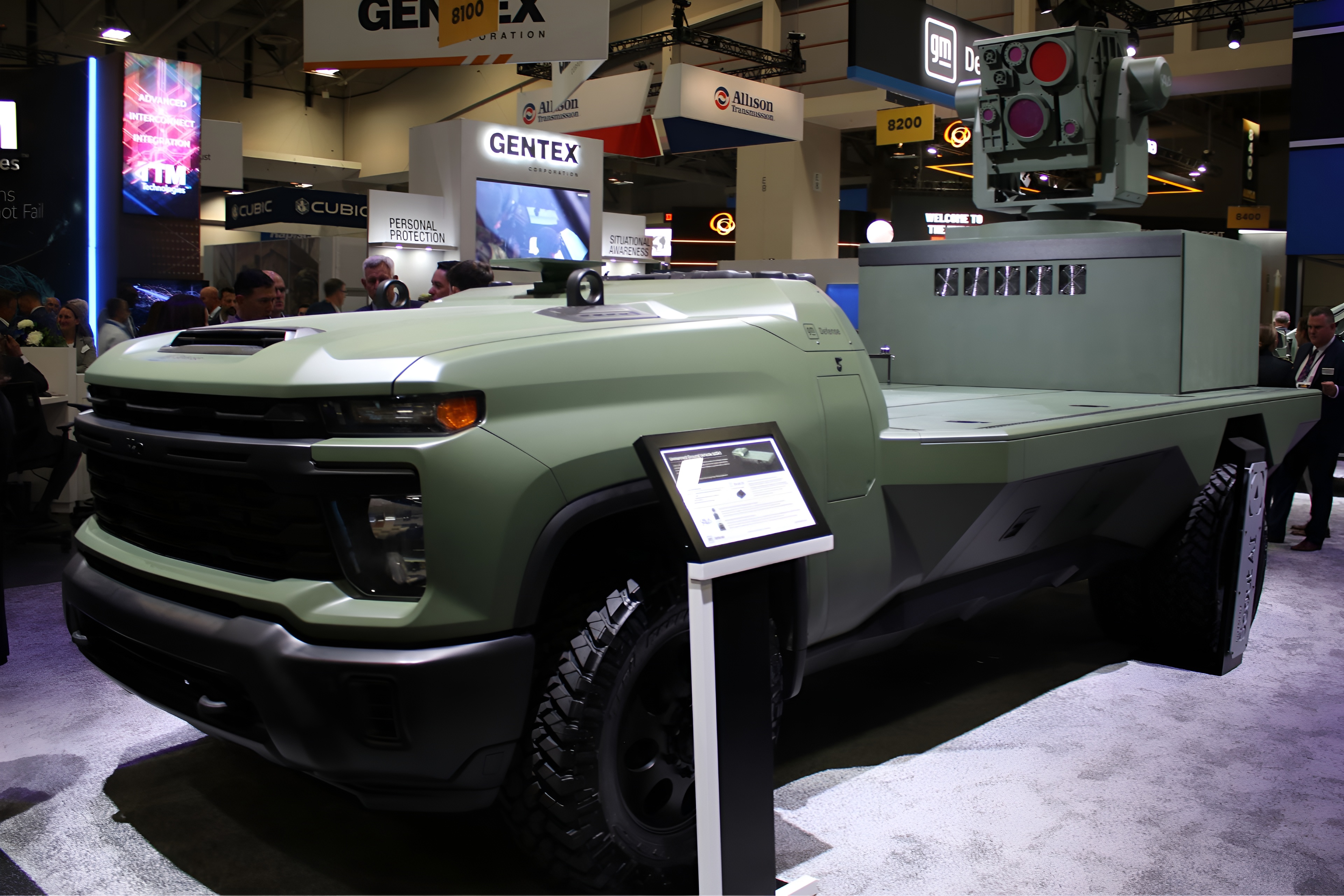
A Silverado built to operate without a driver is a very different proposition from the heavy-duty truck people know for towing and hauling. GM Defense has removed the cabin from a Chevrolet Silverado 3500HD-based concept and is proposing it for military supply runs and casualty evacuation, missions that could keep a driver out of dangerous environments.
The company unveiled the Unmanned Ground Vehicle on October 12 at the Association of the United States Army Annual Meeting in Washington, D.C. GM Defense is targeting functional trials in 2027, but the vehicle remains a concept rather than demonstrated operational equipment.
That distinction matters. Removing the cab creates space and eliminates the need to protect an onboard driver, but it also shifts essential driving, monitoring and decision-making functions elsewhere. Public information does not yet explain how the vehicle navigates, how closely a remote operator must supervise it or what communications and sensor arrangements would support its proposed missions.
A commercial-truck foundation with a different job
The concept uses a dual-rear-wheel skateboard architecture derived from the Silverado 3500HD. Starting with commercial truck hardware can offer a more mature mechanical and manufacturing baseline than creating an entirely new military vehicle, while drawing on GM’s established engineering, supply chain and production resources.
Yet commercial lineage does not by itself prove suitability for unmanned logistics. A heavy-duty pickup is normally designed around a person who can interpret unusual terrain, detect mechanical trouble and respond when a route becomes obstructed. A driverless vehicle must replace or relocate those functions through sensors, software, communications and remote supervision. GM Defense is working with Scout AI on the autonomy system, but no results have been released showing how the complete vehicle performs under representative conditions.
The platform is reported to support up to 8,000 pounds of payload and carry roughly 102 kilowatt-hours of onboard energy using GM Defense’s Ultium-based battery technology. Its drivetrain is not described as a straightforward battery-electric arrangement, however, and the complete propulsion configuration has not been publicly detailed. That leaves unanswered questions about range, endurance, charging or refueling demands and the balance between propulsion energy and power available to onboard equipment.
GM Defense describes one intended role as silent logistics. The platform can provide power quietly while stopped, reducing the need to run an engine during that operating state. That does not establish that every part of a supply mission would be silent, nor does it disclose the vehicle’s noise or thermal characteristics while moving.
Casualty evacuation raises a higher test threshold
Moving supplies without an onboard driver is one challenge. Carrying injured personnel is more demanding because vehicle motion, environmental protection, patient restraint and communication with medical personnel all become part of the system-level problem. The cabinless layout shown at the event does not establish how casualties would be secured or protected, and GM Defense has not released a tested evacuation configuration.
Those omissions do not mean the role is impractical; they identify what trials must resolve before the claim can advance beyond a proposed use. Defence readers will reasonably want to know whether an unmanned heavy-duty vehicle can complete hazardous supply runs or evacuations reliably while reducing risk to drivers. That requires evidence from the integrated vehicle, not simply confidence in the underlying Silverado architecture.
The concept was also displayed with counter-drone equipment, and GM Defense says the modular platform could support that type of mission. No performance results or detailed integration information have been provided, so the display should not be treated as proof of an operational counter-drone capability.
The next milestone is a working demonstrator
GM Defense has indicated that it aims to have a technology demonstrator ready by June 2027, within its broader target for functional trials that year. It does not yet have a scheduled delivery date for an Army test platform, and no procurement or deployment timeline has been announced.
The important next step is therefore not another list of possible payloads. It is a functioning vehicle that can show how the autonomy, power system, payload interfaces and Silverado-derived chassis work together. Until those trials begin producing results, the cabinless truck remains an early-stage attempt to turn familiar commercial hardware into practical military logistics equipment.
| More aerospace and engineering stories, right in your MSN feed. Follow AMI on MSN |
By Jonathan Barrett — Editor for AMI’s future mobility and autonomous systems section, with two decades covering robotics, e-mobility, drone-vehicle convergence, and transport mechanical systems.