Ukraine Says Starshield Speed Limit Disrupted Drone Missions Without Warning
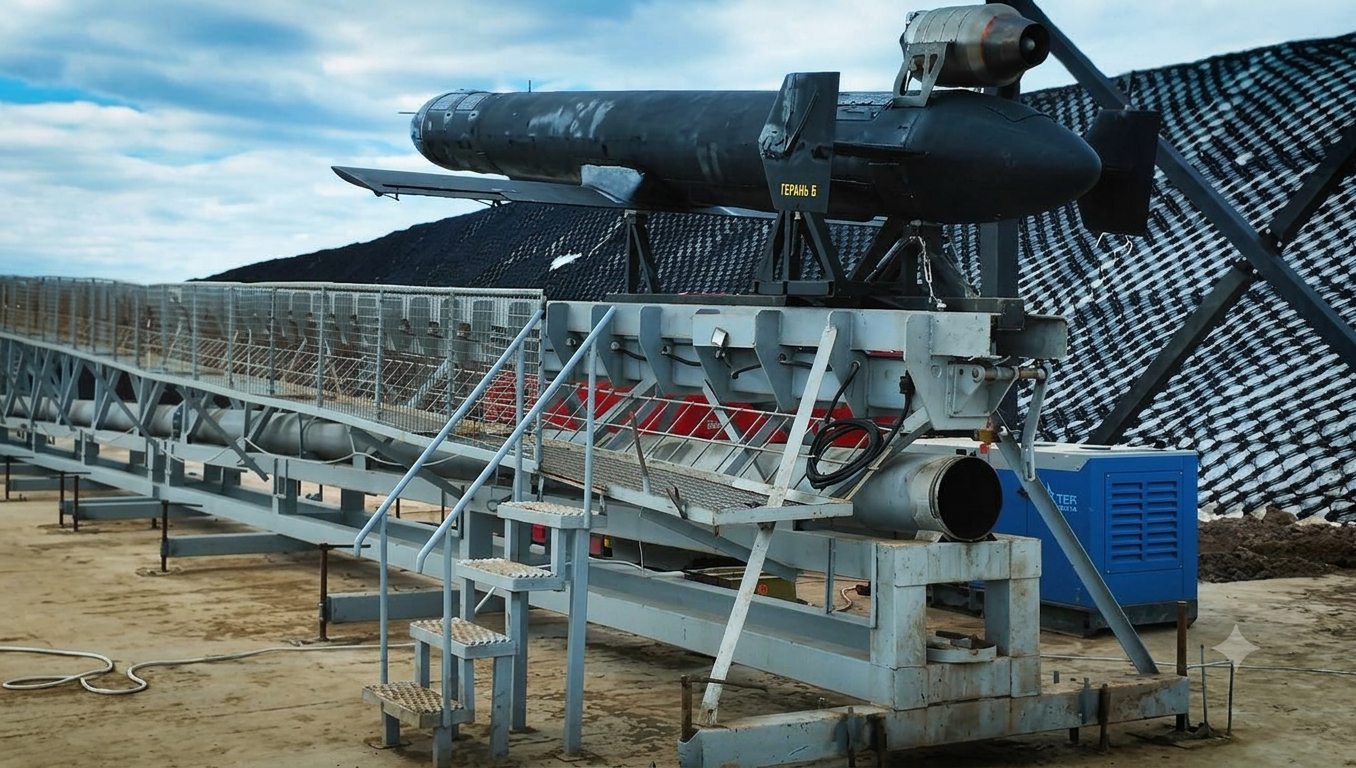
A speed restriction imposed on SpaceX’s military satellite service interrupted connections to moving Ukrainian drones and disrupted several missions without warning, according to Ukrainian officials. The affected Starshield links supported both attack drones and interceptor drones used for air defense, turning a network-level operating limit into an immediate loss of mission availability.
Responsibility was initially disputed. Ukrainian presidential adviser Serhiy Beskrestnov said SpaceX imposed a 160-kilometer-per-hour limit, although a Defence Ministry source reported lost connections at less than half that speed. SpaceX CEO Elon Musk countered that Starshield systems are controlled by the U.S. government and that “any limits on speed or usage are decided by the US military and ultimately POTUS.”
Subsequent reporting from Reuters, citing two U.S. officials and a Western official briefed on the matter, said the order came from inside the White House and was passed to Defense Department leaders. Those officials did not identify who made the decision or who implemented it. A senior U.S. official said no such request came from the president, while the White House did not answer whether another administration official requested it.
That leaves an important distinction unresolved. The later reporting points toward the U.S. government rather than an independent SpaceX decision, but it does not establish the complete command chain behind the restriction. Ukraine contacted SpaceX, the U.S. government and NATO seeking clarification.
A functioning aircraft can still lose mission availability
For an unmanned aircraft that depends on a satellite connection while moving, communications access is part of the operational system not an optional layer added after the airframe, propulsion and flight controls. If the network stops serving a terminal above a defined speed, the aircraft and terminal may remain physically functional while the connected mission they support can no longer proceed as intended.
This is a readiness issue created outside the vehicle itself. Conventional maintenance can replace damaged hardware, inspect wiring or update onboard equipment, but it cannot restore access withheld at the service layer. The relevant dependency extends from the aircraft and terminal through the satellite constellation, service authorization and government policy controlling permitted use.
Ukraine said that dependence affected several missions before clarification arrived. President Volodymyr Zelenskiy called the restriction a major mistake and said interceptor drones rely heavily on the satellite connection. Two Ukrainian military sources also said it impaired attacks on Russian targets inside Ukraine and drone interceptions. Those are attributed Ukrainian accounts; the full scale of the disruption has not been independently established.
Private infrastructure, government control
The episode raises an uncomfortable question for Ukraine and its supporters: how much control should a private company have over technology on which a country depends during a war? Starshield complicates the premise because it is a SpaceX-built service for government and national-security customers, while Musk says the relevant systems and restrictions are controlled by Washington. The practical concern remains even if the limit originated within the U.S. government: an externally controlled service decision reportedly reached deployed aircraft with no advance warning to their operators.
That can reasonably frustrate supporters who see satellite access as affecting Ukraine’s ability to defend itself and fight back. Poland pays for Ukrainian Starlink subscriptions on Kyiv’s behalf, adding another institutional layer between the network operator, government customer, funding partner and end user.
Replacing the service is not a quick procurement exercise. European alternatives are not ready-made substitutes for terminals already integrated into Ukrainian operations. Starlink and Starshield use proprietary technology, so changing networks would require replacing terminals rather than simply redirecting existing hardware to another constellation. Competing terminals may also impose different capacity, size, weight, power and cost constraints.
A Ukrainian official later said Starlink and Starshield service had been restored to full capacity. Restoration resolves the immediate connectivity limit, but not the control issue exposed by it. Until the decision chain and notification process are clarified, Ukraine remains dependent on a communications capability whose operating boundaries can be changed beyond the drone operator’s control.
| More aerospace and engineering stories, right in your MSN feed. Follow AMI on MSN |
By Stephen Wallace — Editor for AMI’s aerospace integration and unmanned mobility coverage, focused on drone manufacturing, VTOL systems, autonomous networks, and air-ground mobility links.