Boeing Opens F-15EX Factory and Flight as Production Continues
The access is still notable. Fighter assembly lines are tightly controlled workplaces, and flights involving people outside the military and manufacturer are uncommon. Boeing’s involvement was explicit: the episode credited the company with making the visit possible. No date, aircraft identity, production milestone or flight-test result was provided.

From factory access to a continuing production program
The production line now has a newly confirmed block of work. On Sept. 29, 2026, the Department of the Air Force awarded Boeing a Lot 7 contract for 22 F-15EX aircraft. The service said the agreement sustains production despite inflation across the defense industrial base and the effects of a 2025 production disruption.
That contract gives the factory visit a consequence beyond spectacle. An assembly line must coordinate structures, avionics, engines, supplier deliveries, inspections and labor well before a finished aircraft reaches the flight line. The Air Force said negotiations covered cost, schedule and aircraft quantity, with all 22 Lot 7 jets retained within available funding.
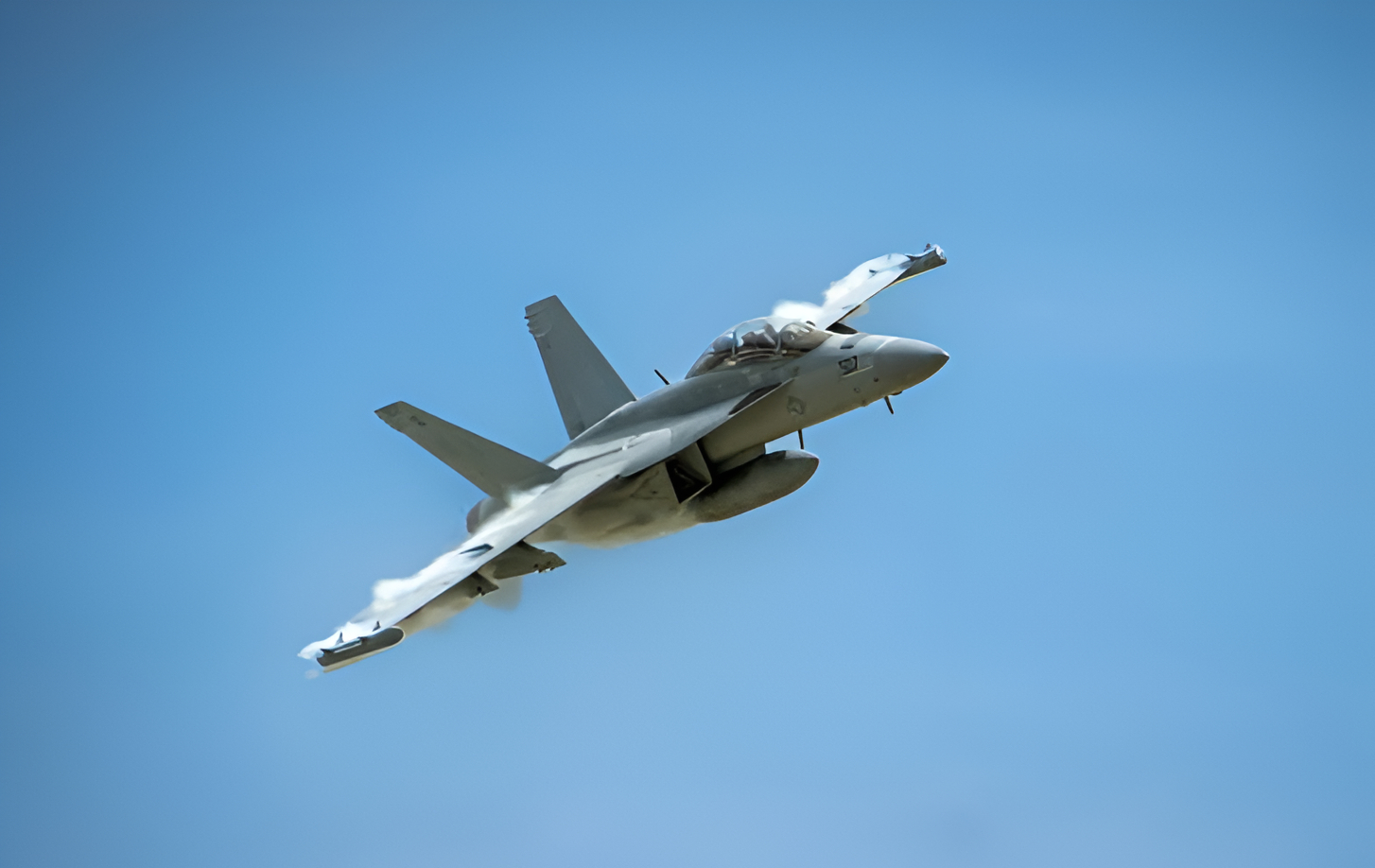
The F-15EX is intended to replace aging F-15C and F-15D aircraft. Rather than treating the familiar Eagle airframe as a finished design, the Air Force describes the EX as a platform built for continued modernization as requirements evolve. Its listed changes include advanced avionics, a large-area cockpit display, digital backbone architecture and enhanced survivability equipment.
Digital controls change how the Eagle flies
One of the most consequential changes is the move to digital fly-by-wire flight controls. Earlier F-15C aircraft use a hydro-mechanical control arrangement in which the pilot’s inputs are transmitted through mechanical and hydraulic systems. In the F-15EX, computers interpret control inputs and command the aircraft’s control surfaces.
That does not remove the pilot from the loop. It changes the architecture between the pilot and the airframe, allowing control laws to manage the aircraft’s response and giving engineers a digital foundation for future updates. It also adds software configuration and verification to the burden carried by maintainers, testers and program managers.
The Air Force began operational testing of the F-15EX in 2021, only months after accepting its first two aircraft. At Nellis Air Force Base, crews evaluated the fighter alongside earlier F-15 variants and used range instrumentation to compare what pilots perceived in the cockpit with recorded aircraft data. That distinction is central to flight testing: a successful sortie is not judged solely by how the airplane felt to its crew.
Developmental testing checks whether an aircraft meets build specifications and safety requirements. Operational testing asks how well the complete system performs under representative conditions. Findings can send engineers back to software, hardware or procedures before a capability is fielded more broadly.
Factory completion is not Air Force acceptance
A newly assembled fighter does not move directly from Boeing’s line into routine service. Air Force acceptance crews conduct extensive checks before the government takes delivery. The process described for the F-15EX includes exercising aircraft systems and taking the jet through demanding portions of its approved flight envelope.
That work separates manufacturing completion from customer acceptance. Ground inspections can identify workmanship or installation problems, but flight exposes the integrated aircraft to aerodynamic loads, vibration, temperature changes and system demands that cannot be fully reproduced on the factory floor. Discrepancies must be documented and resolved before handoff.
The factory-and-flight access therefore shows two different points in the same production chain. St. Louis is where Boeing assembles the aircraft; instrumented testing and acceptance determine whether each completed jet satisfies the Air Force’s requirements. With 22 more aircraft now contracted, maintaining that flow from suppliers and assembly through inspection, flight and delivery is the program’s immediate industrial challenge.
| More aerospace and engineering stories, right in your MSN feed. Follow AMI on MSN |
By David Whitaker — Associate editor for AMI’s aerospace and drone systems desk, translating flight systems, aircraft programs, spaceflight, and UAV developments into accessible technical stories.