Lockheed’s More Maneuverable Patriot Interceptor Won’t Start Testing Until 2027
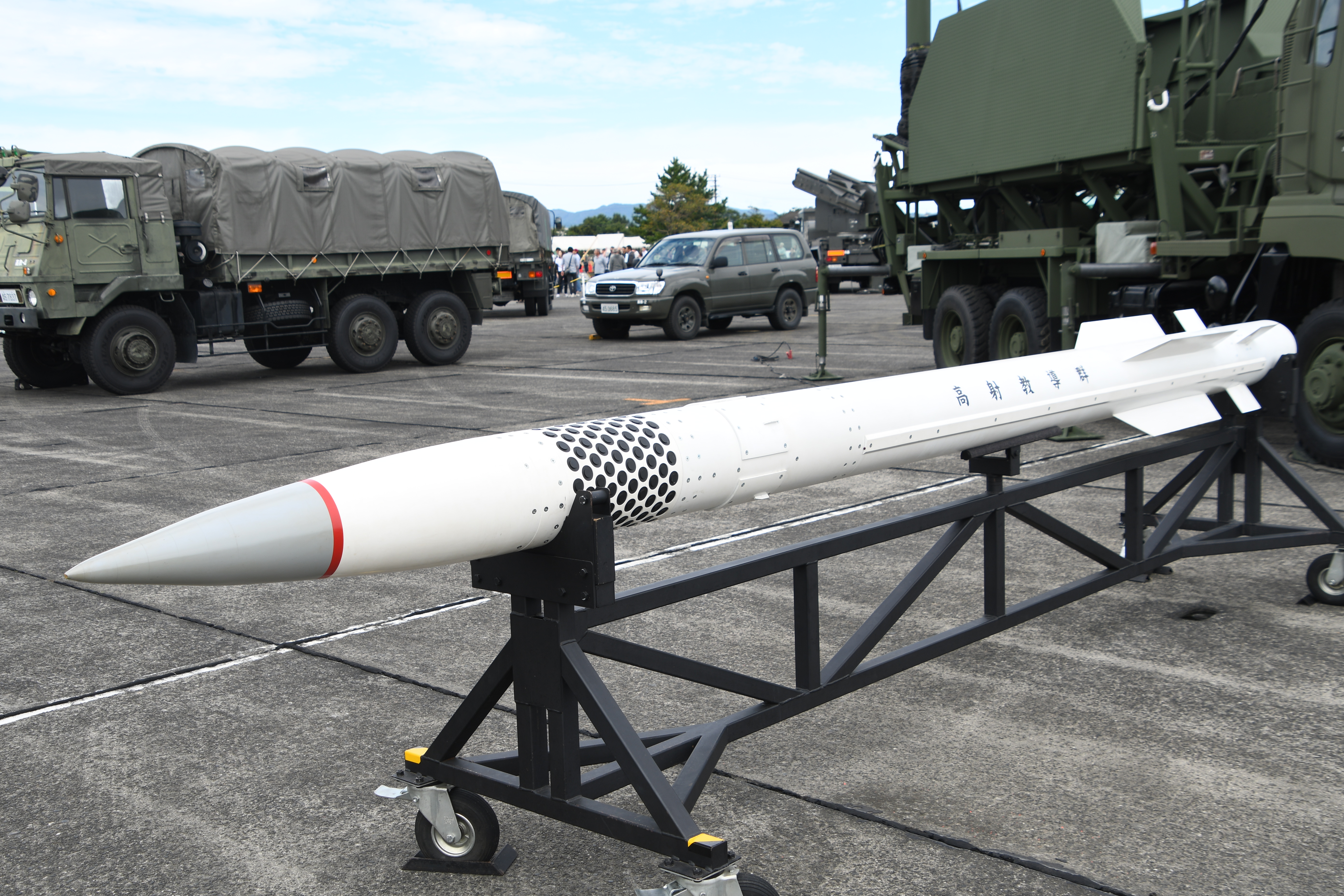
Patriot operators face missiles capable of making harder-to-predict maneuvers, but Lockheed Martin’s proposed answer remains years from possible deployment. The company has unveiled PAC-3 Edge, a Patriot-compatible interceptor scheduled to begin testing in 2027, with preparation for rapid deployment targeted for 2031.

The U.S. Army has advanced Lockheed Martin into the next development stage of its competitive Future Interceptor program. That keeps PAC-3 Edge moving, but it is not a test result or a final demonstration of the performance Lockheed is advertising. Its claimed gains in range, altitude, speed, precision and maneuverability still have to be established through development and testing.
The urgency is particularly visible in Ukraine, where supporters have worried about Russian missiles using trajectory changes and terminal maneuvers to get through Patriot defenses. A Financial Times report cited in coverage of the program put Ukraine’s reported Patriot ballistic-missile interception rate at 37% in August 2025 and 6% in September, linking the decline to those changing flight profiles. Those monthly figures concern a specific operational setting rather than every Patriot engagement, but they illustrate the problem PAC-3 Edge is intended to address: an interceptor must retain enough sensing, energy and control authority to respond when a target does not follow the expected path.
What changes inside PAC-3 Edge
PAC-3 Edge builds on the PAC-3 Missile Segment Enhancement, or PAC-3 MSE, rather than replacing the full Patriot architecture. The principal changes are a new Lockheed Martin seeker, upgraded flight controls and a Northrop Grumman multi-pulse solid-rocket motor.
The seeker is central because it provides the information used to guide the interceptor during the engagement. Lockheed says the new unit is designed to increase precision and maneuverability against evolving threats, and the company has invested $250 million in its Strigo Product Center to support new seeker technology. It has not disclosed the seeker’s technical configuration. Suggestions that it could use dual-mode or multimode sensing remain analyst speculation, not a confirmed design feature.
The motor and control upgrades address the other side of the interception problem. A multi-pulse motor can deliver thrust during separate portions of flight rather than expending all useful propulsion in one continuous event. Lockheed describes the Northrop Grumman motor as providing precision thrust across the flight, while the revised control system is intended to improve performance at longer ranges and higher altitudes. Together, those changes are meant to preserve energy and maneuvering capability later in an engagement, when a changing target path can impose greater demands.
PAC-3 Edge retains the hit-to-kill approach used by the PAC-3 family, destroying a target through direct impact. That makes guidance accuracy and endgame control especially important, but Lockheed has not released the specifications needed to quantify how much more range, speed or maneuverability the new design would deliver over PAC-3 MSE.
Compatibility reduces one risk, not the schedule
Lockheed is designing the interceptor to work with current and future air-and-missile-defense equipment, including the Army’s Integrated Battle Command System, M903 launcher, containerized launchers and HIMARS Flex. Using established command and launch architecture could avoid the disruption of fielding an entirely separate defensive system. It also lets the Army pursue improved interceptor performance while transitioning toward the Lower Tier Air and Missile Defense Sensor, a radar designed to provide 360-degree coverage.
Production capacity forms a separate constraint. Lockheed produced nearly 620 Patriot interceptors in 2025 and plans to raise annual output to 2,000 by 2030. That expansion is substantial, but missile production depends on a long chain of seeker, propulsion, electronics and structural suppliers. PAC-3 Edge will also introduce new hardware that must mature alongside the broader effort to increase Patriot-family output.
The result is a program with a clear engineering target but an unverified solution. The seeker must track more demanding threats, the motor must deliver useful energy when needed, and the controls must convert that energy into accurate maneuvering all while remaining compatible with Patriot equipment already in service across 18 countries. Testing beginning in 2027 will provide the first public milestone for judging whether those pieces produce the promised improvement; the company’s rapid-deployment preparation does not reach its target until 2031.
| More aerospace and engineering stories, right in your MSN feed. Follow AMI on MSN |
By David Whitaker — Associate editor for AMI’s aerospace and drone systems desk, translating flight systems, aircraft programs, spaceflight, and UAV developments into accessible technical stories.