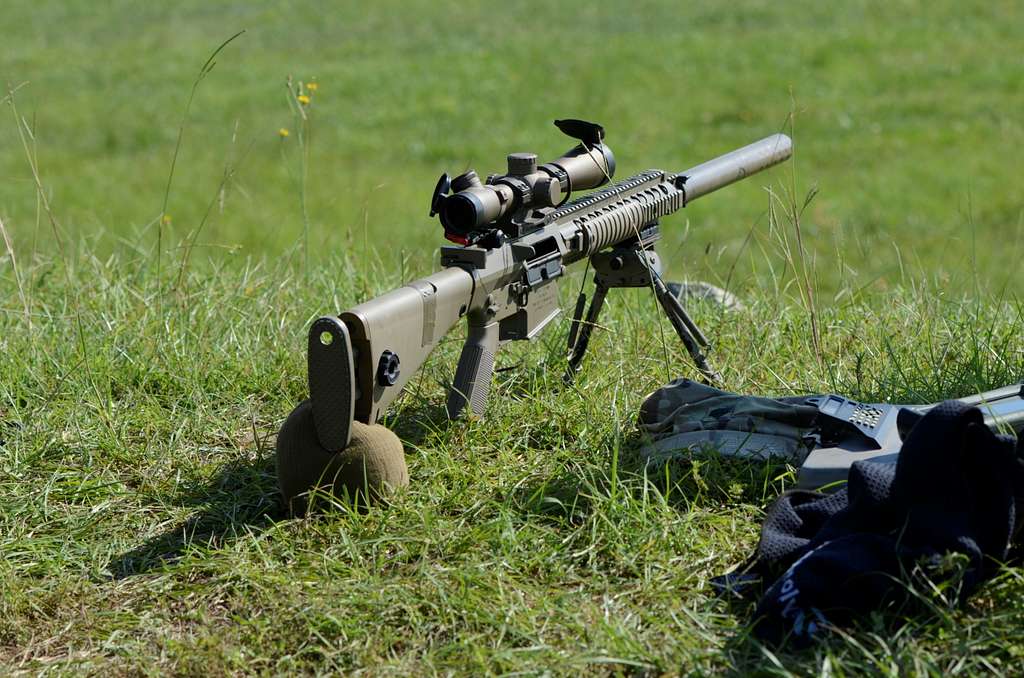
Army Will Field M8 Carbine, One Pound Lighter and 3.5 Inches Shorter
The Army’s next carbine is being promoted through a comparison that also exposes an unresolved procurement question. The Pentagon says the XM8 is approximately 3.5 inches shorter and more than one pound lighter than the M7 rifle, yet its stated assignment is to replace the older M4A1 for soldiers in the Close Combat Force beginning in fiscal 2027.

Initial M8 fielding is expected to start in December 2026 with some units at Fort Bragg, North Carolina, according to company executives cited by Defense News. The Pentagon’s fiscal-2027 statement is consistent with that timing, but available public descriptions do not fully define whether the M8 is the M4A1’s direct successor, the replacement for the recently introduced M7 within equipped units, or both at different stages of fielding.
The physical change is substantial enough to explain why the Army is moving toward the compact configuration. The M7 is listed at 9.8 pounds with its suppressor, with a 13.5-inch barrel and 20-round magazine. The M8 is listed at 8.8 pounds with its suppressor, an 11-inch barrel and a 25-round magazine.
Those figures make the M8 roughly a pound lighter in the cited configurations, while the Pentagon describes the complete weapon as about 3.5 inches shorter. Barrel length accounts for 2.5 inches of that reduction. A shorter overall package also changes how the mass is distributed, particularly with a suppressor mounted at the front.
Weight reduction carries its own design constraints
Removing weight from an infantry weapon is not a matter of cutting material indiscriminately. SIG Sauer’s product manager said the company used lightening cuts around the receiver and removed weight from the barrel while accounting for potential effects on performance, barrel life and heat. The shorter barrel also moved the weapon’s center of gravity, which the company says improves its balance with the suppressor installed.
The emphasis on mass reflects a broader soldier-load problem. Weapons compete with ammunition, body armor, water, batteries, communications equipment and other gear for a limited human carrying capacity. Research on military load carriage consistently finds that added weight increases physiological strain and can reduce mobility and performance. A 2026 load-carriage study found total load weight had more influence on measured strain than the design of the backpack carrying it.
A one-pound weapon reduction will not solve that system-level burden, but weight removed from equipment held in the hands can also affect handling and fatigue differently from weight supported in a pack. The shorter configuration should be easier to manage in vehicles and confined spaces, although the supplied figures do not establish comparative Army test results for those tasks.
The M8 remains tied to the wider 6.8mm program
The M8 is not a return to the M4A1’s 5.56mm ammunition. It remains part of the Army’s Next Generation Squad Weapons effort and uses the 6.8x51mm cartridge shared with the M250 light machine gun. SIG received a 10-year contract in 2022 to produce the rifle and automatic-rifle elements of that program.
The Army launched the effort after a 2017 study validated requirements for greater energy at extended ranges and reduced shooter error through advanced fire control. That performance objective helped drive a larger and heavier weapon and ammunition system than the M4A1 architecture it was intended to succeed.
The proposed 25-round magazine partially closes another visible gap. It adds five rounds over the M7’s 20-round magazine, although it remains below the 30-round capacity commonly associated with the M4A1. Army Times reported that the larger magazine was undergoing soldier evaluation and still required a full Army assessment before approval, leaving its availability during initial M8 fielding unresolved.
Budget documents add another piece to the transition. The Army requested no additional M7 rifles for fiscal 2027 after roughly 50,000 had reportedly been delivered. The service has not publicly settled what it will do with those weapons. Reassignment, training use and conversion into the compact configuration have been discussed by SIG, but no Army decision has been announced.
The December fielding milestone will therefore begin more than a hardware rollout. It should start clarifying whether the lighter M8 is an incremental configuration inside the same program or the Army’s new standard rifle after a brief M7 fielding cycle.
| More aerospace and engineering stories, right in your MSN feed. Follow AMI on MSN |
By David Whitaker — Associate editor for AMI’s aerospace and drone systems desk, translating flight systems, aircraft programs, spaceflight, and UAV developments into accessible technical stories.