U.S. Navy Has 11 Carriers, but Repairs Keep Some Sidelined
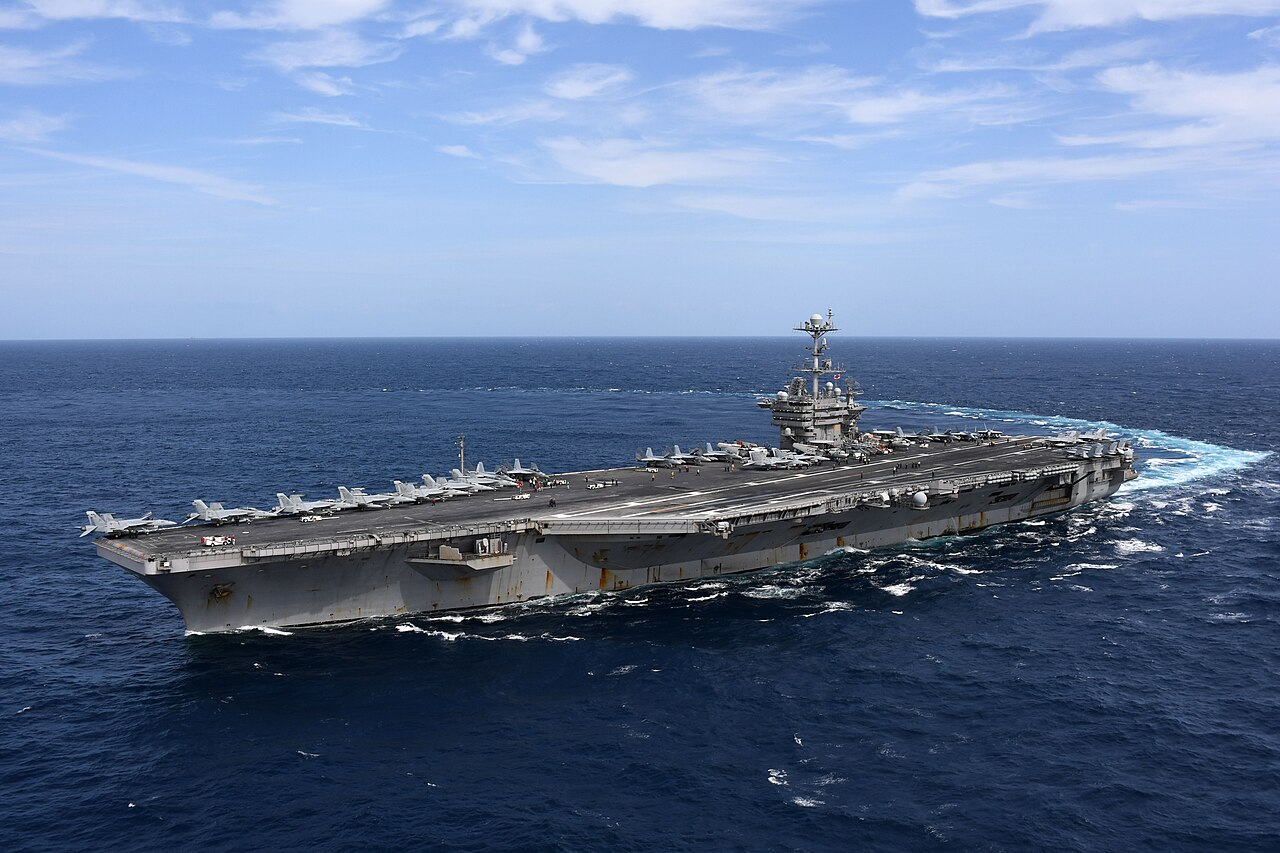
The U.S. Navy had 11 commissioned aircraft carriers as of October 2026, but that number is an inventory count not a force that can be sent into combat all at once. Maintenance, training, deployment preparation and lengthy shipyard overhauls leave some carriers unavailable at any given time.

The gap is substantial when a carrier enters its once-per-service-life reactor-refueling overhaul. USS Harry S. Truman moved to Newport News Shipbuilding on September 30 for work scheduled to continue until November 2031. It remains a commissioned carrier throughout that period, even though the shipyard project removes it from deployment rotations for years.
The commissioned fleet consists of 10 Nimitz-class ships and USS Gerald R. Ford. The Nimitz-class carriers are USS Nimitz, USS Dwight D. Eisenhower, USS Carl Vinson, USS Theodore Roosevelt, USS Abraham Lincoln, USS George Washington, USS John C. Stennis, USS Harry S. Truman, USS Ronald Reagan and USS George H.W. Bush. Their consecutive hull numbers run from CVN-68 through CVN-77, while Ford is CVN-78. All 11 are nuclear-powered.
A five-year overhaul shows the availability constraint
Truman’s overhaul is the clearest current example of why commissioned strength and immediate availability cannot be used interchangeably. Under the Navy’s $5.1 billion contract announcement, the work includes refueling the carrier’s reactors as well as extensive maintenance, repairs, upgrades and modernization. The Navy describes the project as a full recapitalization for the second half of the ship’s planned service life.
Truman is scheduled for redelivery in November 2031. That timetable demonstrates the scale of midlife carrier maintenance: one overhaul represents nearly one-third of the maintenance and modernization the ship is expected to receive over its service life. The work preserves a valuable hull for decades, but the price is a long absence from the operating fleet.
Other carriers move through shorter maintenance periods, training and preparations between deployments. A carrier coming out of a shipyard cannot simply be counted as immediately ready for another mission; the ship and its personnel must progress through the necessary preparation before deployment. The precise number available therefore changes with the fleet cycle rather than remaining fixed at 11.
Nuclear propulsion does give these ships considerable endurance, but it does not make them independent of logistics. Their aircraft still need fuel, while the ship and air wing require food, ammunition and other supplies. Carrier availability consequently depends on more than whether the reactors can continue producing power.
The fleet is approaching a narrow transition
The count also faces a timing issue at opposite ends of the carrier fleet. USS Nimitz, commissioned in May 1975, is the oldest carrier in service. Its planned retirement was extended from 2026 into 2027. The future USS John F. Kennedy, the second Ford-class carrier, has received preliminary acceptance but has not entered commissioned service; commissioning is expected in March 2027.
The Navy has said it plans to retire Nimitz when Kennedy is commissioned. Until that handoff occurs, Kennedy does not belong in the commissioned-carrier total. The transition therefore depends on the arrival of the new carrier lining up with the departure of the oldest one, while the rest of the fleet continues cycling through maintenance and training.
Ford, commissioned in July 2017, also marks a significant design change. It replaces the Nimitz class’s steam-powered aircraft catapults with electromagnetic launch equipment and incorporates new aircraft-recovery systems and weapons elevators. Those changes support the Navy’s long-term move to the Ford class, but they do not remove the basic availability constraint: even a newer carrier must undergo maintenance, prepare its crew and air wing, and fit into a deployment rotation.
Amphibious assault ships do not raise the official carrier figure above 11. Those vessels can operate helicopters, tiltrotors and short-takeoff and vertical-landing aircraft, but the Navy classifies them as LHA or LHD ships and assigns them a primary role supporting Marine expeditionary operations. They are not part of the nuclear-powered CVN carrier inventory.
The Navy’s 11-carrier figure is therefore accurate, but it answers only how many are commissioned. Truman’s scheduled absence through November 2031 and the pending Nimitz-to-Kennedy handoff shows why the number ready for near-term operations is necessarily smaller and continually changing.
| More aerospace and engineering stories, right in your MSN feed. Follow AMI on MSN |
By David Whitaker — Associate editor for AMI’s aerospace and drone systems desk, translating flight systems, aircraft programs, spaceflight, and UAV developments into accessible technical stories.