Lufthansa Retires Last Airbus A340-600 After 23 Years of Service
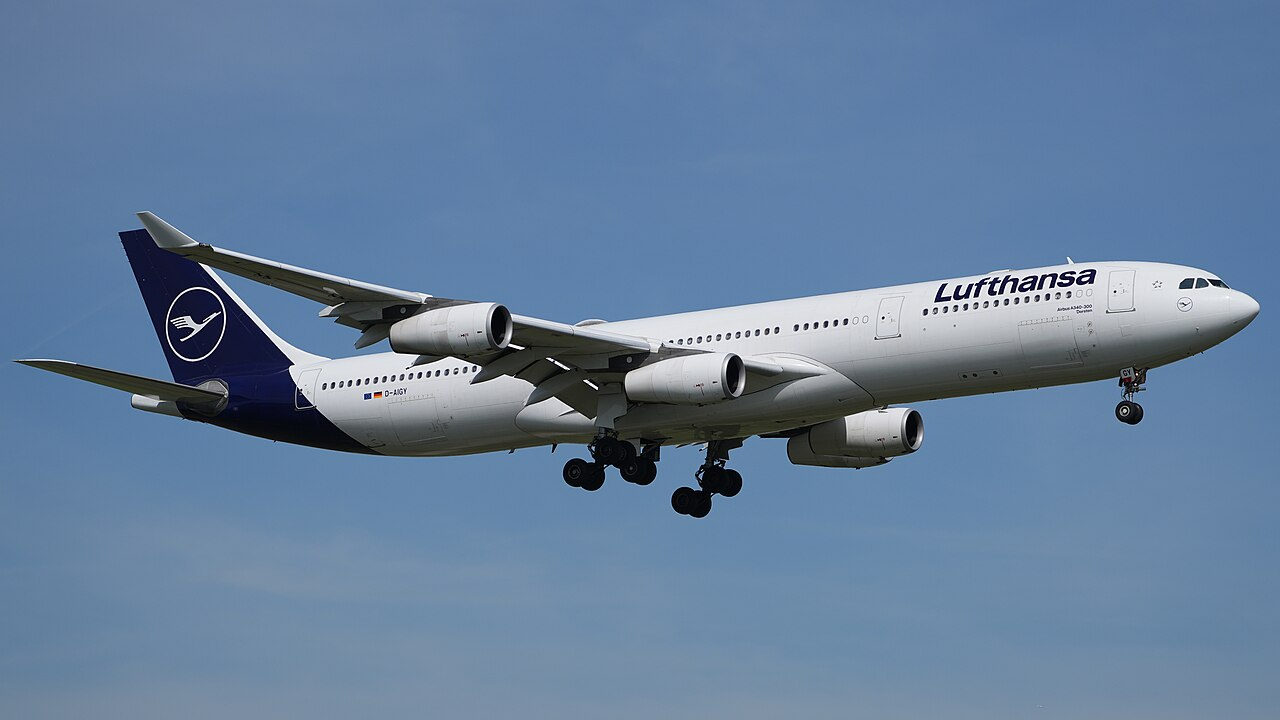
One of the longest passenger jets ever built has completed its last scheduled flight for the airline that operated more of them than any other. Lufthansa flight LH419 arrived in Frankfurt from Washington Dulles on October 19, 2026, closing nearly 23 years of scheduled passenger service with the four-engine Airbus A340-600.
The final aircraft, registered D-AIHW, landed at 6:31 a.m. GMT after departing Washington on October 18. According to Lufthansa’s account of the final flight, 267 passengers and 15 crew members were aboard for the eight-hour, five-minute trip. Some passengers had booked specifically to join the farewell, while aircraft enthusiasts gathered for the arrival.
That attention reflected the A340-600’s unusual physical presence. At 75.30 meters long, it was the world’s longest passenger aircraft when Lufthansa received its first example in November 2003. Its exceptionally slender fuselage helped produce the enthusiast nickname “Flying Pencil,” while four Rolls-Royce Trent 500 engines gave it a look and sound increasingly absent from modern long-haul fleets.
Lufthansa eventually operated 24 A340-600s, the largest fleet of the type in the world. The aircraft carried more than 40 million Lufthansa passengers over 23 years and served long-distance markets across North America, South America, Africa and Asia. Its cabins included first, business, premium economy and economy class.
Four engines give way to two
The final Washington flight was more than a ceremonial retirement. It marked a practical change in how Lufthansa intends to operate its long-haul network: fewer aircraft types and greater reliance on newer twin-engine jets.
Lufthansa announced in April that its four remaining A340-600s would leave at the end of the 2026 summer schedule. The airline is bringing in aircraft including the Airbus A350-1000 and additional Boeing 787s, while the Boeing 777-9 is expected to follow. Eighteen 787-9s were already in service at the time of the retirement, with another 11 due by 2027.
Four engines once offered important operating flexibility on long overwater and remote routes. Advances in twin-engine aircraft, engine reliability and extended-range operating approvals have since allowed aircraft such as the A350 and 787 to cover demanding intercontinental missions with two powerplants.
The efficiency difference reaches beyond having two fewer engines to maintain. Four-engine aircraft generally carry additional structural and aerodynamic burdens, including greater wing weight. Lufthansa says the incoming A350-1000 and 777-9 consume 30 percent less kerosene than the older aircraft they will replace, based on manufacturer figures, with correspondingly lower emissions.
Fleet simplification also affects work that passengers rarely see. Reducing the number of aircraft types can cut complexity in maintenance programs, spare-parts support, crew training and schedule planning. Lufthansa expects next-generation models to make up 70 percent of its long-haul fleet by 2028.
For passengers and aircraft enthusiasts, the trade is tangible. New twinjets bring lower fuel consumption, quieter operation and reduced operating costs, but they also replace the A340-600’s distinctive four-engine profile and unusually long fuselage. The scale and engine sound that made the aircraft immediately recognizable are precisely the characteristics that a cost- and fuel-conscious fleet no longer requires.
Lufthansa’s A340 era is not over yet
The final A340-600 service does not end Lufthansa’s operation of the A340 family or four-engine passenger aircraft. The airline’s shorter A340-300 is expected to remain until 2027, with exact withdrawal timing dependent on operational requirements and fleet developments.
Lufthansa also plans to retire the A340-300, Airbus A330-200 and Boeing 747-400 by 2027 as part of its wider modernization program. That leaves the A340-600’s departure as one completed step in a larger transition rather than the immediate disappearance of every four-engine jet from the airline.
Still, LH419 closed the chapter that mattered most to followers of this particular aircraft. Lufthansa flew more A340-600s than any other operator, and its final example ended scheduled service on the same broad transatlantic network where the type had long been a familiar sight. What replaces it will be quieter and more economical but it will not have four engines or a 75-meter silhouette.
| More aerospace and engineering stories, right in your MSN feed. Follow AMI on MSN |
By David Whitaker — Associate editor for AMI’s aerospace and drone systems desk, translating flight systems, aircraft programs, spaceflight, and UAV developments into accessible technical stories.