Project HARP Reached 180 Kilometers but Never Became a Satellite Launcher
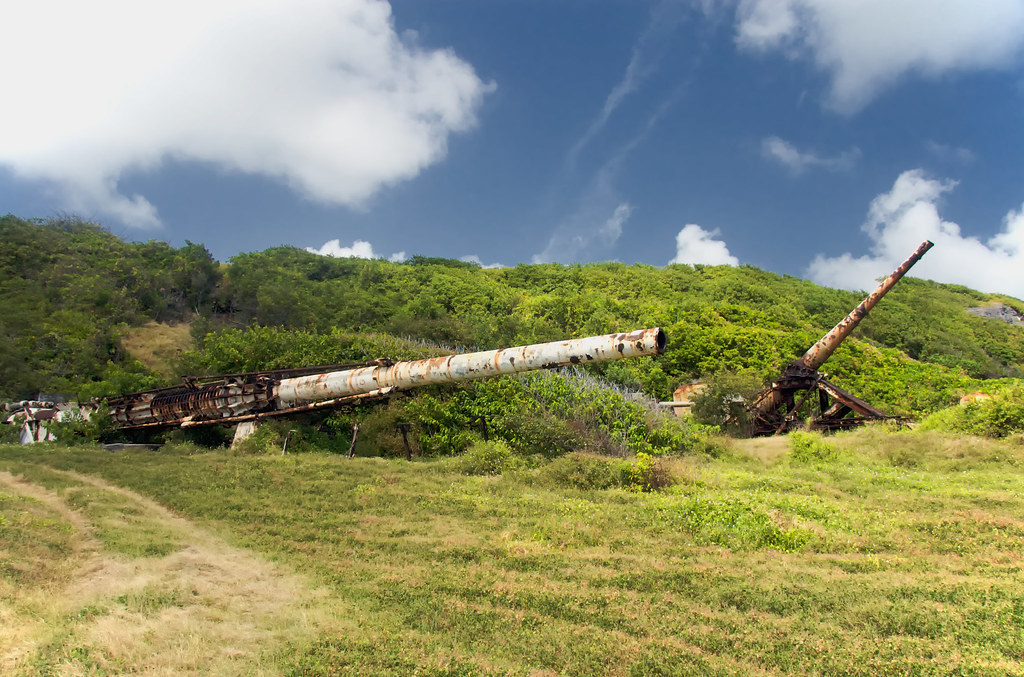
Project HARP’s giant gun could throw a scientific projectile far above the conventional boundary of space, but it could not complete the much harder job of placing a satellite in orbit. In 1966, the 36-meter artillery system on the southeastern coast of Barbados reportedly sent a projectile to an altitude of 180 kilometers. The low-cost orbital launcher envisioned by some of its leaders never followed.

That gap between altitude and orbit defines the experiment. A projectile fired mostly upward can cross 100 kilometers, coast to its highest point and then fall back. An orbiting spacecraft must also build enough horizontal velocity to keep falling around Earth rather than returning to the surface. NASA’s flight-to-orbit guide gives a velocity of 17,478 mph for a circular orbit 100 miles high. Reaching a comparable altitude is only one part of the requirement.
A naval gun turned into a research launcher
Project HARP was a joint effort involving the Canadian government, McGill University and the U.S. Ballistics Research Laboratory. Its Barbados installation joined 16-inch naval-gun sections into a 36-meter barrel and used more than half a metric ton of black powder. Although the hardware resembled oversized naval artillery, its funded research role included launching instruments and chemical tracers into the upper atmosphere.
Barbados offered several practical advantages. The site provided an eastward path over the ocean and a broad area where launch debris could fall. It sat about 13 degrees north of the equator, while tracking infrastructure associated with Cape Canaveral’s launch corridor was available nearby. The wider region’s atmosphere was also scientifically useful for studying conditions connected with hurricane development.
Some projectiles carried trimethylaluminium, which produced a luminous cloud after release. By observing how that cloud changed shape and moved, researchers could study wind shear high in the atmosphere. In that respect, HARP occupied territory later associated with sounding rockets: brief, suborbital flights that can collect data in regions too high for aircraft and too low for sustained satellite operation. NASA describes sounding rockets as relatively inexpensive research platforms precisely because they do not require the boosters and extended tracking needed for orbital missions.
The barrel solved only part of the launch problem
HARP’s engineering centered on extracting greater velocity without exceeding the barrel’s pressure limits. Its narrow research vehicles rode inside lightweight sabots, which sealed the smaller projectile within the much larger bore. A narrow, dense projectile could reduce aerodynamic drag, but the complete shot still had to balance payload mass, sabot mass and structural strength.
Pressure behavior proved difficult to predict. Piezoelectric sensors measured how pressure changed inside the barrel, while early tests produced higher peaks and lower muzzle velocities than expected. Unburned powder showed that releasing a large amount of chemical energy did not automatically translate into efficient acceleration. The team revised how the propellant charges were arranged and ignited, seeking a more controlled pressure history rather than one damaging peak.
Barrel length also mattered because a longer useful acceleration path could raise muzzle velocity without demanding the same pressure increase. A McGill report on the March 1965 firing series said extending the Barbados gun increased muzzle velocity by 30% for the same charge and shot weight. The report recorded one 185-pound Martlet 2C vehicle reaching 131 kilometers during that series, before the later reported 180-kilometer result.
Those achievements still left an unforgiving systems problem. A gun-launched payload experienced extreme acceleration at the start, then had limited options for steering and adding the large horizontal velocity required for orbit. Any practical satellite concept would need its structure, instruments and additional propulsion hardware to survive that launch environment while remaining light enough to accelerate effectively.
Project HARP therefore succeeded more clearly as an atmospheric-research system than as an orbital launcher. Its Barbados hardware has stood idle near Grantley Adams International Airport since the final launch in 1966 a 36-meter reminder that crossing into space and staying there are fundamentally different engineering accomplishments.
| More aerospace and engineering stories, right in your MSN feed. Follow AMI on MSN |
By David Whitaker — Associate editor for AMI’s aerospace and drone systems desk, translating flight systems, aircraft programs, spaceflight, and UAV developments into accessible technical stories.