Colorado Rail District Seeks $295 Million Yearly After 800,000-Voter Ballot Error
Colorado’s Front Range Passenger Rail District is asking eligible voters on Nov. 3 to approve $295 million in annual sales taxes and authorize $580 million in debt after Issue 7A was mistakenly printed on ballots sent to roughly 800,000 people outside the district. The Colorado Department of State and county clerks said the district failed to communicate updated boundaries following a 2026 change in state law.
Only votes cast by eligible residents within the revised district boundaries will be counted. County clerks can block the ineligible votes during tabulation, with a public audit and canvass following the election. The rail district has also replaced its designated election official: former Jefferson County Clerk and Recorder Pam Anderson took over the role after the previous official, district general counsel Brent Butzin, resigned on Oct. 12.
The corrective steps address ballot administration, but they do not answer the broader governance questions raised by the funding request. Voters are being asked to approve a recurring revenue stream for a passenger-rail program expected to require years of construction, coordination with existing railroads and continued operating support. The proposed debt would carry a maximum repayment cost of $785 million.
What the tax would fund
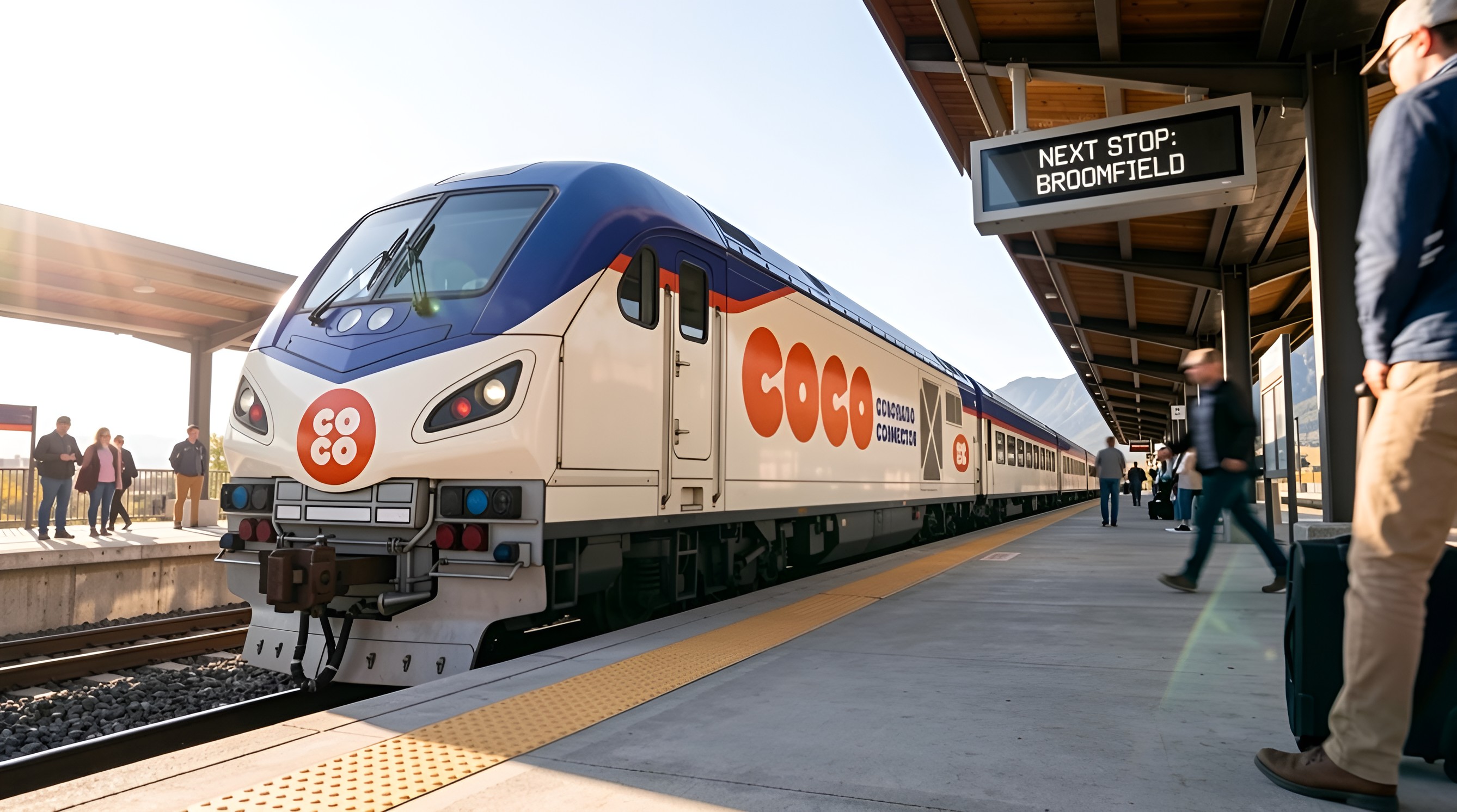
Issue 7A proposes a 0.333% sales and use tax, equal to about 33 cents on a $100 taxable purchase. Food, gasoline, residential utilities, prescription drugs and medical supplies would be exempt. Revenue would support construction, operation and maintenance of Colorado Connector passenger service along the Front Range, including the planned extension from Denver through Colorado Springs to Pueblo.
The broader route is intended to connect Fort Collins and Pueblo, with station and local-access improvements along the system. District officials anticipate beginning northern service between Denver and Fort Collins in 2029, while the southern extension is proposed to start in 2032. The project’s anticipated capital cost is roughly $4.7 billion over two decades.
Those figures create two distinct oversight tasks. Annual tax collections must be traced to specific construction and operating outcomes, while debt-financed work requires controls over contract scope, schedule changes and repayment obligations. The ballot language calls for annual independent audits and review by a rotating group of district taxpayers. For those mechanisms to be useful, public reporting would need to connect spending with measurable results such as completed design packages, executed railroad agreements, station readiness, service frequency and updated capital and operating forecasts.
Ridership assumptions also deserve continued testing. District surveys found that 11% of respondents would use the train to commute. That figure does not capture every potential trip, including education, events and intercity travel, but it underscores the importance of publishing the assumptions behind projected fare revenue, train frequency and highway-congestion benefits. A rail system can serve purposes beyond commuting, yet those purposes should be reflected in measurable demand forecasts before long-term operating commitments accumulate.
Consultant controls are part of project delivery
Butzin’s work outside Colorado adds a relevant governance issue without establishing misconduct in Colorado. He is a partner at Nossaman LLP and advises the California High-Speed Rail Authority. Reporting tied him to a California inspector general’s review that found frequent same-day flight bookings created a risk of higher costs and raised questions about required travel approvals. The reported total included about $86,500 in hourly travel pay and more than $250,000 when that pay was combined with reimbursed expenses. Butzin did not respond to requests for comment cited in that reporting.
California’s experience is not proof that Colorado’s program will encounter the same problems, nor does it show that Butzin caused California’s delays. It does illustrate why a public rail organization needs enforceable rules for consultant travel, billing, staffing commitments and advance approval. The California authority has since said only preapproved travel within contract scope and state regulations will qualify for reimbursement, while also updating its rules and training.
Colorado has a local benchmark as well. Voters approved the Regional Transportation District’s FasTracks tax in 2004 with a planned commuter-rail connection to Boulder and Longmont, but the B Line still terminates in Westminster more than two decades later. Different agencies, funding structures and operating conditions limit direct comparison, yet the unfinished commitment shows why milestone reporting and clearly assigned delivery responsibility matter before revenue becomes permanent.
Before the Nov. 3 vote, the most useful documents would be a current delivery schedule, an itemized capital and operating plan, consultant approval rules, updated ridership assumptions and a public process for explaining missed milestones. The ballot error can be contained during tabulation. The larger commitment $295 million every year, plus as much as $580 million in debt will depend on controls designed to function for decades.
| More aerospace and engineering stories, right in your MSN feed. Follow AMI on MSN |
By Thomas Caldwell — AMI’s senior editor for mechanical and mobility engineering, covering vehicle electronics, systems integration, electrification, chassis systems, propulsion, and safety policy.