Canadian Safety Board Finds Vertically Aligned Cessnas Collided Twice, Killing Both Student Pilots
For a pilot looking outside the cockpit, another aircraft directly above or below can effectively disappear behind the airplane’s structure. That geometry preceded a fatal collision near Steinbach, Manitoba, where two student-piloted Cessnas approached with one aircraft approximately 30 metres above the other. The aircraft made contact twice, killing both pilots.
The Transportation Safety Board of Canada found that the vertical alignment placed each Cessna in the other pilot’s blind area. Although both pilots announced their final approaches within 10 seconds, the radio calls apparently were not incorporated into either pilot’s awareness of the developing conflict. The finding illustrates the limit of treating visual lookout as a self-contained safety system at an airport without a control tower.
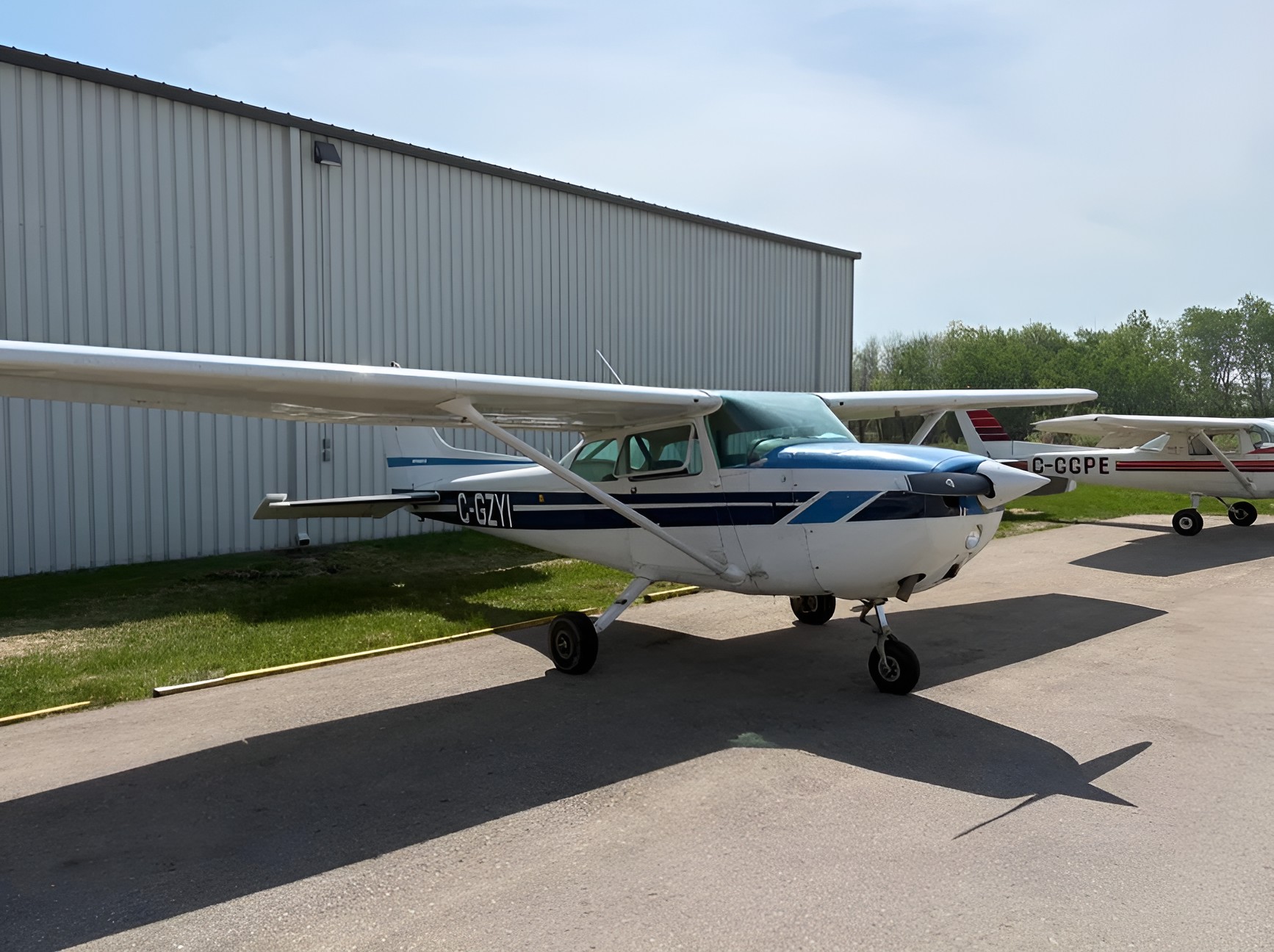
The July 8, 2025 accident occurred while four aircraft were conducting or joining training circuits in the rural municipality of Hanover. One Cessna, registered C-GZKA, abandoned an initial approach after another aircraft entered the circuit. It extended farther south before attempting another approach, while the second Cessna continued through a normal circuit. Those paths then converged.
The aircraft initially touched before the lower Cessna pitched up and the two became entangled. Both fell to the ground and were destroyed by a post-impact fire. The pilots, Savanna May Royes, 20, and Sreehari Sukesh, 23, died. Neither aircraft carried passengers.
Why sight alone could not maintain separation
At an uncontrolled airport, pilots not a ground controller are responsible for maintaining separation. Visual detection remains central, but its effectiveness depends on relative position, aircraft structure, movement across the pilot’s field of view and whether the pilot knows where to concentrate the search.
Vertical alignment is particularly difficult because wings, cabin roofs, floors and cockpit framing can obstruct the relevant view. An aircraft directly above may remain hidden from the lower pilot, while the lower aircraft can be masked beneath the upper pilot’s fuselage or wing. If their relative geometry changes little as they converge, there may also be limited apparent movement to draw attention.
Radio traffic information provides a separate awareness layer. Position, altitude, intentions and location within the circuit allow pilots to build a mental traffic picture before another aircraft becomes visible. Transport Canada’s procedures for radio-equipped aircraft at uncontrolled aerodromes call for pilots to maintain a listening watch and report when joining the circuit, flying downwind and becoming established on final approach.
Those transmissions only add protection when they are heard, interpreted and matched to an aircraft’s likely position. Nearly simultaneous final calls can become especially important when two pilots believe they are following separate or correctly sequenced approaches. In this accident, investigator Eric Vermette said there was no further communication after the two final calls.
A local procedure introduced following an earlier near-miss required Harv’s Air pilots to include their distance from the runway in final-approach calls. Neither student pilot included that distance. A distance report could provide more precise information than the word “final” alone, particularly when circuit paths have differed after a go-around. The safety board’s limited-scope investigation identified the missing information but was not intended to assign fault or determine civil or criminal liability.
Changes add layers rather than relying on one safeguard
Harv’s Air Service, which owned both Cessnas, has reduced the maximum number of aircraft in a circuit from four to three. Lower circuit density reduces the number of positions and intentions each pilot must track, while also limiting the number of paths that can converge during go-arounds, arrivals and repeated training approaches.
The flight school now requires students and aircraft renters to attend safety briefings covering lookout techniques, situational awareness and aircraft blind spots. It has also been installing more visible LED lighting and requires aircraft lights to remain on throughout each flight. Lighting can improve conspicuity when there is a clear line of sight, but it cannot illuminate an aircraft through a wing, fuselage or cockpit structure. Its benefit therefore complements rather than replaces radio awareness and active scanning.
The resulting safety model is layered: fewer aircraft sharing the circuit, more specific position reports, continuous monitoring of the frequency, deliberate checks around structural blind spots and improved aircraft visibility. None guarantees detection independently. Their value is that one layer may reveal a conflict that another cannot.
The final approach calls in this case were separated by no more than 10 seconds, yet the Cessnas remained vertically aligned and unseen. At an uncontrolled airport, hearing another aircraft’s position is not background information; it may be the only warning available while that aircraft is hidden from view.
| More aerospace and engineering stories, right in your MSN feed. Follow AMI on MSN |
By Thomas Caldwell — AMI’s senior editor for mechanical and mobility engineering, covering vehicle electronics, systems integration, electrification, chassis systems, propulsion, and safety policy.