


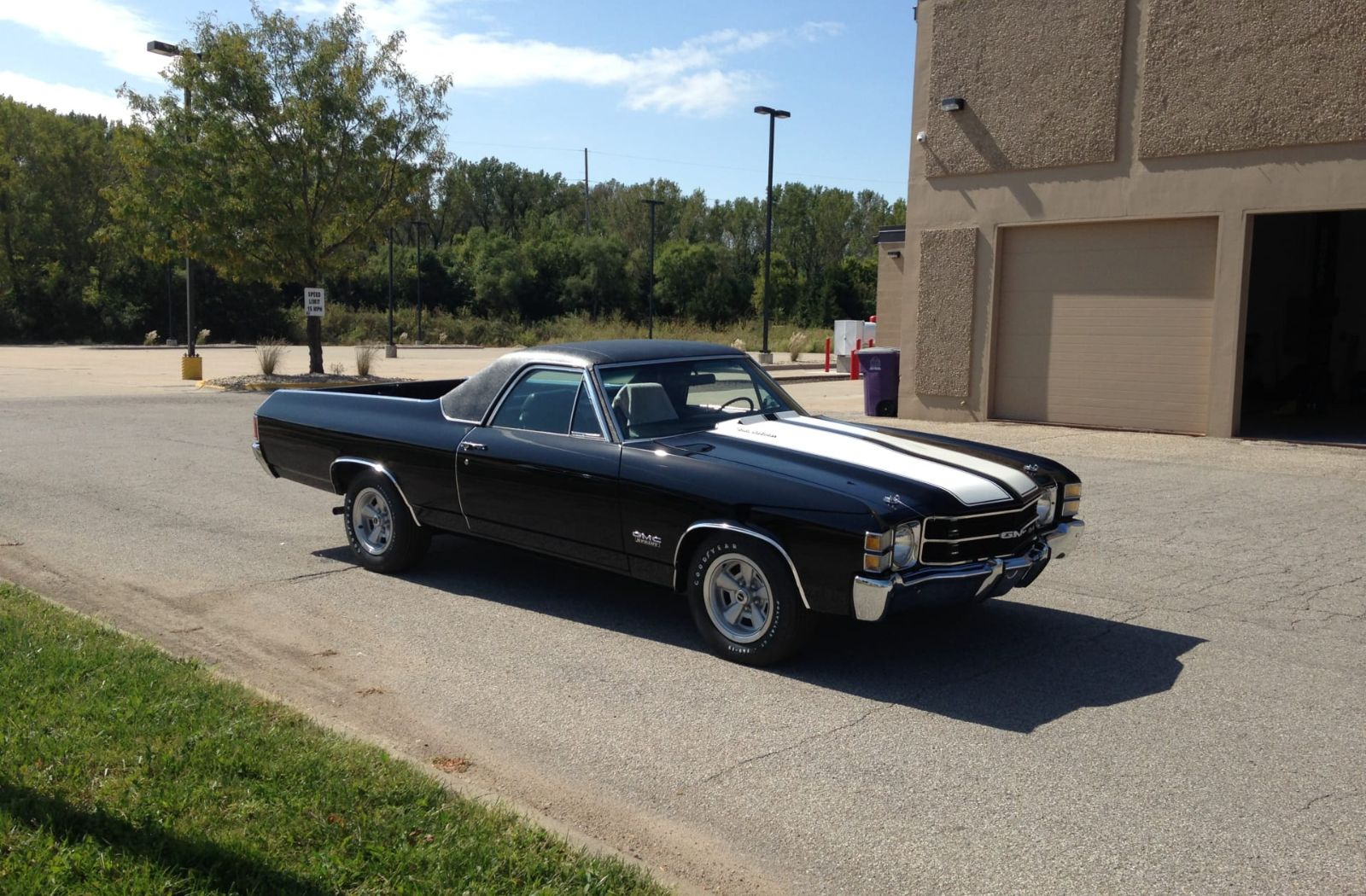
GMC Built an Estimated 25 Sprint SP 454s for 1971
Twenty-five is the estimate that defines the 1971 GMC Sprint SP 454. Production figures cited in an updated October 21, 2026, examination put total Sprint SP output for that model year at 249 vehicles, with only an estimated 25 receiving the 454-cubic-inch V8. The figure requires attribution because it is an estimate rather than a confirmed configuration count, but it illustrates how little market presence GMC achieved with a vehicle assembled from credible Chevrolet muscle-car hardware.
The Sprint was GMC’s counterpart to the Chevrolet El Camino, combining a passenger-car cabin with an open cargo bed. It used General Motors’ rear-wheel-drive A-body architecture, a platform also associated with the Chevelle, Malibu and Monte Carlo. That common foundation gave GMC access to proven engines, transmissions and chassis components without developing a coupe utility from scratch.
The performance-oriented Sprint SP package, identified by ordering code YE7, went considerably further than a set of badges. Its equipment included heavy-duty suspension components, dual exhaust, 15-inch Rally wheels, bucket seats, a center console and model-specific trim. Buyers could pair the package with a 350-cubic-inch small-block V8, a 402-cubic-inch big-block marketed as a 400, or the LS5 454.
Chevelle-era power in a GMC showroom
For 1971, the LS5 carried advertised ratings of 365 horsepower under the SAE gross method and 465 pound-feet of torque. A functional cowl-induction hood was also available on LS5-equipped vehicles. In broad mechanical terms, a top-spec Sprint SP and an El Camino SS shared their platform, engine family, transmission choices and most suspension and chassis hardware. GMC differentiated its version through its grille, badging, trim and wheel-center details.
That parts-sharing made the Sprint SP 454 a genuine performance configuration, but it did not give the vehicle Chevrolet’s identity or customer pipeline. GMC sold the Sprint through truck-oriented dealerships, while the mechanically similar El Camino SS benefited from Chevrolet’s established performance image. The GMC’s restrained presentation further reduced its visibility. Its scarcity appears to have resulted from limited demand and internal competition, not from a planned 25-vehicle special edition.
The engineering was therefore less unusual than the product positioning. General Motors could efficiently create a GMC variant from a common platform and component catalog, but the vehicle still had to reach buyers through a retail channel associated primarily with work trucks. Shared hardware reduced development complexity; it could not eliminate overlap between two divisions selling closely related products.
The horsepower drop was partly a measurement change
The Sprint SP continued into 1972, when the LS5’s advertised output fell to 270 horsepower. Comparing that number directly with the previous 365-horsepower figure creates a misleading 95-horsepower decline. GMC’s 1971 literature reportedly listed the same LS5 at both 365 gross horsepower and 285 net horsepower. On the more comparable net basis, the change for 1972 was 15 horsepower.
Gross ratings represented an engine under favorable test conditions, without the complete accessory and exhaust loads found in the installed vehicle. Net ratings more closely reflected production intake, exhaust, accessory and tuning configurations. U.S. manufacturers moved to net figures for 1972, making many specification sheets look more dramatic than the underlying mechanical changes alone warranted. The Sprint still experienced real emissions-era changes, but the revised rating standard explains most of that first apparent plunge.
Demand actually improved in the second year. Sprint SP production rose to 749 for 1972, including an estimated 114 with the 454. The larger engine was rated at 245 net horsepower in 1973 and remained available in the Sprint through 1975.
That later decline unfolded as manufacturers redesigned engines, fuel systems and exhaust controls to satisfy tighter requirements. The EPA’s transportation-emissions timeline records the broader shift toward catalytic converters and unleaded gasoline in 1975. Catalytic converters arrived on the Sprint that year, placing the vehicle within an industry-wide transition that treated engine, fuel and emissions equipment as an increasingly integrated system.
GMC retained the SP package through 1977, even after the 454 disappeared following 1975. For 1978, the division replaced the Sprint name with Caballero. The original 1971 version remains the sharpest expression of the program’s central contradiction: GMC had access to the platform and big-block hardware of GM’s best-known muscle machines, yet its truck-dealership identity helped leave an estimated 25 top-engine examples with almost none of the El Camino’s cultural footprint.
| More aerospace and engineering stories, right in your MSN feed. Follow AMI on MSN |
By Thomas Caldwell — AMI’s senior editor for mechanical and mobility engineering, covering vehicle electronics, systems integration, electrification, chassis systems, propulsion, and safety policy.



