Space Force Moves Six Vulcan Launches to SpaceX as Rocket Stays Grounded
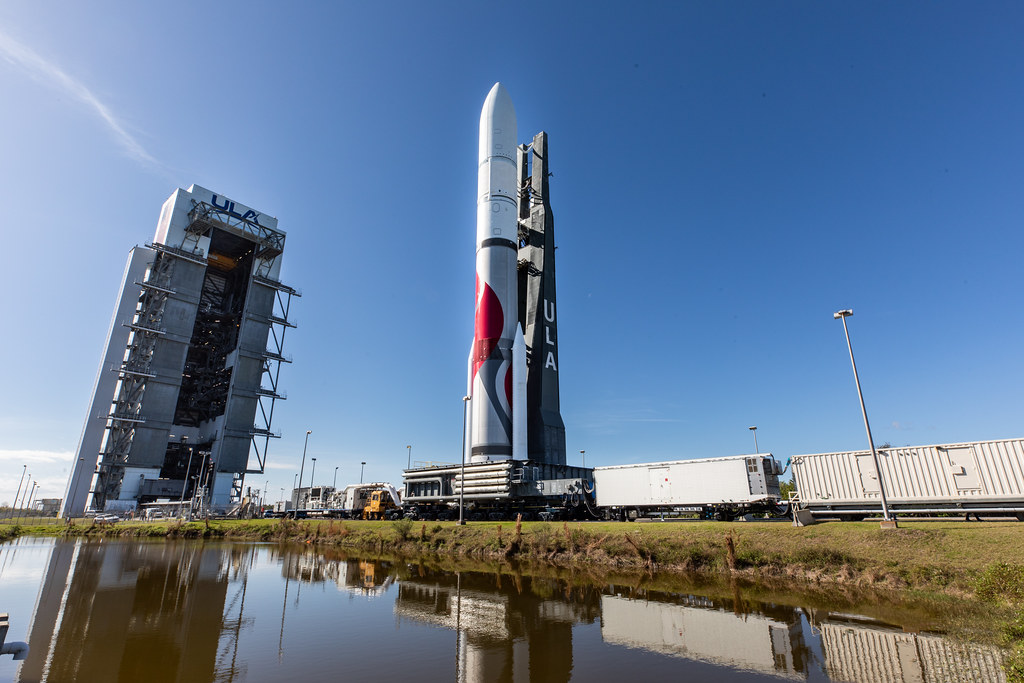
The U.S. Space Force has moved six near-term national-security launches from United Launch Alliance’s grounded Vulcan Centaur rocket to SpaceX. The October 21 decision keeps time-critical payloads on nearer-term schedules while leaving ULA with later missions to launch after Vulcan is cleared to return.

Space Systems Command Commander Lt. Gen. Philip Garrant disclosed the manifest changes during an industry briefing. SpaceX will use Falcon 9 and Falcon Heavy rockets for the reassigned launches. ULA’s contracts were not canceled; the command used a mission-trade mechanism that shifts later national-security work to Vulcan rather than removing ULA from the manifest.
A schedule fix without a procurement reset
The arrangement addresses two constraints at once. The Space Force needs launch capacity for payloads that cannot wait indefinitely, but it also has a long-term requirement for more than one provider capable of handling demanding military missions. Federal policy calls for maintaining at least two launch vehicles able to carry any national-security payload, according to the Congressional Research Service’s National Security Space Launch primer.
Moving all available work permanently to one company would undercut that assured-access objective. Waiting for Vulcan, however, would tie near-term schedules to an investigation with no announced completion date. Trading missions separates the immediate scheduling problem from the longer-term industrial-base requirement: SpaceX absorbs launches that need an available rocket now, while ULA retains future work contingent on Vulcan’s recertification.
That distinction also defines the public-cost boundary. No costs for the six transfers were released, so the financial effect cannot be calculated from the announced changes. What is clear is that the government chose to rearrange contracted work instead of canceling ULA’s launches and beginning a broader procurement reset. That can preserve continuity for satellite programs as well as the launch-provider capacity the government has already contracted to maintain.
The trade is possible because Falcon 9 and Falcon Heavy are already certified for National Security Space Launch missions. Certification is more than evidence that a rocket has reached orbit: Space Systems Command reviews major subsystems, flight demonstrations and payload-interface requirements before assigning these missions. The available alternative therefore had already passed the government process needed to carry military and intelligence payloads.
A successful orbit did not close the Vulcan issue
Vulcan has been grounded for operational defense launches since its February 12, 2026, USSF-87 flight. One of its Northrop Grumman GEM 63XL solid rocket boosters experienced a visible nozzle failure shortly after liftoff, although the rocket still delivered its payload to orbit. The event was the second nozzle-related irregularity reported across four Vulcan flights, following a similar observation during the Cert-2 demonstration in late 2024.
Reaching orbit demonstrated that the flight completed its primary mission, but the repeated nature of the nozzle concern triggered a deeper review before another operational defense payload can fly. ULA and Northrop Grumman are conducting structural analyses and hot-fire validations intended to verify booster-nozzle integrity. Garrant did not disclose interim findings from the joint Air Force-industry investigation board.
The review creates a firm operational boundary: confidence in Vulcan’s eventual return is not the same as authorization to place another national-security payload on it. Space Systems Command must be satisfied with the technical work before lifting the suspension, and no official return date has been established.
The six-mission move is therefore less a verdict on the two launch companies than a demonstration of why the government contracts for redundant access. SpaceX provides the available near-term path, while the mission trade keeps ULA positioned to resume launches if Vulcan completes its review and recertification. Until that happens, the military’s newest certified national-security rocket remains off the operational manifest and later ULA missions remain dependent on the booster-nozzle validation now underway.
| More aerospace and engineering stories, right in your MSN feed. Follow AMI on MSN |
By David Whitaker — Associate editor for AMI’s aerospace and drone systems desk, translating flight systems, aircraft programs, spaceflight, and UAV developments into accessible technical stories.