Pilot Walks Away Unhurt as Video Captures Plane Crash on Interstate
Civil aviation safety protocols and domestic airspace management rely on rigorous operational redundancies to mitigate sudden mechanical failures and volatile atmospheric phenomena. When unpredictable flight dynamics occur near congested corridors or high-density transit routes, pilot decision-making and structural engineering are tested in seconds. Maintaining aircraft stability remains paramount across commercial long-haul operations and regional general aviation flights alike.
Federal regulators and flight safety boards continually track operational anomalies to refine approach profiles, spacing criteria, and rapid-response procedures. Despite modern telemetry and satellite navigation, unexpected localized hazards can confront pilots with severe tactical challenges without advance radar warnings. These sudden shifts demand swift crew coordination to protect occupants and minimize ground-level hazards.
Federal safety officials have initiated active inquiries following two high-profile in-flight emergencies that unfolded within hours of each other in western airspace. Investigators from the Federal Aviation Administration opened formal reviews after a commercial airliner experienced an abrupt descent and an experimental amphibious aircraft was forced into a hazardous highway landing. Both incidents underscored the razor-thin margin between controlled recovery and severe calamity.
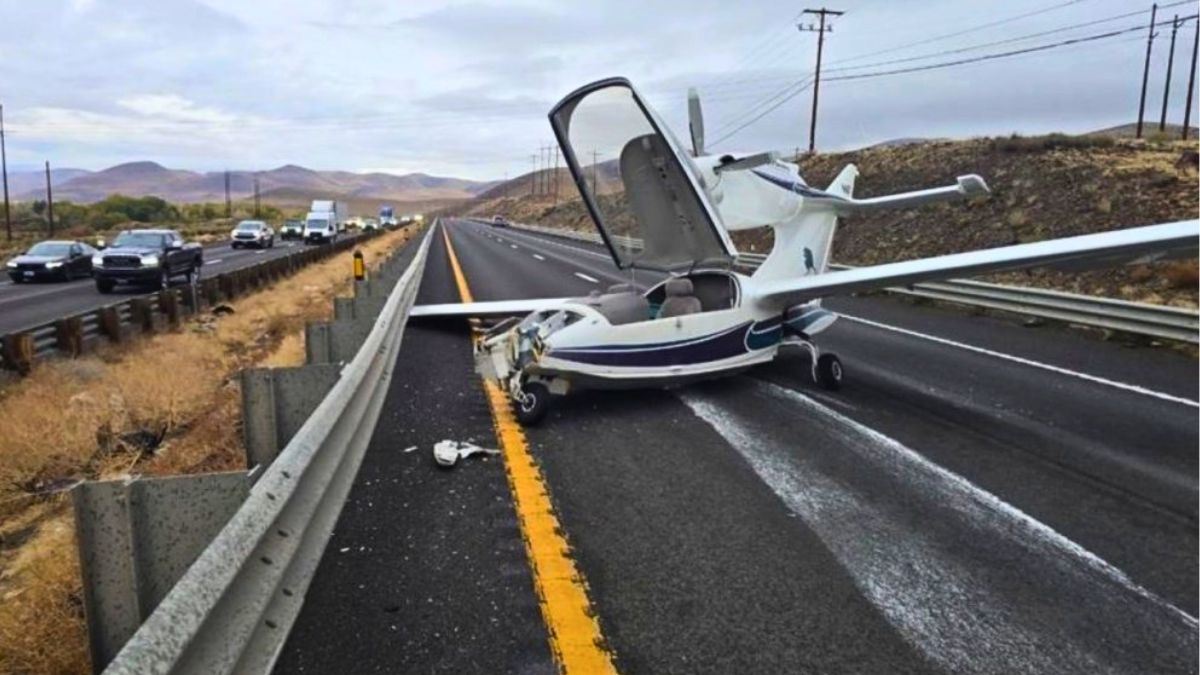
The most visible mishap occurred outside Reno, Nevada, where a single-engine amphibious ‘Super Seawind’ went down directly onto Interstate 80 during the morning commute. Motorist video footage credited to commuter Samantha Ruth captured the damaged airframe resting against the highway guardrail near Patrick in Storey County. Local emergency crews responded immediately as SFGATE reported that the aircraft clipped a passenger car and spilled between 40 and 50 gallons of fuel onto the roadway.
The aircraft had departed from Reno-Tahoe International Airport before suffering an in-flight emergency that prompted the forced descent. Despite substantial damage to the wings and fuselage, the lone pilot managed to walk away from the wreckage without major physical trauma. State troopers and transport officials closed all westbound lanes for several hours before heavy-duty cranes could hoist the airframe from the asphalt.
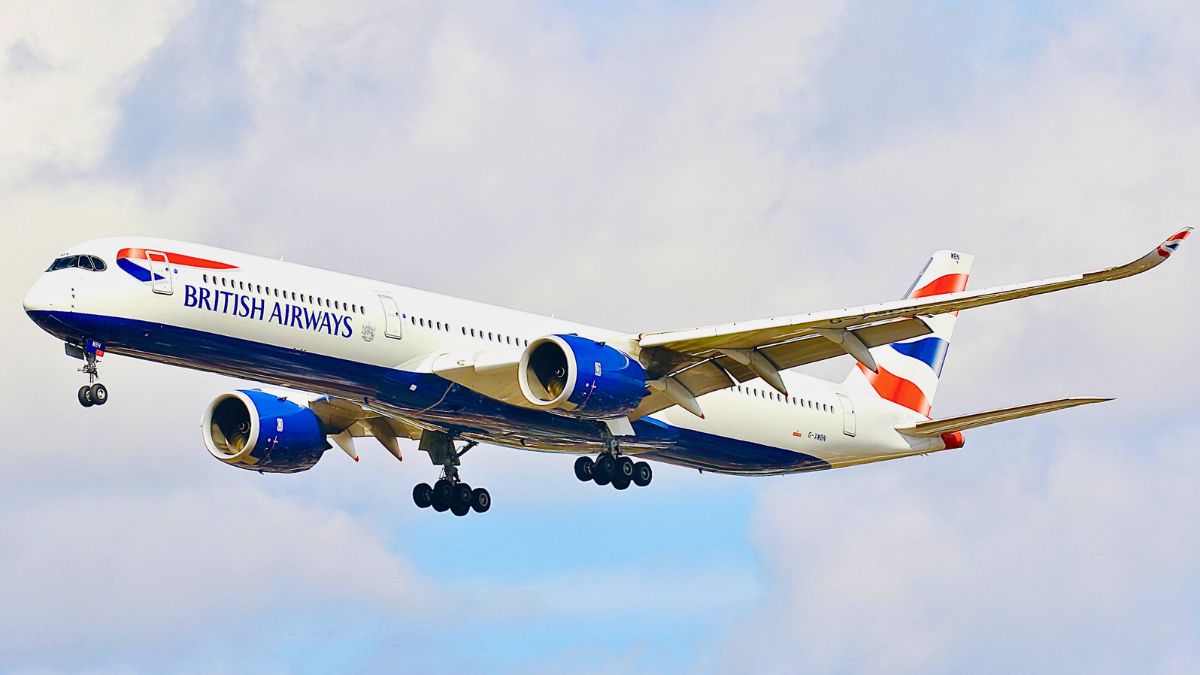
Hours later, federal attention shifted toward Southern California as United Airlines Flight 1157, operated by a wide-body ‘Boeing 777’, encountered severe atmospheric forces over the Pacific. The transpacific flight from Honolulu to Los Angeles was descending through 25,000 feet when an abrupt dive sent the jet dropping approximately 3,700 feet in roughly 60 seconds. The sudden drop occurred roughly 70 miles west of the California coastline, catching unsecured cabin occupants off guard.
Air traffic control recordings revealed the flight crew calmly reporting the sudden disturbance before regaining steady trim. The pilot told controllers over the radio, “It felt like wake turbulence, but we’re smooth now,” while requesting immediate medical support upon arrival. In the cabin, passengers described a sudden sensation of weightlessness, with passenger Marly Wadlington recounting that the floor seemed to drop out completely while travelers braced in shock.
Although all 190 passengers landed safely without reported injury, four flight attendants required on-site medical evaluation, with one crew member transported to a local hospital for further care. Former National Transportation Safety Board Chairman and CBS News aviation analyst Robert Sumwalt stressed that passenger restraint compliance remains the primary operational buffer against dynamic flight disruptions. Sumwalt highlighted that a securely buckled seat belt constitutes the most effective personal defense during sudden clear-air turbulence encounters.
The twin incidents emphasize the unpredictable environmental and technical hazards that persistent regulatory oversight must constantly navigate. As investigators examine flight data recorders and telemetry from the ‘Boeing 777’ alongside wreckage inspection of the downed ‘Super Seawind’, federal findings are expected to reinforce operational safety margins across commercial fleets and general aviation.