The Forgotten American Supercar That Used Fighter Jet Tech to Predict the Future
During the twilight years of the Cold War, aerospace innovation began exerting a profound influence across high-speed terrestrial engineering. Defense contractors and specialized research laboratories were pioneering composite structures, lightweight honeycombs, and digital cockpit instrumentation. Yet traditional American automakers remained heavily tethered to conventional pushrod architectures, prioritizing mass-production convenience over uncompromising technical ambition.
While European marques like Ferrari and Porsche relied on lightweight grand-touring philosophies, the American domestic market lacked a purpose-built exotic machine capable of asserting engineering supremacy on global proving grounds. For ambitious defense-adjacent designers, closing that capability gap required completely discarding standard assembly-line practices. The resulting vision pointed toward a theoretical convergence between supersonic fighter aircraft and pavement-bound machines.
As recently detailed by HotCars, automotive visionary Gerald Wiegert answered that technological challenge by creating the ‘Vector W8’, an audacious machine widely recognized as America’s forgotten first supercar. Operating out of Wilmington, California, under his Vector Aeromotive Corporation banner, Wiegert bypassed typical automotive component bins entirely. His objective was not merely to compete against Detroit or European rivals, but to deploy strict aerospace fabrication doctrines directly onto public roads.
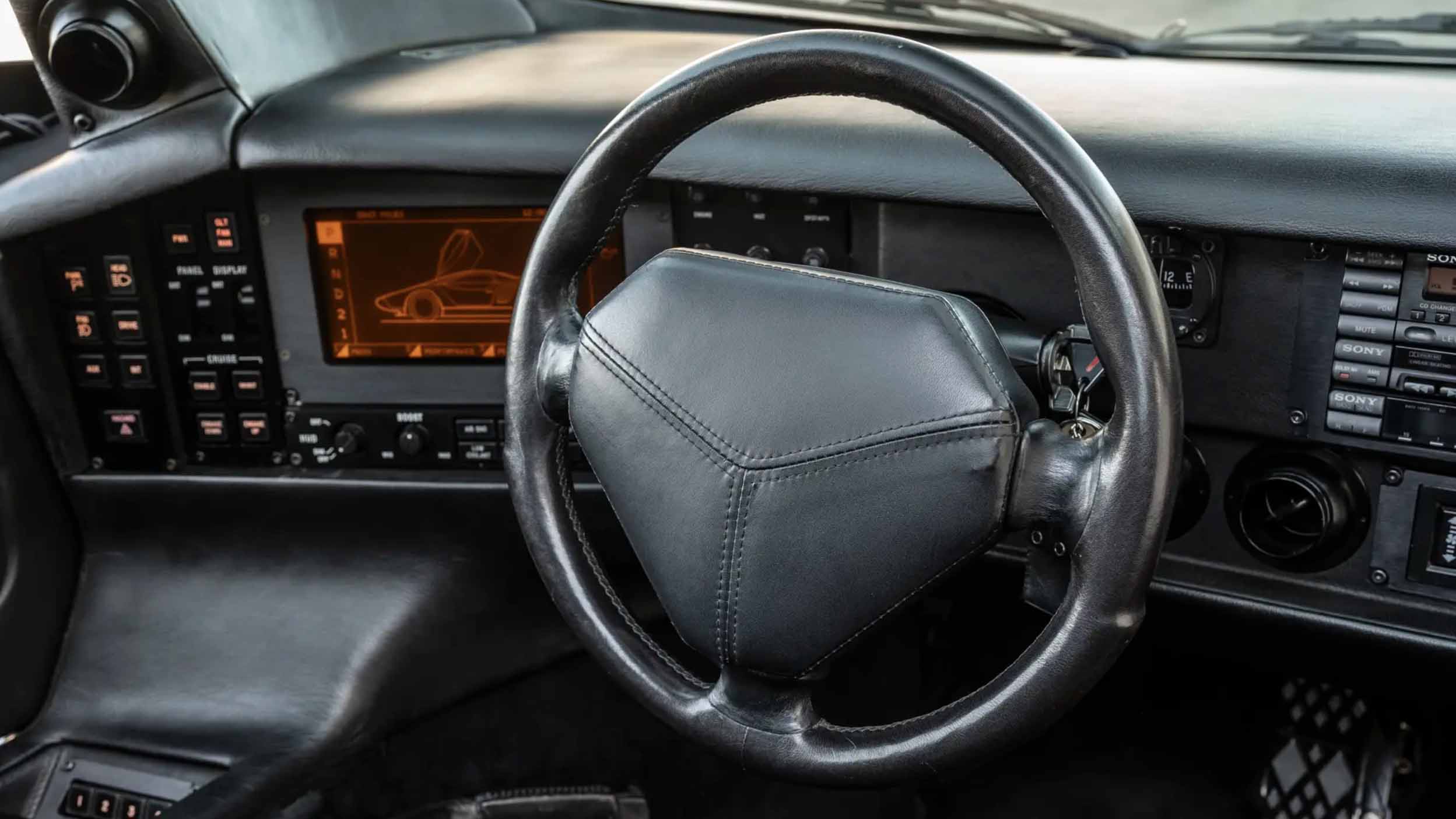
To execute this defense-grade vision, the vehicle was constructed around an epoxy-bonded aluminum honeycomb semi-monocoque chassis secured with more than 5,000 aircraft-specification rivets. The exterior aerodynamic skin was shaped entirely from carbon fiber and Kevlar, providing extraordinary rigidity and structural resistance while keeping overall mass tightly managed. Even the cockpit discarded traditional analog gauges in favor of a cathode-ray tube avionics screen, illuminated rocker switches, and circuit breakers designed for military cockpits.
Wiegert refused to compromise on the vehicle’s aeronautical integrity, prioritizing mil-spec durability over commercial comfort. In an interview reflecting on his uncompromising engineering standards, Wiegert recounted to Hagerty Media that “Vectors had mil-spec wiring and tactical military aircraft switches.” This commitment extended to occupant survivability, enabling the prototype to pass grueling barrier tests with exceptional structural integrity.
Underneath the rear carbon-Kevlar decklid sat a bespoke, transverse-mounted 6.0-liter Rodek aluminum racing V8 engine equipped with twin Garrett turbochargers and twin intercoolers. Operating at a baseline boost setting of 8 psi, the twin-turbocharged powerplant generated a certified 625 horsepower at 5,700 rpm and 649 lb-ft of torque. When drivers manually dialed up the manifold pressure via cockpit controls, output surged past 700 horsepower, directed to the rear wheels through a heavily modified GM Turbo-Hydramatic 425 three-speed automatic transaxle.
On paper and on the track, the performance figures rivaled frontline contemporary fighters of the era. The supercar claimed an advertised top speed of 242 mph, achieved 218 mph during real-world dry lake testing, and dispatched the 0 to 60 mph sprint in just 3.8 seconds. Such performance metrics severely rattled established European exotics, proving that American aerospace techniques could effortlessly eclipse traditional engine builders in raw velocity.
However, building a road-legal jet on wheels proved economically punishing for a small independent manufacturer. Wiegert’s meticulous assembly procedures and dependence on specialized aerospace contractors slowed assembly to a crawl, driving retail prices to roughly $450,000 per unit. Over a turbulent four-year production run between 1989 and 1993, Vector Aeromotive successfully delivered only 17 customer production cars alongside two pre-production prototypes.
The ambitious enterprise unraveled following an aggressive corporate struggle in 1993, when Indonesian investment firm Megatech executed a hostile takeover of Vector Aeromotive. Wiegert was ultimately ousted from his company, and subsequent production shifted to the Diablo-derived ‘Vector M12’, extinguishing the pure military-grade identity of the original concept. Decades later, the ‘Vector W8’ stands as a legendary testament to what occurs when aerospace doctrine challenges conventional automotive design.