Hormuz Disruption Cut Exxon and Chevron Production 6% Despite $112 Oil
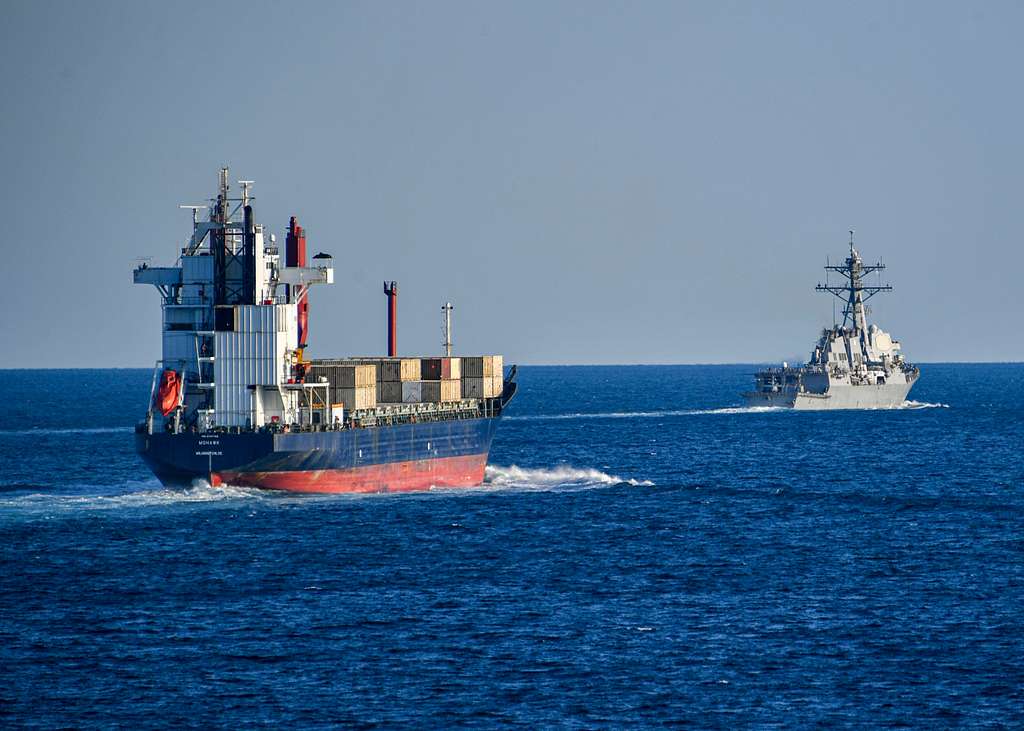
Oil above $112 a barrel would ordinarily strengthen a producer’s quarterly results. In the first quarter of 2026, however, Exxon Mobil and Chevron each lost about 6% of global production as the near-closure of the Strait of Hormuz constrained shipping and forced operational cutbacks. The bottleneck raising energy prices also prevented the companies from extracting and delivering as much oil and gas as planned.

The financial picture was further complicated by approximately $7 billion in combined mark-to-market derivative losses disclosed by Exxon and Chevron. Those losses were associated with hedges linked to physical cargoes that would take several weeks to arrive. In other words, accounting recognized the changing value of the derivative positions before the corresponding cargo sales were completed.
That timing gap helps explain why rapidly rising commodity prices did not produce an immediate, unqualified windfall. Global crude futures climbed more than 50% in less than three weeks during March, while Brent reached its highest level in four years. Higher realized prices supported revenue on products that could be sold, but they could not restore production that had been shut in or move cargoes through a constrained shipping route.
Physical capacity came before price
The disruption exposed a basic limitation in global energy systems: a high market price has little immediate value if production plants, storage networks and marine transport cannot move additional material. Oil and liquefied natural gas operations are interconnected chains. When tanker movements slow, inventories can accumulate upstream, storage becomes a constraint and producers may have to reduce output even if their wells or processing equipment remain technically available.
Chevron’s upstream shut-ins were higher than analysts had anticipated, according to Barclays analyst Betty Jiang, although stronger realized pricing more than offset the lost production. Chevron took the unusual step of issuing earnings guidance three weeks before its scheduled results, reflecting the scale of the operational and accounting complications. Its subsequent first-quarter discussion described roughly $3 billion in unfavorable timing effects, split evenly between inventory valuation and paper derivative positions linked to physical cargoes.
Chevron said about $1 billion of those paper positions was expected to unwind in the second quarter, with most of the associated cargoes delivered in April. That expected reversal is important: a mark-to-market loss records the derivative at its current value, but it is not necessarily the final economic result of the combined hedge and physical sale.
Exxon Chief Financial Officer Neil Hansen described the same timing mechanism: This accounting often happens well before the sale of the associated physical product is complete. He added that the effects would unwind over time. Under commodity accounting rules, derivatives generally must be measured at fair value, while the recognition of related physical transactions can follow a different schedule. The result can be a sharp quarterly mismatch during an unusually fast price increase.
Plant damage creates the longer constraint
Exxon faces a more durable capacity problem because about 20% of its production comes from Qatar and the United Arab Emirates. Two liquefied natural gas production lines in Qatar were damaged by Iranian missiles, affecting approximately 3% of Exxon’s global output. Repairs could take years, making this more than a short shipping delay. Shell also sustained damage to a gas-to-liquids plant, while its overall gas output was 5% lower during the quarter.
Liquefied natural gas plants cannot be replaced or repaired like ordinary industrial equipment. Their processing lines combine gas treatment, refrigeration, compression, heat exchange and export systems engineered around tightly integrated operating conditions. Damage to major sections can require detailed inspection, specialized replacement components and extensive recommissioning before full production resumes.
The wider supply outlook includes substantial new capacity: the International Energy Agency’s global tracker identifies more than 330 billion cubic meters per year of new liquefied natural gas export capacity scheduled to come online between 2025 and 2030 from projects already under construction as of 2025. That future buildout cannot quickly substitute for a plant or shipping route unavailable today, however, because liquefaction projects have long construction and commissioning cycles.
Higher prices can improve producers’ longer-term economics once cargoes move and accounting effects reverse. The immediate quarter was governed instead by physical throughput: Exxon and Chevron each lost about 6% of production, and damage to two Qatari gas lines left roughly 3% of Exxon’s global output facing a repair timeline measured in years.
| More aerospace and engineering stories, right in your MSN feed. Follow AMI on MSN |
By Thomas Caldwell — AMI’s senior editor for mechanical and mobility engineering, covering vehicle electronics, systems integration, electrification, chassis systems, propulsion, and safety policy.