


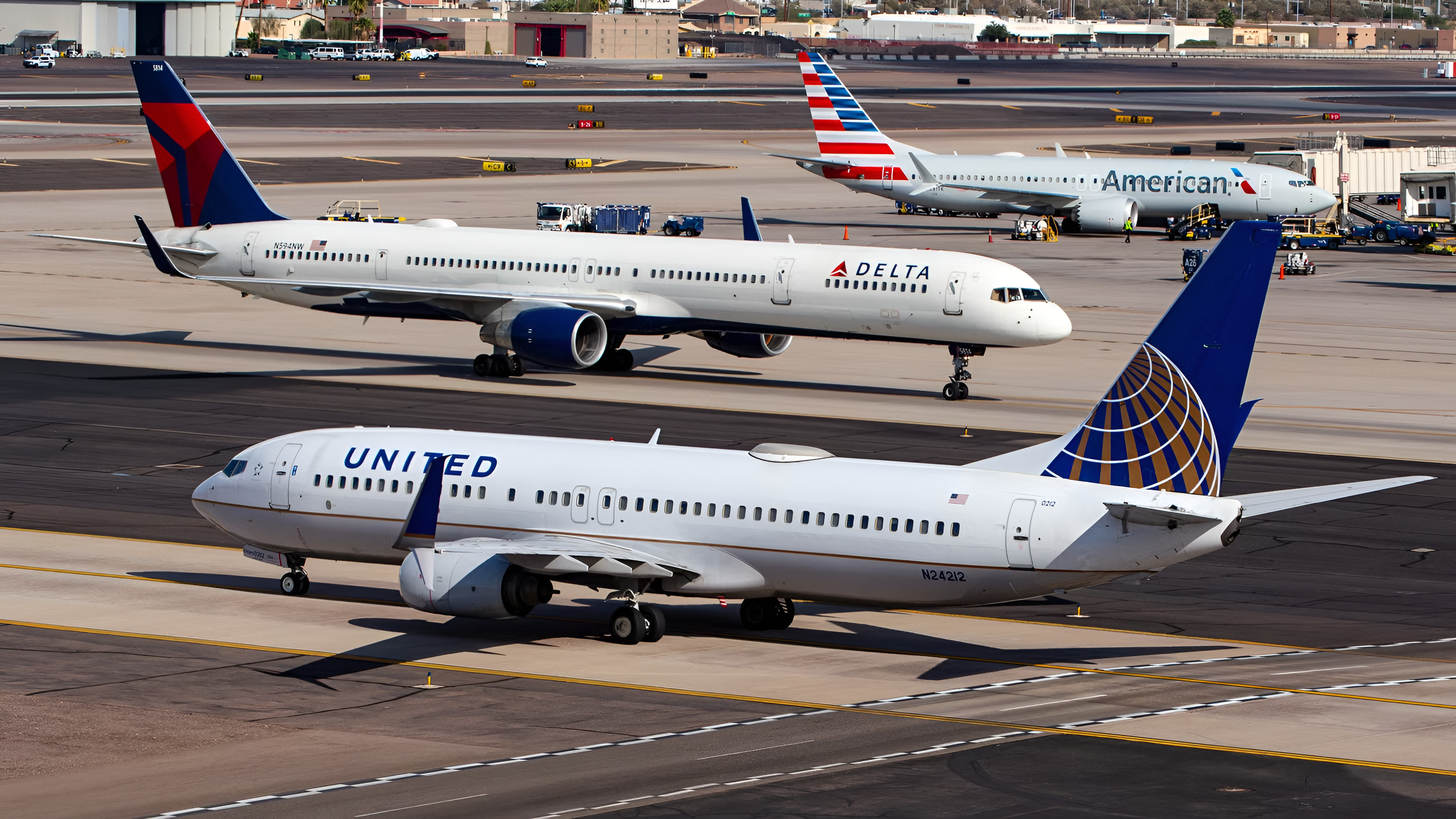
Delta, United, American, Southwest and Alaska Lift Revenue 18% on Flat Traffic
Delta Air Lines, United Airlines, American Airlines, Southwest Airlines and Alaska Air Group produced a striking third-quarter contrast: their combined passenger revenue increased by nearly $8.8 billion, or 18%, from a year earlier, while passenger traffic grew by less than 1%. The five carriers are emphasizing revenue per passenger rather than using discounted fares to pursue additional traffic as jet-fuel costs climb.
For travelers, the immediate consequence is a market with fewer incentives for airlines to discount remaining seats. U.S. airfares increased nearly 23% year over year during the seven months through September, according to Labor Department data. Yet fuel costs have risen even faster, leaving carriers to consider higher fares, slower flight growth or both.
Revenue is rising much faster than traffic
The gap between 18% revenue growth and less than 1% traffic growth reflects what airlines call stronger passenger yield: more revenue collected for each unit of travel. Yield can improve through higher base fares, fewer discounted tickets, premium-cabin sales and paid extras. It is distinct from load factor, which measures how much available seating is occupied.
That distinction explains why filling every seat is not always the most valuable outcome. A discounted passenger adds revenue, but the added amount must justify the operating expense and preserve the value of seats that could sell later at higher prices. When fuel is expensive, an airline has less room to stimulate demand with low fares merely to raise traffic or load factor.
Jet-fuel prices have climbed approximately 90% since February. Rapid changes are particularly difficult because airline schedules, aircraft assignments, crew plans and airport resources are established well in advance, while fare increases take time to flow through bookings. The International Air Transport Association has noted that airlines historically adapted to sustained high fuel prices through pricing, efficiency measures, capacity optimization and procurement management, but sudden price shocks can raise costs faster than revenue can adjust.
American provides a concrete view of that mismatch. In its third-quarter 2026 results, the airline reported total revenue of $16.3 billion, up 19.3%, while fuel expense increased by $1.9 billion, or 67.5%. American paid an average of $3.85 per gallon during the quarter and anticipates approximately $4.70 per gallon in the fourth quarter, nearly twice its year-earlier price.
Planned flights now face a higher financial threshold
Six major U.S. airlines are currently scheduled to expand domestic capacity by 3% in the fourth quarter and 3.8% in the first quarter of 2027, according to Airlines for America data. Those published schedules describe planned seat supply, not a guarantee that every flight will operate.
United CEO Scott Kirby has cautioned that published industry capacity plans for 2027 might not materialize. American is likewise reassessing whether additional flights would generate enough revenue to cover their operating costs, and the carrier says its 2027 network growth will slow from 2026 levels.
The comparison airlines must make is not simply between operating a flight and parking an aircraft. Each prospective frequency has a marginal cost that includes fuel, crew time, maintenance consumption, airport charges and ground support. It also has a marginal revenue forecast based on expected fares, passenger demand and connections into the wider network. Higher fuel prices raise the revenue threshold that a proposed flight must clear.
Selective restraint is therefore more likely than an equal reduction across every route. Airlines can protect flights that contribute strong revenue while reconsidering weaker frequencies or planned additions. This can preserve network economics, but it also means travelers may see less schedule growth, fewer discounted seats and reduced choice at some times or markets.
Capacity changes extend beyond the cabin
A slower schedule also changes the workload around each aircraft. Ground handlers plan staffing and equipment around departure banks, while airports and service contractors allocate workers for baggage, passenger handling and aircraft turnaround tasks. Fewer added flights can reduce expected demand for those services even if existing operations remain busy.
The timing is important because staffing, equipment utilization and service contracts cannot always be resized as quickly as an airline can revise a future timetable. Providers serving several carriers may gain some protection through diversified demand, but they still need enough operational flexibility to avoid staffing for growth that does not arrive.
The scheduled increases of 3% late in 2026 and 3.8% early in 2027 are now the practical test. If fuel remains elevated, the industry’s 18% passenger-revenue gain on nearly flat traffic suggests airlines have already chosen their first response: protect revenue per passenger before committing more aircraft, crews and airport resources to additional flights.
| More aerospace and engineering stories, right in your MSN feed. Follow AMI on MSN |
By Thomas Caldwell — AMI’s senior editor for mechanical and mobility engineering, covering vehicle electronics, systems integration, electrification, chassis systems, propulsion, and safety policy.



