Türkiye Shipwreck’s Hull Vanished, but 4,700-Year-Old Trade Jars Survived
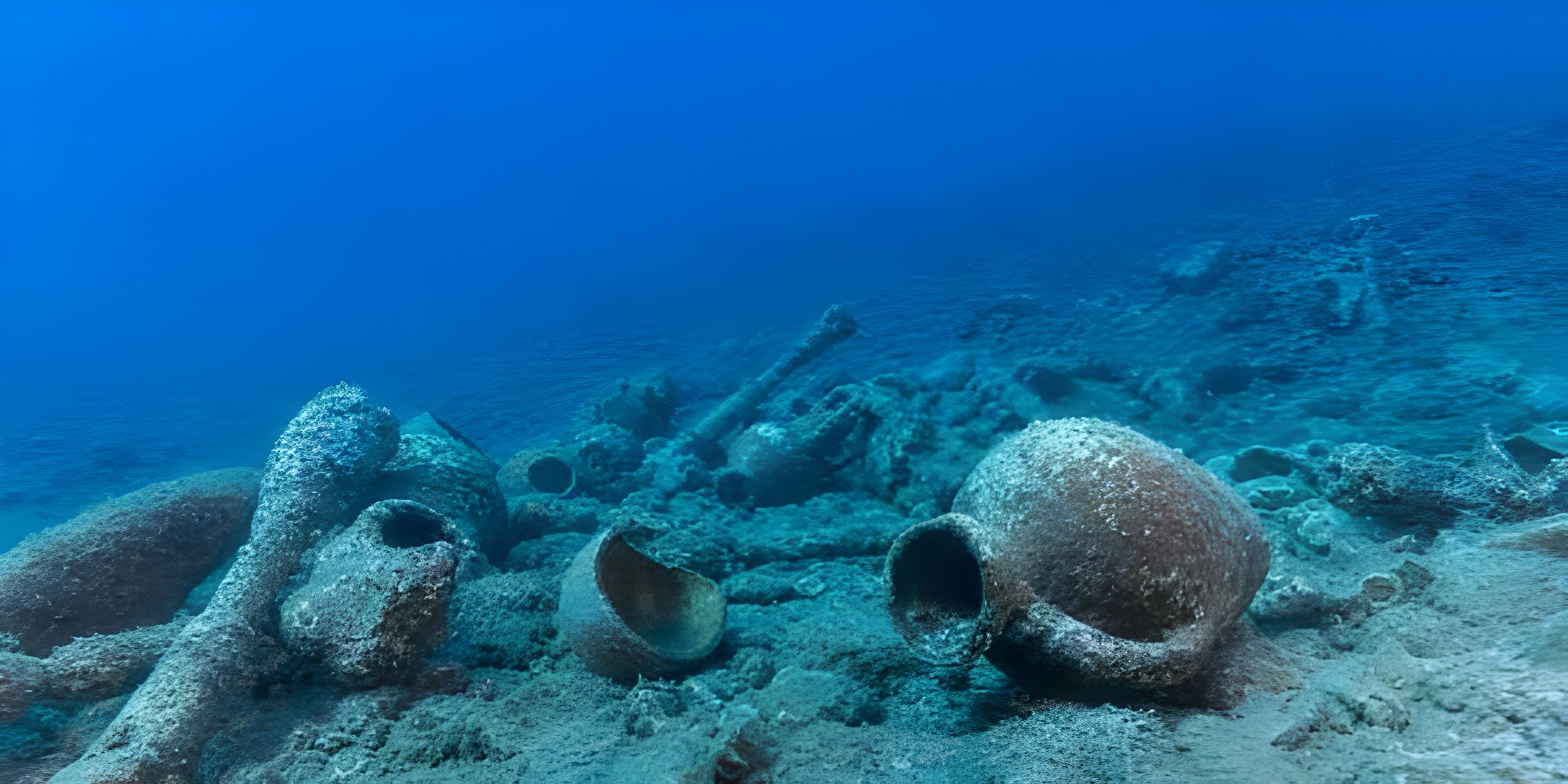
A wooden trading vessel believed to have sunk off southern Türkiye as much as 4,700 years ago has effectively disappeared, yet its ceramic containers remain lodged among seabed rocks. Archaeologists estimate that the ship was approximately 10 metres long, with the surviving jars now providing the principal material evidence for its age, cargo practices and connections across the eastern Mediterranean.
The wreck lies near Kekova Island in Antalya province. Türkiye’s Culture and Tourism Minister Mehmet Nuri Ersoy described it as the world’s oldest known shipwreck, while researchers have more cautiously dated the vessel and its cargo to approximately 2700–2400 BCE. That places the site between about 4,400 and 4,700 years old and makes it a contender for the oldest identified seagoing wreck.
Pottery becomes the ship’s surviving structure
With no wooden hull available for direct examination, the investigation depends on durable objects that once sat inside or around it. Professor Hakan Öniz of Akdeniz University led the Mediterranean Archaeology Association expedition, which recovered ceramic anchors and substantial pottery remains. Macquarie University archaeologist Karin Sowada examined more than 20 artefacts to determine their age, clay composition and likely geographic origin.
The asymmetry in preservation is fundamentally a materials problem. An exposed timber structure can be broken down until little or nothing recognisable remains. Fired ceramic is chemically and mechanically more persistent: it can crack, accumulate marine growth and become scattered, but its fabric, shape and manufacturing marks may survive for millennia. Here, those fragments and vessels have become a substitute dataset for a hull that can no longer be measured.
The storage containers are amphorae large, handled ceramic vessels used to move commodities. Their geometry and production methods can be compared with pottery from securely dated land sites. Researchers used those characteristics to place the wreck in the Early Bronze Age, although the precise date remains under consideration.
The estimated 10-metre vessel size is therefore a reconstruction rather than a surviving hull dimension. Archaeologists are working from the distribution and quantity of material at the site, including the cargo pottery and anchors. That approach can establish an approximate physical envelope, but it cannot recover every feature of the original ship’s construction or loading arrangement.
Clay carries a geographic signature
The most consequential connection comes from the jars’ raw material. According to Ersoy, clay analysis ties some of the containers to workshops in the Jordan Valley. Similar pottery styles have been found in Egypt, Türkiye and Greece, placing the Kekova material within a much wider pattern of Bronze Age exchange.
This does not fix the ship’s complete route. A jar’s production origin identifies where the container or potentially its clay came from, not every port visited afterward. The vessel was evidently moving along the southern coast of Türkiye, but its direction and final destination remain uncertain. The jars could also have been emptied and reused before the sinking, complicating any direct link between their clay source and their last contents.
Possible cargoes include olive oil, wine, grain, tree resin and other materials commonly carried in ceramic containers. Residue has reportedly remained visible in some vessels, but scientific analysis is needed to identify it. Until then, the amphorae establish a transport system more securely than they establish a particular product.
One unusual ceramic object adds a narrower question about life aboard. It has nine markings and two holes, and researchers believe it may have served as a vessel for making cheese or butter. Its perforations and form support that interpretation, but the proposed food-processing role remains tentative.
Öniz called the wreck “a time capsule at the bottom of the sea.” Mechanically, it is an incomplete one: timber, joints and most of the vessel’s load-bearing structure are gone. What remains is still unusually informative. Clay selection, forming technique, fired surfaces, residues and the seabed distribution of the jars may collectively reveal when the vessel sailed and how far its material connections extended. The strongest lead now runs from rocks off Kekova to pottery workshops in the Jordan Valley, preserved in containers that outlasted the ship carrying them.
| More aerospace and engineering stories, right in your MSN feed. Follow AMI on MSN |
By Edward Collins — Senior editor for AMI’s performance systems and mechanical design coverage, focused on powertrains, drivetrain systems, manufacturing precision, materials, and high-performance engineering.