Los Alamos Raises Nuclear-Core Output as Safety Board Reports Restricted Access
Los Alamos National Laboratory is increasing production of plutonium cores for nuclear warheads at the same time its independent federal safety board says restrictions are preventing full scrutiny of the work. In its 36th Annual Report to Congress, the Defense Nuclear Facilities Safety Board described the access constraints it encountered in 2026 as “the most significant in its history.”
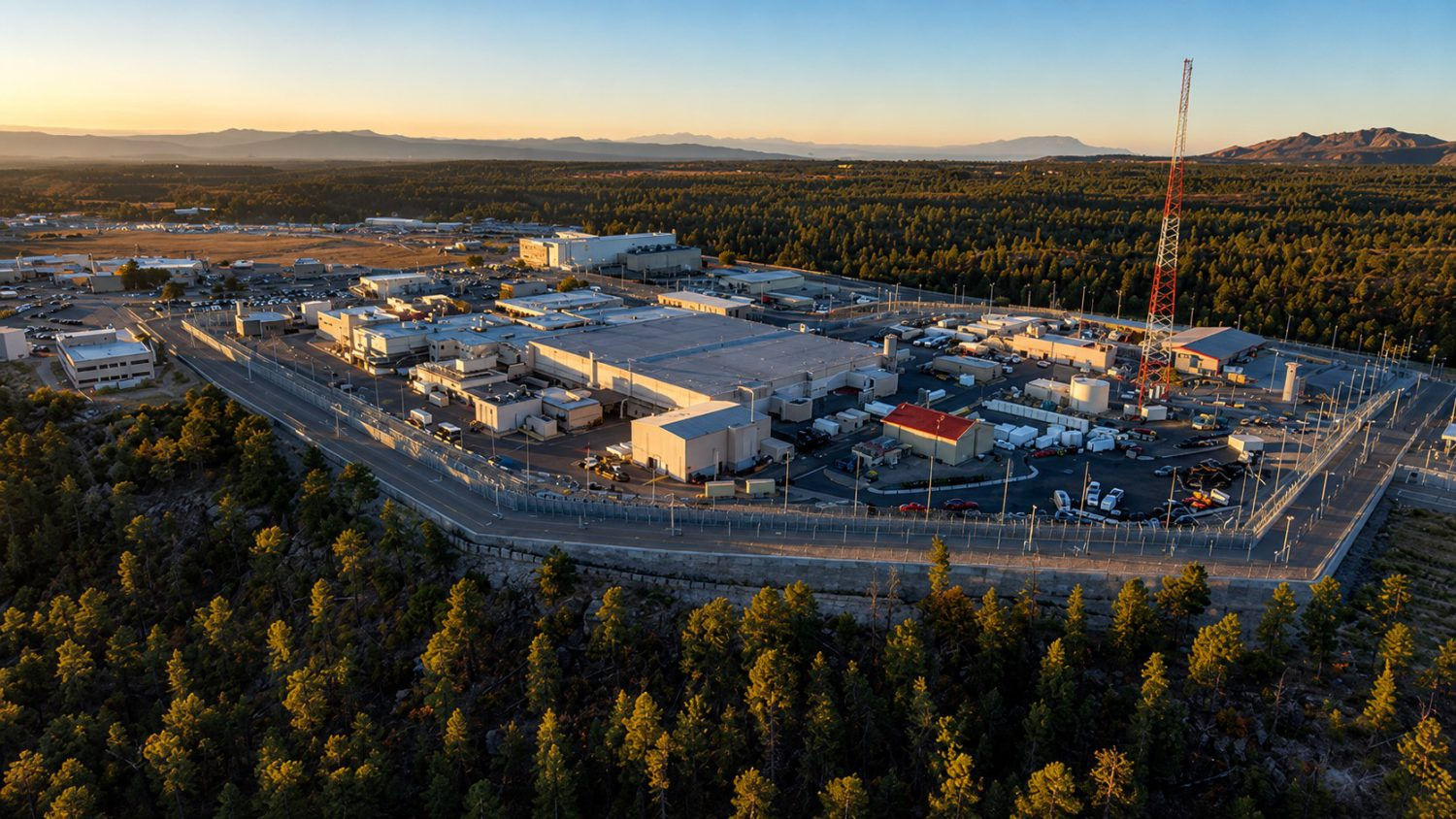
The dispute centers on Plutonium Facility Building 4, or PF-4, currently the only U.S. building capable of producing plutonium pits at scale. Those pits are the fissile cores of nuclear warheads. The National Nuclear Security Administration verified the first war-reserve pit for the W87-1 produced at Los Alamos in October 2024, restoring a manufacturing capability the United States had not sustained since the Rocky Flats Plant closed in the late 1980s.
PF-4 is assigned to produce at least 30 war-reserve pits annually. Los Alamos director Thom Mason said in January 2026 that the laboratory had “exceeded all” pit-production objectives, although the actual output remains classified. A planned complementary facility at the Savannah River Site is intended eventually to raise national capacity to 80 pits per year.
Production growth raises the value of independent access
Restarting pit manufacturing is not equivalent to restarting an ordinary production line. PF-4 must manage hazardous material, tightly controlled processes, specialized equipment and a safety framework that has to remain credible as workload increases. Higher output can put more demand on equipment availability, maintenance scheduling, staff and the review of operating changes. Independent oversight provides a separate channel for examining whether the safety basis and actual working conditions remain aligned.
The board says it faced denied or delayed access to safety-basis updates and exclusion from safety and operations meetings. The Energy Department’s position is that the board sometimes requests information or asserts jurisdiction beyond its statutory authority, and that security obligations justify some restrictions. The board contends that the department’s current interpretation conflicts with a memorandum of understanding negotiated by the two organizations in 2021.
That is more than an administrative disagreement. Safety-basis documents define the analyzed hazards, credited controls and operating boundaries for a nuclear facility. Delayed access makes it harder for outside inspectors to assess changes while they are current. Exclusion from meetings removes context that may not be apparent from a finalized document, including how managers and technical staff are resolving competing operational and safety concerns.
Security review is a legitimate requirement at a defense nuclear site, but it creates a practical tradeoff: information must be protected without making independent review too late to influence decisions. A workable process needs clear categories, predictable review times and a defined way to settle disputes. Without those features, access can exist formally while losing much of its operational value.
A one-member board cannot form a quorum
The oversight body also has an internal capacity problem. Two members departed during 2025, leaving only one sitting member. That member can continue some work, but cannot form a quorum, constraining the board’s formal governance and decision-making just as pit production is expanding.
Resident inspectors still provide an on-site technical presence, but field observation and board authority perform different functions. Inspectors identify and document conditions; a functioning board can deliberate, approve formal actions and issue recommendations through its established process. Staffing only one seat narrows the path from technical observation to institutional response.
Public visibility has weakened as well. As of July 30, the latest publicly posted Los Alamos resident-inspector report covered the week ending June 26. Posting of technical documents was paused while the board and Energy Department developed a sensitivity-review process. The pause protects against inappropriate release of sensitive material, but it also delays the public record used by workers, nearby communities and outside specialists to follow recurring safety issues.
A June 15 glovebox fire illustrates the importance of timely technical reporting without establishing a broader production failure. The contained fire occurred during a thermal-treatment test involving non-nuclear material and presented no criticality risk, but the glovebox remained unavailable in the last publicly posted weekly report. Inspectors had previously raised concerns that many PF-4 gloveboxes lacked automatic fire suppression, while a March report recorded an internal disagreement over a fire-hazard evaluation.
Cost control adds another assurance gap. The Government Accountability Office found that NNSA lacked a comprehensive lifecycle cost estimate for pit-production capability meeting its best practices. Without that baseline, Congress has a weaker view of the full cost of building, operating, maintaining and sustaining the capacity behind the production mandate.
The immediate engineering challenge is therefore paired with a governance one: PF-4 must increase reliable output while safety information moves through security review, a depleted board and delayed publication. Restoring a quorum and establishing clear, timely access rules would not determine production policy, but it would strengthen independent assurance at the only U.S. facility currently able to manufacture plutonium pits at scale.
| More aerospace and engineering stories, right in your MSN feed. Follow AMI on MSN |
By David Whitaker — Associate editor for AMI’s aerospace and drone systems desk, translating flight systems, aircraft programs, spaceflight, and UAV developments into accessible technical stories.