


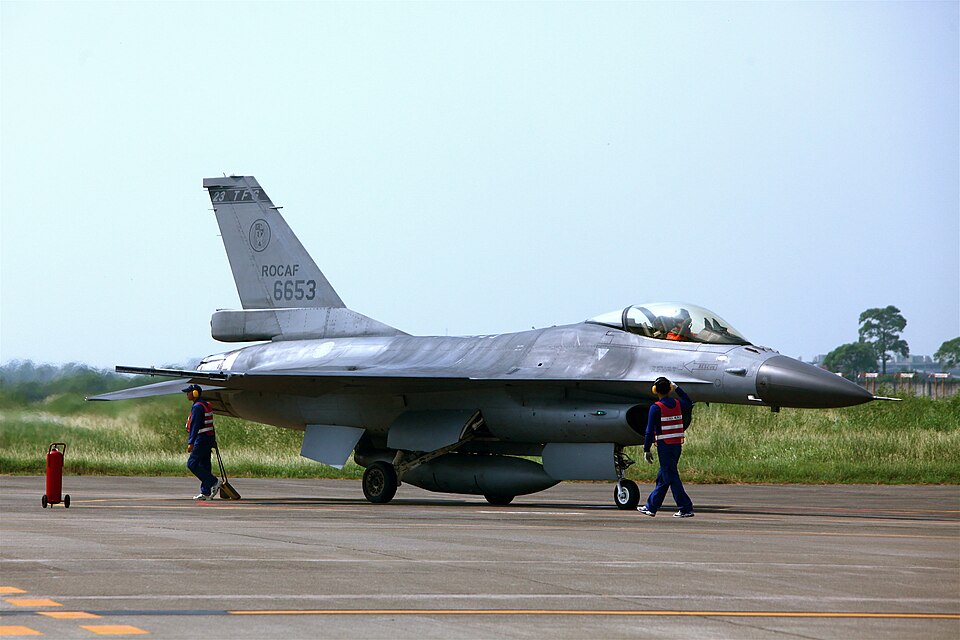
Taiwan Says 66-Fighter F-16V Schedule at Risk as Two Weapons Slip to 2028
Taiwan has funded 66 new F-16V fighters and received the first two, but it still cannot count on completing the full delivery plan on its original schedule. A Ministry of National Defense report submitted to the Legislative Yuan identifies delays in three of Taiwan’s 24 active U.S. arms procurements: the fighters, 28 MK-48 torpedoes and AGM-154C air-launched munitions. The two weapons programs are now due to finish deliveries in 2028, while production and supply problems have put the F-16V deadline at risk.

The imbalance is important: the other 21 active U.S. procurement programs are proceeding on schedule. This is not a systemwide halt. It is a concentrated industrial problem affecting three prominent purchases after their budgets and delivery plans were established.
Funding cannot remove production risk
Taiwan allocated NT$247.23 billion during 2020–2026 for the 66 F-16V Block 70 aircraft, with all of them originally planned for delivery in 2026. The first two arrived at Chihhang Air Base in Taitung on October 2, and the remaining aircraft are expected to be ferried in batches after preparations are completed.
That first arrival is a tangible program milestone, but two aircraft do not settle the schedule for the other 64. Fighter delivery depends on more than completing final assembly. Aircraft must progress through production, flight testing, government acceptance and transfer preparations before entering the receiving air force’s own acceptance, training and maintenance pipeline. A delay near the front of that sequence can compress later work even when finished aircraft begin arriving.
The F-16V difficulty begins with industrial continuity. Lockheed Martin’s longtime F-16 line in Fort Worth ended production before a new line was established in Greenville, South Carolina. The U.S. Air Force said the Greenville operation launched in 2019, three years after production ended at the previous site, and became the world’s only active F-16 production facility.
Moving a mature aircraft to another factory is not equivalent to switching on an existing line. Tooling, supplier flows, production processes and skilled workforces must be re-established at the new location. Taiwan’s ministry specifically attributed the schedule risk to relocation and restart work as well as supply-chain problems. Those constraints also affect other customers using the same production line, limiting how quickly any one order can move through it.
The weapons delays expose two different bottlenecks
The 28-unit MK-48 order consists of 24 combat torpedoes and four training units. Valued at NT$5.46 billion, or about US$168 million, the purchase will now be completed in 2028. The ministry cited supply-chain disruption and the need to restart production lines.
Restarting dormant production carries a different challenge from increasing output at an active plant. Suppliers must be available, materials must be sourced and manufacturing processes must again produce acceptable hardware. A procurement can therefore be fully financed while its schedule remains exposed to industrial capacity that no longer exists in immediately usable form.
The AGM-154C delay adds integration work to that equation. Taiwan selected the latest version for its F-16A/B fleet under the Feng Chan modernization project. Although modernization of those aircraft was completed in 2023, the ministry said the United States still needed to resume munition production, obtain materials and resolve system-integration issues. Deliveries are now scheduled to conclude in 2028.
Aircraft modernization and weapon availability are separate dependencies. Upgrading a fighter does not automatically make every selected weapon ready for delivery and use; the particular aircraft and weapon configuration still has to be integrated. Choosing a newer munition version may preserve the intended capability, but it can also add production and engineering work compared with buying an item already moving steadily through a mature line.
Delay shifts the value taxpayers receive
For Taiwan’s armed forces and taxpayers, the immediate tradeoff is time. The money allocated to these procurements supports defined aircraft and weapons, but delayed delivery postpones when the funded equipment can enter acceptance, training and operational service. Existing fleets and systems must cover that interval, while personnel and facilities preparing for new equipment face a less certain arrival sequence.
The fact that 21 programs remain on schedule provides a useful boundary. Taiwan’s broader U.S. procurement portfolio continues to move, including communications, air-defense, reconnaissance and uncrewed-aircraft purchases. The three delays instead show where older production lines, constrained material supplies and configuration-specific engineering can override a funded timetable.
The next measure of progress will be the pace of the F-16V batches after the first two aircraft. Taiwan has hardware on the ground, but the program’s public promise is 66 fighters and production, testing and delivery must now move fast enough to prevent the original 2026 plan from slipping further out of reach.
| More aerospace and engineering stories, right in your MSN feed. Follow AMI on MSN |
By David Whitaker — Associate editor for AMI’s aerospace and drone systems desk, translating flight systems, aircraft programs, spaceflight, and UAV developments into accessible technical stories.




