SpaceX Proposes 32-Mile Florida Pipeline to Replace Hundreds of Fuel Trucks Per Starship Launch
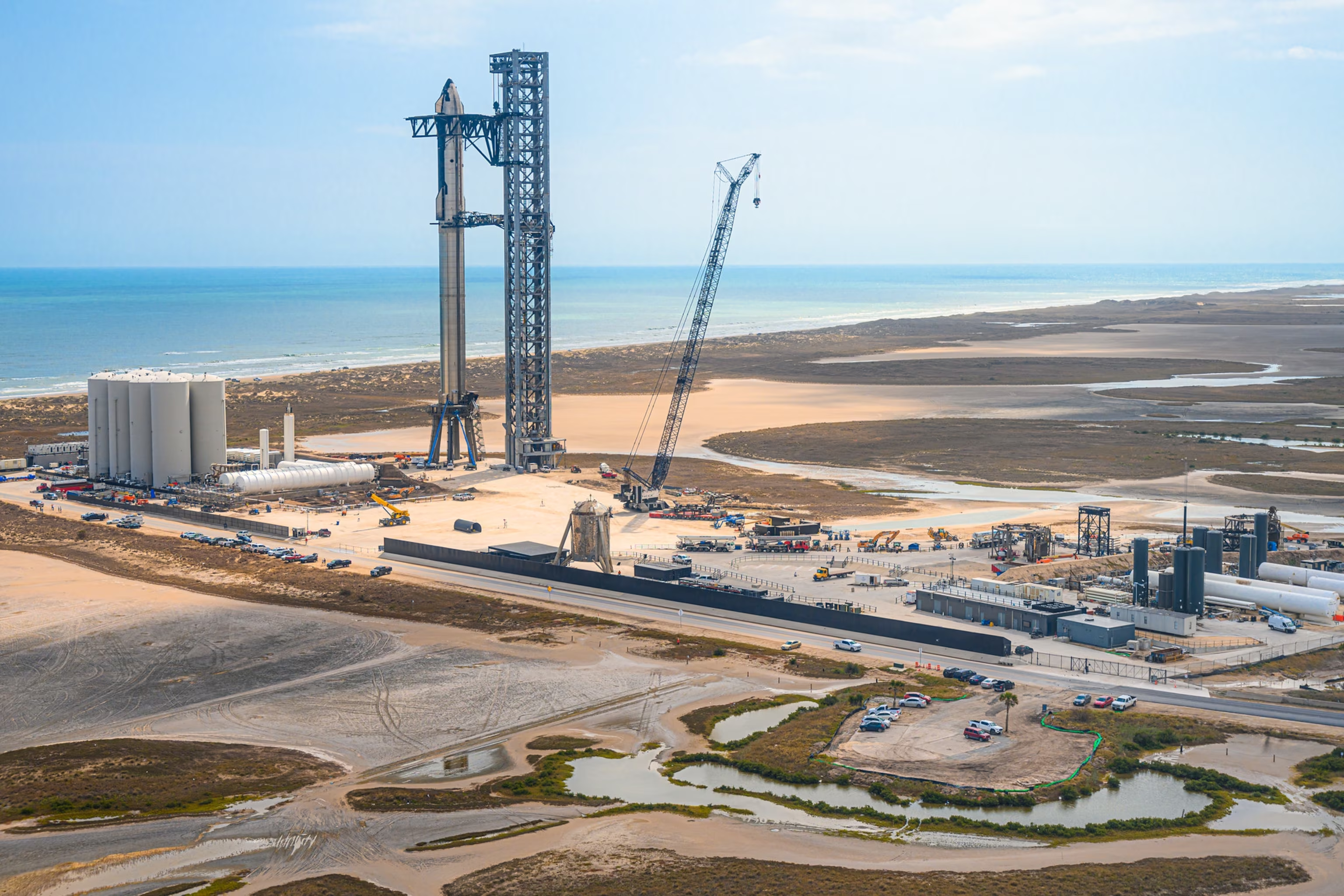
SpaceX wants to replace a recurring convoy-scale fuel burden with fixed infrastructure. Its subsidiary, Coastal Connect Services, has proposed a 32.4-mile natural-gas pipeline across Brevard County that could eliminate hundreds of liquid-natural-gas truck deliveries for every Florida Starship launch. The tradeoff is a new utility corridor whose final route, property easements, engineering and permits remain unfinished.
The Florida Public Service Commission unanimously approved a tariff on Oct. 6 allowing Coastal Connect Services to construct, own and operate natural-gas transmission pipelines in the state. That action establishes a commercial and regulatory framework for the SpaceX affiliate, but it is not final authorization for this specific Brevard County line.
A commission docket filing projects that the pipeline could enter service in August 2027. Reaching that date depends on final engineering, rights-of-way, environmental and local permits, coordination with the interstate gas network, procurement, construction, testing, safety notices and inspections. Brevard County had not received formal permitting or site-planning submissions, according to county spokesperson Don Walker.
A launch vehicle creates a ground-transport problem
The proposed 16-inch steel line would connect to a Florida Gas Transmission interstate pipeline about 1.5 miles east of the St. Johns River. It would carry natural gas toward the Cape Canaveral area, where SpaceX would liquefy it for use as Starship’s methane fuel.
This division of work is important. The pipeline would not carry cryogenic rocket propellant over the full 32.4 miles. It would deliver gaseous feedstock to the launch area, shifting the high-volume movement from tanker trucks to a continuously available fixed line before liquefaction near the point of use.
That architecture addresses a basic scaling constraint. A launch pad can be equipped with large storage tanks and propellant-handling systems, but those systems still need a dependable upstream supply. If each launch requires hundreds of truckloads of liquefied natural gas, road delivery becomes a substantial logistics operation repeated whenever the site replenishes its inventory.
A Florida Public Service Commission memo described continued trucking as less practical, reliable, safe, efficient and cost-effective than a dedicated pipeline. SpaceX also considered an existing Florida City Gas line, but the memo said that option did not meet the company’s needs and specifications. Creating Coastal Connect Services gives SpaceX an affiliate focused on the transportation link rather than relying on an existing local line that was not designed around the launch operation’s requirements.
The route moves the burden from roads to land
Removing hundreds of fuel deliveries per launch could reduce recurring truck traffic for road users and give the launch site a more direct supply arrangement. A pipeline, however, exchanges repeated vehicle movements for a permanent right-of-way with construction, inspection and land-access requirements.
The preliminary alignment would run north past State Road 528, follow the State Road 407 corridor beyond Interstate 95, skirt Space Coast Regional Airport and continue east along the NASA Causeway. The filing says the exact route is still being developed around available rights-of-way and other property.
As currently contemplated, the line may cross or abut 33 county-owned properties. County land-acquisition personnel are coordinating appraisals and possible easement sales, while Space Coast Regional Airport personnel have participated in initial site visits, investigations and easement discussions. Those steps indicate early route development rather than a settled corridor or completed public-property transaction.
Florida’s pipeline oversight also extends beyond the commission’s tariff decision. The Florida Department of Environmental Protection explains that its Natural Gas Transmission Pipeline Siting Act process addresses state licensing for covered projects, while environmental regulation can include wetlands crossings and discharge of water used in hydrostatic testing. Other state and local agencies may participate as applicable.
Because the proposed line is shorter than 100 miles and remains within one county, it falls within categories listed as exempt from mandatory use of that state siting act, although eligible applicants may use the process voluntarily. The project would still face the applicable environmental, safety and local requirements identified for its route. If the voluntary state certification route were used, the process can consider alternate corridors and can confer eminent-domain authority; no such certification for this pipeline has been established.
The August 2027 target therefore represents an infrastructure schedule, not a guaranteed completion date. SpaceX has identified the supply problem and obtained approval for its affiliate’s tariff, but the physical project still has to convert a preliminary line on a map into an engineered, permitted and tested connection across dozens of potentially affected public properties.
| More aerospace and engineering stories, right in your MSN feed. Follow AMI on MSN |
By David Whitaker — Associate editor for AMI’s aerospace and drone systems desk, translating flight systems, aircraft programs, spaceflight, and UAV developments into accessible technical stories.