NASA’s Starship Moon Plan Needs Two Refueling Stages, Launch Count Unsettled
NASA’s proposed Starship architecture for the first crewed Artemis lunar landing depends on two orbital refueling stages, yet the agency has not specified how many tanker launches the sequence would require. In its Artemis IV graphic, NASA labels the tanker flights for both stages only as “(multiple).” Estimates for the broader launch campaign range from six or eight flights to as many as 22.

The unresolved number is more than a scheduling detail. Each added tanker must launch, rendezvous and dock before transferring deeply chilled propellant in orbit. The required transfer between independent Starships has never been demonstrated, making it a central capability that must be verified before the architecture can support astronauts. NASA says SpaceX will demonstrate its propellant-aggregation approach during an uncrewed demonstration mission, according to the agency’s latest lander-development outline.
Why launch estimates range from eight to 22
The competing estimates are counting a campaign whose final performance and operating details remain unsettled. A 2021 Government Accountability Office audit estimated that the architecture could require as many as 16 launches. More recently, an Aerospace Safety Advisory Panel member suggested the figure could reach 22. SpaceX CEO Elon Musk disputed that estimate and said the total would be closer to six or eight.
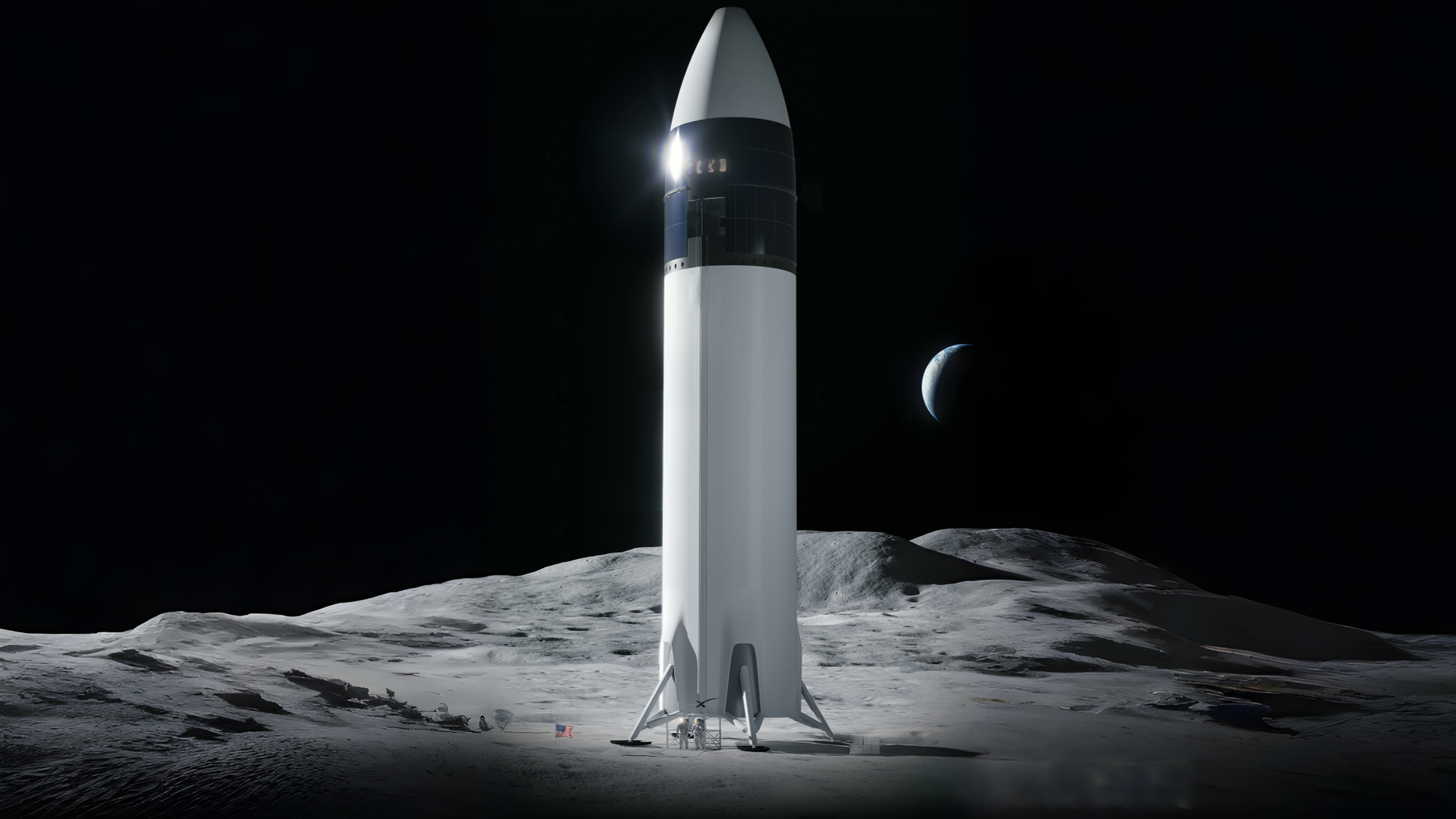
NASA’s graphic does not resolve the disagreement. It shows a propellant depot launching into low Earth orbit, followed by “(multiple)” tanker Starships that would fill it. The Starship lunar lander would then launch separately, dock with the depot and receive its first load of propellant.
The launch count depends on how much usable propellant each tanker can deliver, how efficiently it can be transferred and how much is lost or consumed while the vehicles wait and maneuver. The depot itself and the lunar lander are also launches within the overall campaign. A higher tanker requirement therefore expands both the mission calendar and the number of successful vehicle interactions needed before the crew leaves Earth.
A second refueling stage changes the sequence
After its initial fill in low Earth orbit, the lander would move to what NASA calls the “final tanking orbit.” Additional tanker flights would meanwhile replenish the depot. The depot would then leave low Earth orbit, rendezvous with the lander in the higher orbit and conduct a second propellant transfer.
Nobody has settled the final operating location and details for that last refueling step. The “final tanking orbit” is a newly depicted element in NASA’s proposed Artemis IV sequence, rather than a fully defined destination in the information released with the graphic. Its inclusion shows that the lunar mission would not rely on one depot fill and one lander transfer in a single orbit; it would use a staggered, two-orbit chain.
Once the final transfer is complete, Starship would climb to high Earth orbit and dock with Orion. Four astronauts would launch separately aboard Orion on NASA’s Space Launch System rocket. Orion and Starship would then travel toward the moon together and enter low lunar orbit, where two astronauts would remain aboard Orion while the other two descended in Starship. The lander would later return them to Orion for the trip to Earth.
What NASA gains from the added complexity
NASA says staging the propellant campaign before the crewed launch gives mission planners more flexibility around the timing of the Space Launch System flight. That separation can prevent Orion and its crew from having to wait while every tanker operation is completed.
The revised route is also intended to lower Starship’s propellant requirement. Instead of meeting Orion in the higher lunar orbit envisioned under earlier plans, Starship would push the combined lander-Orion stack toward low lunar orbit. Direct access to the lower orbit reduces the propellant Starship must aggregate and shortens the return path between the lunar surface and Orion.
Those benefits are purchased with a longer chain of launches, dockings and cryogenic transfers before the landing can begin. SpaceX has transferred cryogenic propellant between tanks inside one Starship during a flight test, but moving it between two separately launched and docked spacecraft is the capability this architecture requires.
NASA also requires an uncrewed lander demonstration before astronauts fly on a crewed lunar mission. For the proposed Starship sequence, that demonstration must do more than validate the lander: it must establish that orbital propellant aggregation can support the complete flight profile. Until the inter-vehicle transfer is demonstrated and the amount delivered per tanker is known, “multiple” remains the most definite launch count in NASA’s own mission graphic.
| More aerospace and engineering stories, right in your MSN feed. Follow AMI on MSN |
By David Whitaker — Associate editor for AMI’s aerospace and drone systems desk, translating flight systems, aircraft programs, spaceflight, and UAV developments into accessible technical stories.