RBC Bearings Expands for Fivefold Tomahawk Ramp and Submarine Demand
Demand for Tomahawk missiles and submarine components is rising faster than RBC Bearings can currently supply its portion of the hardware. The component manufacturer is installing equipment, rearranging factory space and bringing complex processes in-house as customers push for substantially higher production.

The most striking target is Tomahawk output. CEO Mike Hartnett said annual production is moving from roughly 200 missiles toward about 1,000, a fivefold increase. RBC Bearings supplies several critical fuel-system components for the missile and is laying out factory floor space to support the planned rate. The expansion remains in progress, making the availability of those specialized parts one piece of a much larger production challenge.
RBC is also working to triple output of submarine-related marine components. The company is about 30% of the way toward that goal, but supply-chain difficulties have kept marine production below plan. Management said it could be more than 70% of the way there next year, with the wider expansion continuing through fiscal 2028 and completion anticipated in fiscal 2029.
Higher orders do not immediately create higher output
The constraint illustrates a recurring problem in defense manufacturing: procurement demand can rise much faster than the factories and supplier networks that turn orders into finished systems. A missile assembler may have funding and contracts for more units, but its final rate still depends on the availability of numerous components produced by specialized suppliers.
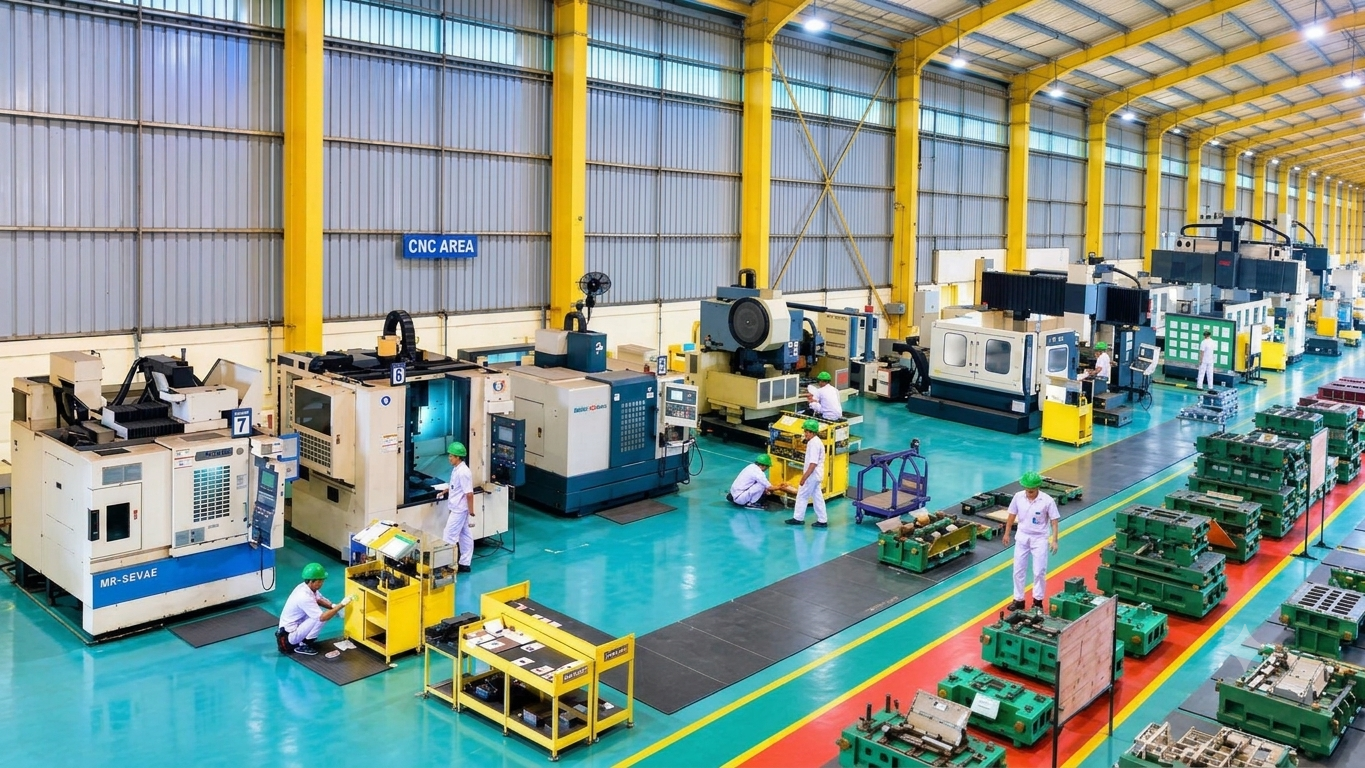
RBC’s response combines three levers. New equipment adds physical production capability. Factory-floor changes provide space for the Tomahawk work. Bringing certain complex marine-component processes in-house gives the company more direct control over steps that had been exposed to supply-chain difficulties. None is an instant fix; equipment must be installed and put into production, while internal processes have to reach the output needed by downstream customers.
The financial results show that this is a capacity problem amid strong demand rather than a lack of orders. RBC’s Aerospace & Defense revenue increased 15.8% in its fiscal second quarter of 2027, including 17.4% growth in commercial aerospace and 13.6% growth in defense. Management said both commercial-aircraft and defense growth were constrained by production capacity, although newly installed equipment was beginning to ease the limits.
Aerospace & Defense accounted for 44% of the company’s quarterly revenue. Space revenue rose 78% during the first half of the fiscal year, adding another fast-growing customer category competing for manufacturing resources. Missiles and munitions generate roughly $50 million in annual revenue for RBC, according to CFO Rob Sullivan.
Overall quarterly sales reached $524.6 million, up 15.2% from a year earlier. Those figures are useful less as an earnings scorecard than as evidence of how quickly demand is reaching the supplier level. RBC expects Aerospace & Defense growth could approach 20% in the second half if marine production recovers as anticipated.
The submarine bottleneck extends beyond one supplier
RBC’s marine expansion sits within a broader effort to add submarine-industrial capacity. In October 2026, the U.S. Navy announced construction of a separate 38,000-square-foot facility in Mississippi for submarine propulsors, propellers, rotors and related components. That $60 million project includes $27 million from the Navy, with $22 million originating from Australia’s contribution to the U.S. submarine industrial base.
The two expansions concern different suppliers and components, but they point to the same industrial constraint: submarine output depends on capacity distributed across a wide manufacturing network, not only on work performed at the final shipyard. Delays or limited throughput at component plants can restrict how quickly the larger system scales.
For RBC, the next meaningful measure is not the demand forecast but the rate at which installed equipment and internalized processes translate into deliverable parts. The company’s own timeline places the marine expansion years from completion, even as Tomahawk production is being prepared for a rise from roughly 200 to about 1,000 missiles annually.
| More aerospace and engineering stories, right in your MSN feed. Follow AMI on MSN |
By David Whitaker — Associate editor for AMI’s aerospace and drone systems desk, translating flight systems, aircraft programs, spaceflight, and UAV developments into accessible technical stories.