Ukrainian Black Sea Drone Attacks Cut Kazakhstan’s 2026 Oil Target by 2 Million Tons
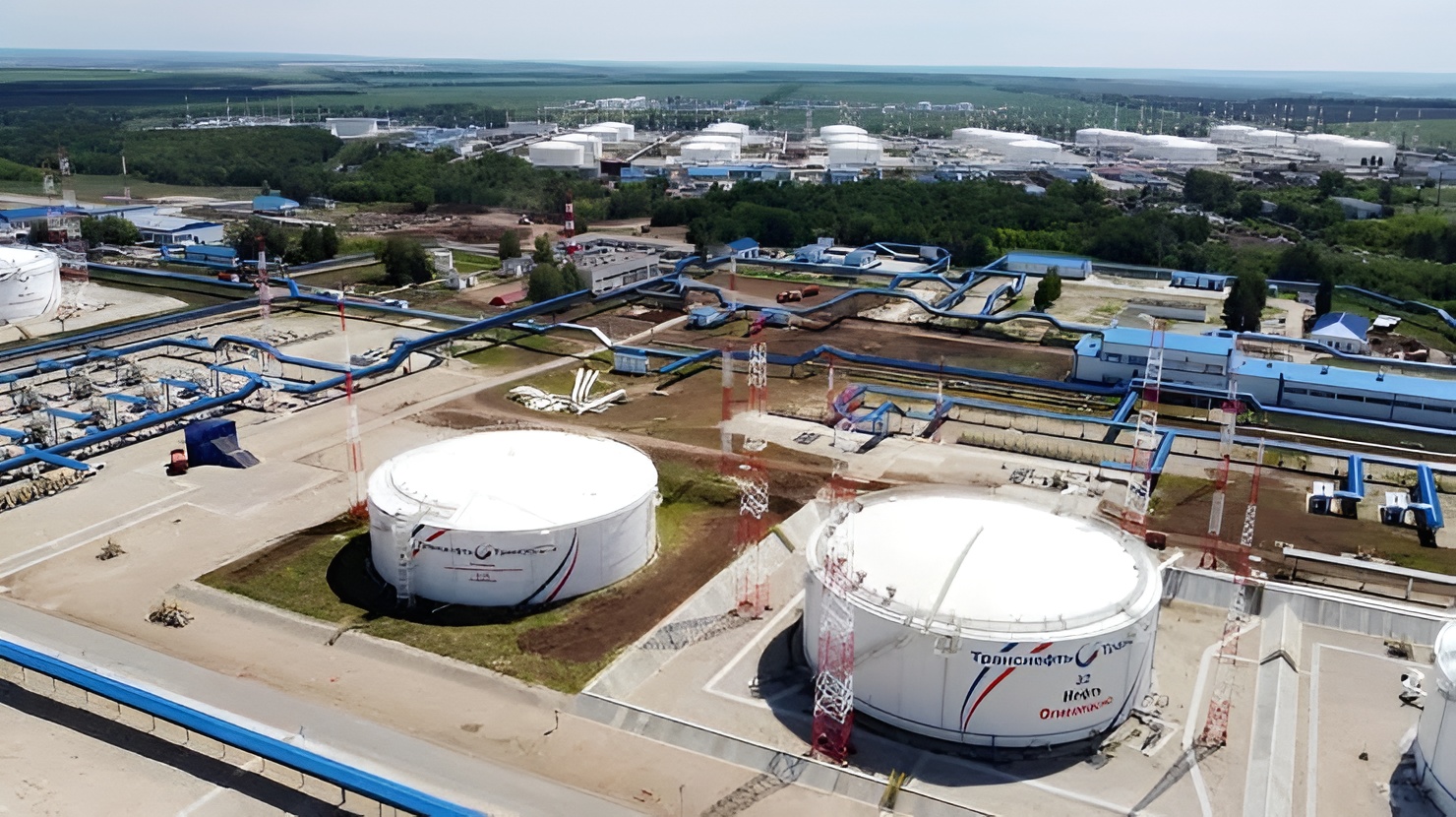
Kazakhstan’s main oil-export corridor is operating normally again, but the disruption has already reached the country’s production plan. Energy Minister Erlan Akkenzhenov said Kazakhstan lowered its 2026 oil target from 98 million to 96 million metric tons after Ukrainian drone attacks affected the Black Sea export system carrying around 80% of its oil exports.
Akkenzhenov attributed approximately 3.5 million metric tons of lost production to attacks in January, June and July involving the Caspian Pipeline Consortium, or CPC. The system moves Kazakh oil across Russia to the port of Novorossiysk. Kazakhstan supplies about 2% of the world’s daily oil, giving the disruption consequences beyond the immediate combatants.
“While we had planned to produce 98 million tons, the adjusted target is now 96 million tons,” Akkenzhenov told journalists in Astana. He said CPC exports were operating normally at the time of his remarks, creating the central tension: restoring pipeline operations does not immediately recover production already lost or eliminate the planning risk created by repeated interruptions.
Export capacity sets an upstream limit
An oil field’s productive capacity and a country’s usable production are not the same thing. Crude must also move through pipelines, terminals and tankers at rates sufficient to reach customers. When an export corridor cannot accept the planned flow and other routes lack spare capacity, producers eventually have to restrain output upstream.
That is why a disruption at a Black Sea outlet can affect fields far inside Kazakhstan. The CPC is not merely one route among several similar choices; it is the dominant high-volume channel. Of the 78.7 million metric tons Kazakhstan exported in 2025, 64.8 million went through the consortium’s system. The country cannot shift that volume quickly to another outlet.
Existing alternatives include eastbound routes toward China and shipments across the Caspian Sea to Azerbaijan, where the oil can enter the Baku–Tbilisi–Ceyhan pipeline and continue toward Turkey. Those routes provide useful flexibility, but their current scale is much smaller. Kazakhstan moved about 1.3 million metric tons from Aktau toward the Azerbaijan route in 2025, while an existing agreement contemplates a phased increase to 2.2 million tons annually.
The comparison explains why exports can return to normal while the annual target remains lower. The lost production figure of roughly 3.5 million tons covers disruptions already experienced, while the two-million-ton target reduction is a forward planning adjustment. They measure different things and need not match directly.
Redundancy would require another major transport system
Producers connected to the Tengiz and Kashagan fields are examining a much larger Trans-Caspian option. A shareholder working group commissioned a feasibility study covering either a subsea pipeline or a substantially expanded tanker system, according to a detailed account of the proposed second export route. Each concept is intended to support as much as 35 million metric tons annually.
That capacity would be material more than half the volume CPC carried for Kazakhstan in 2025 but it would still not replace the main corridor. It would also require more than adding ships or securing space in another pipeline. Tengiz and Kashagan lack a high-volume pipeline connection to the port of Aktau, so expansion would involve inland transport, storage, port throughput, loading facilities and receiving capacity across the Caspian.
The engineering choice also creates different schedules and constraints. A tanker system could potentially expand in stages but would need a larger fleet and more terminal capacity on both shores. A subsea pipeline would offer a dedicated connection but would take years to develop. Either approach represents a major infrastructure program rather than an emergency diversion that can absorb CPC-scale flows on short notice.
Planned field work adds another constraint. Maintenance at the Karachaganak oil and gas condensate field was forecast to remove 400,000 to 450,000 metric tons of production around the mid-September work period. Maintenance is a normal reliability requirement, but its production effect leaves less flexibility when export infrastructure has already caused losses elsewhere in the system.
Kazakhstan’s revised target therefore reflects a capacity problem, not only the temporary status of one pipeline terminal. The CPC may be moving oil normally today, yet the country remains dependent on a corridor that handles four-fifths of its exports. The next meaningful milestone is the Trans-Caspian feasibility work: it must show whether Kazakhstan can build a second route large enough to turn diversification from a limited backup into genuine export redundancy.
| More aerospace and engineering stories, right in your MSN feed. Follow AMI on MSN |
By Stephen Wallace — Editor for AMI’s aerospace integration and unmanned mobility coverage, focused on drone manufacturing, VTOL systems, autonomous networks, and air-ground mobility links.